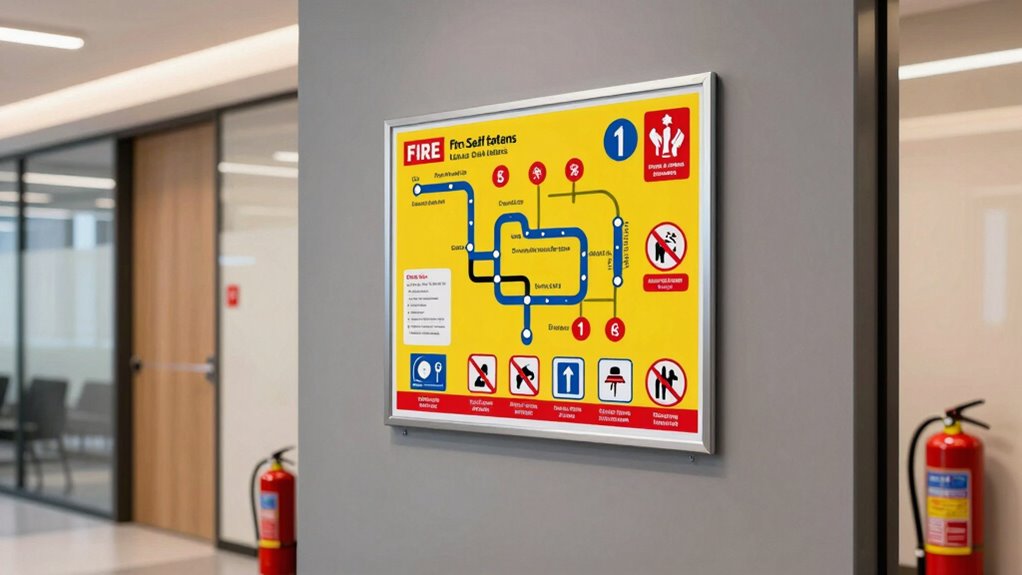

You need visual fire safety plans because they help you understand critical information quickly during emergencies. Clear maps, icons, and color coding guide you to exits and fire extinguishers instantly, reducing confusion and delays. Visual signs make it easier to navigate regardless of language or literacy level, ensuring everyone can respond effectively. If you keep exploring, you’ll discover how these plans can save lives and improve safety for everyone involved.

Get decor and gifts delivered free — and shop member deals
- Fast, free delivery on millions of items
- Access to Prime Big Deal Days deals on October 6–7
- Prime Video, Amazon Music and more included
Key Takeaways
- Visual plans enable quick comprehension of evacuation routes during emergencies, saving crucial time.
- They use icons and color coding that are universally recognizable, overcoming language barriers.
- Visual safety maps facilitate faster location of fire extinguishers and safety equipment.
- Easy updates to visual plans ensure current information, preventing confusion and enhancing safety.
- They improve response efficiency in high-traffic areas by clearly guiding diverse building occupants.
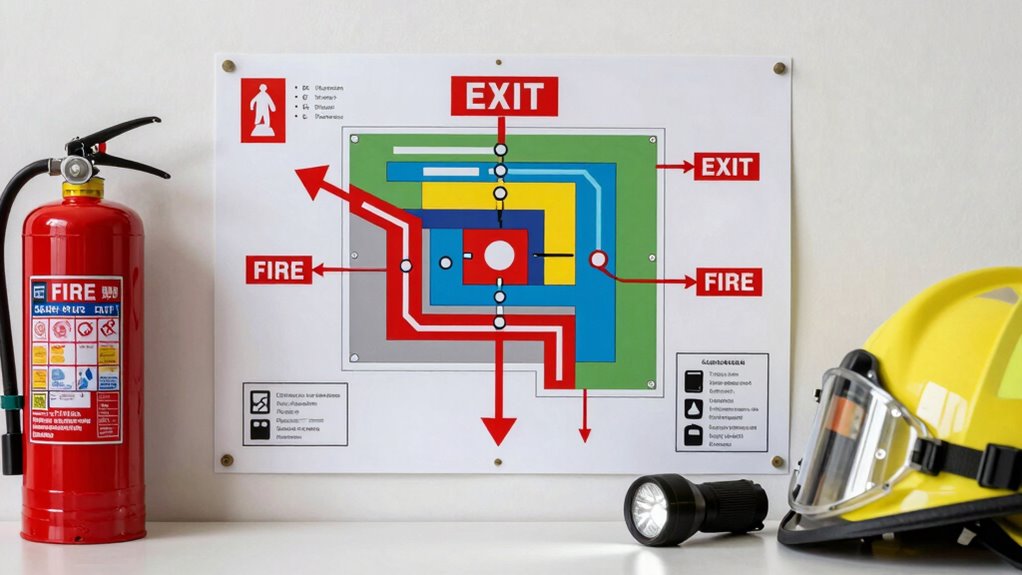
When it comes to fire safety, having a plan isn’t enough—you need one that’s easy to understand quickly, especially in an emergency. In a crisis, every second counts, and a clear, visual fire safety plan can make all the difference. Instead of relying solely on written instructions, a visual plan uses maps, icons, and color coding to instantly communicate critical information. This approach helps you identify evacuation routes without hesitation and locate fire extinguisher locations immediately, even if you’re panicked or distracted.
Clear, visual fire safety plans with maps and icons help everyone respond quickly during emergencies.
A well-designed visual plan simplifies complex information. For example, bright arrows pointing to evacuation routes guide you through the safest exits, no matter where you are inside the building. These routes should be clearly marked on maps posted in visible areas, such as hallways or near exits. When you see these visual cues, you can quickly orient yourself and move swiftly toward safety. Similarly, fire extinguisher locations should be marked with universally recognizable icons, so you know exactly where to find them during an emergency. This reduces confusion and saves precious time when you need to suppress a small fire before it spreads.
Using visuals also caters to different learning styles and language barriers. Not everyone can quickly read or interpret complex text during a fire; some might be unfamiliar with the language or panicked enough to overlook written instructions. Clear pictograms and color-coded signs transcend language barriers and ensure everyone, regardless of background or literacy level, understands what to do. This inclusivity enhances overall safety and ensures your entire team or household can respond effectively.
Moreover, visual fire safety plans are easier to update and maintain. When layouts change or new fire safety equipment is added, you can quickly revise the visual elements to reflect these updates. This ongoing clarity means your safety plan remains effective over time, reducing the risk of outdated or confusing information. Visual communication also plays a crucial role in reinforcing safety protocols in environments with high foot traffic, such as offices or schools, where many people might be unfamiliar with the layout, improving response times. Incorporating visual safety strategies into your plan ensures that crucial information is accessible and effective for all users.
In short, incorporating visual elements into your fire safety plan isn’t just about aesthetics—it’s about practicality. Clear evacuation routes and fire extinguisher locations depicted visually ensure everyone can act swiftly and confidently in a fire emergency. When panic sets in, your visual plan becomes a vital tool, guiding you and others to safety with minimal hesitation.
As an affiliate, we earn on qualifying purchases.
Frequently Asked Questions
How Do Visual Fire Safety Plans Improve Emergency Response Times?
Visual fire safety plans improve emergency response times by providing clear, easily understood diagrams of evacuation procedures and signage placement. When you can quickly identify exits, fire extinguisher locations, and escape routes on a plan, you waste less time during a crisis. This clarity helps responders and occupants act swiftly, reducing confusion and ensuring everyone evacuates safely and efficiently, ultimately saving lives and minimizing damage.
What Materials Are Best for Creating Durable Visual Fire Safety Plans?
Think of your fire safety plan as a sturdy shield—its materials must withstand the storm. Use high-quality vinyl or laminated paper for excellent material durability, ensuring plans resist wear and tear. Opt for bold, clear design for maximum clarity, making it easy to interpret in emergencies. These materials combine resilience and readability, so your safety plans remain effective when every second counts.
Can Visual Plans Be Integrated With Digital Emergency Systems?
Yes, you can integrate visual fire safety plans with digital emergency systems using augmented reality and interactive mapping. These technologies allow you to overlay safety information onto real-world views, guiding occupants quickly during emergencies. By connecting your plans to digital systems, you enhance situational awareness, streamline evacuation routes, and provide real-time updates. This integration makes your fire safety protocols more accessible, effective, and engaging for everyone involved.
How Often Should Visual Fire Safety Plans Be Updated?
Updating your visual fire safety plans is like tuning a musical instrument—you need to do it regularly. Aim for at least once every year, or whenever there are significant changes to your building or procedures. Incorporate maintenance scheduling and staff training into this process to guarantee everyone stays informed. Regular updates help keep your plans accurate, effective, and ready to guide your team in emergencies, minimizing risks.
Are There Specific Standards for Visual Fire Safety Plan Designs?
Yes, there are specific standards for visual fire safety plan designs. You should use clear fire safety symbols that are universally recognized, guaranteeing quick understanding during emergencies. Follow plan layout standards that promote clarity, such as logical placement of exits, fire extinguishers, and escape routes. These standards help guarantee your fire safety plans are effective, easily interpretable, and compliant with local regulations, ultimately enhancing safety for everyone involved.
Conclusion
In the end, making fire safety plans more visual isn’t just about visuals — it’s about saving lives. Clear, concise, and engaging visuals cut through confusion, creating a compelling call to action. When you prioritize pictures over paragraphs, you pave the way for preparedness, preventing panic and promoting protection. So, streamline safety strategies with striking sketches and simple symbols, and stay safe, swift, and secure when it counts most. Visuals truly vanquish vulnerability.
Fall Picks
fall essentials
As an affiliate, we earn on qualifying purchases.