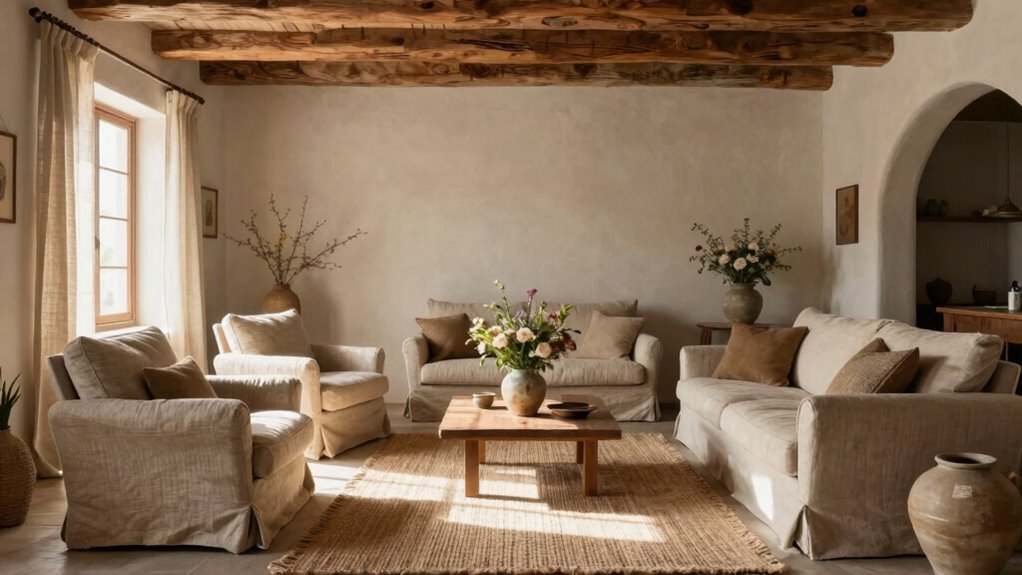

The natural-material trend boosts your comfort while supporting sustainability. Choosing organic fabrics, woods, and fibers from eco-conscious sources guarantees items are breathable, softening over time and regulating temperature naturally. These materials are produced with eco-friendly processes, reducing chemical use and energy consumption. They offer a timeless, authentic look that ages well. By opting for natural options, you’re making a responsible choice that benefits both your health and the environment—continue to explore how these materials make a difference.

Get decor and gifts delivered free — and shop member deals
- Fast, free delivery on millions of items
- Access to Prime Big Deal Days deals on October 6–7
- Prime Video, Amazon Music and more included
Key Takeaways
- Natural materials like organic cotton and wool offer breathability and temperature regulation for enhanced comfort.
- Over time, natural fibers soften, increasing tactile comfort and a cozy feel.
- Eco-friendly manufacturing processes ensure products are safe, breathable, and free from harmful chemicals.
- The authentic texture and aesthetic of natural materials contribute to a relaxed, comfortable environment.
- Natural fibers support healthy indoor air quality and reduce allergic reactions, promoting overall well-being.

Have you noticed how more people are turning to natural materials in their homes and fashion? It’s no accident. The shift toward organic fabrics, woods, and fibers stems from a desire to live more sustainably while still enjoying comfort and style. You’re likely drawn to these materials because they offer a warmth and authenticity that synthetic options often lack. Plus, with growing awareness about the environmental impact of manufacturing, many brands now prioritize sustainable sourcing and eco friendly manufacturing practices. This collective movement encourages consumers to make more mindful choices that benefit the planet. This means that the materials you choose aren’t just better for the planet—they also promote healthier living environments.
Choosing natural materials supports sustainability, comfort, and healthier environments in your home and wardrobe.
When you opt for natural materials, you’re supporting a cycle of responsible production. Sustainable sourcing ensures that fibers like organic cotton, hemp, or wool come from farms and suppliers committed to environmentally conscious practices. These practices often involve reduced water usage, no harmful chemicals, and fair labor standards. That way, every piece you bring into your home or wardrobe is part of a larger effort to reduce pollution and waste. It’s not just about aesthetics; it’s about making mindful choices that contribute to the planet’s well-being. Supporting responsible production also helps preserve biodiversity and natural ecosystems. Recognizing the importance of eco friendly manufacturing, consumers are increasingly seeking out brands that prioritize these sustainable practices.
Eco friendly manufacturing processes further enhance the appeal of natural materials. Many manufacturers now use methods that minimize energy consumption and avoid toxic dyes or treatments. This results in products that are safe for you and the environment. When you choose items made through eco friendly manufacturing, you’re supporting companies that prioritize transparency and sustainability. This can mean smoother, more breathable fabrics or furniture that feels naturally cool and inviting—comfort that comes from the material itself, not added chemicals or synthetic layers. Additionally, natural materials are often more durable and can last for years, reducing the need for frequent replacements and further supporting sustainability.
Moreover, natural materials inherently support comfort. They breathe better, regulate temperature, and often become softer over time. Imagine sinking into a bed made of organic cotton or wrapping yourself in a cozy wool sweater. These materials adapt to your body’s needs, providing a sense of ease that synthetic alternatives struggle to match. They also tend to have a timeless appeal, blending seamlessly into various interior styles and wardrobes, making them both practical and aesthetically pleasing. Choosing natural fibers also encourages sustainable sourcing, which ensures that the materials are harvested responsibly and ethically. This conscious approach helps safeguard natural resources for future generations. Additionally, natural materials often develop a unique character and patina as they age, enhancing their charm and longevity.
In the end, embracing the natural-material trend isn’t just a fashion statement—it’s a conscious choice to live more sustainably while enjoying genuine comfort. With a focus on sustainable sourcing and eco friendly manufacturing, you get to indulge in products that are better for you and the environment. This balance of eco-consciousness and comfort is what makes the natural-material trend truly compelling and enduring.
Frequently Asked Questions
Are Natural Materials More Durable Than Synthetic Options?
Natural materials can be more durable than synthetic options, especially when carefully sourced. They often have sustainability benefits, as they’re renewable and biodegradable, reducing environmental impact. Proper material sourcing guarantees quality and longevity, so you get products that last longer and wear well over time. While some synthetics may resist wear initially, natural materials tend to age gracefully, maintaining their beauty and function, making them a smart, eco-friendly choice for durability.
How Do Natural Materials Impact Indoor Air Quality?
Natural materials generally improve indoor air quality by reducing VOC emissions and supporting allergen management. You’ll notice fewer chemical odors and a healthier environment because these materials release fewer harmful substances. They also help manage allergens, reducing dust and mold build-up. By choosing natural options, you create a space that’s safer and more breathable, promoting well-being for everyone inside, especially those with allergies or sensitivities.
Can Natural Materials Be Easily Cleaned and Maintained?
Yes, natural materials can be easily cleaned and maintained. You should use eco-friendly cleaning products to keep them in good condition without harming the environment. Regular maintenance tips include dusting, avoiding harsh chemicals, and promptly cleaning spills. For wood or bamboo, occasional polishing helps preserve their appearance. Overall, natural materials are durable and straightforward to care for if you follow these simple, eco-conscious practices.
What Are the Cost Differences Between Natural and Synthetic Materials?
You’ll find that natural materials often cost more upfront because of their quality and sourcing, making the initial price tag steeper. In the cost comparison, synthetic materials usually have lower material pricing, which appeals to budget-conscious buyers. However, natural options can save you money long-term through durability and comfort, proving that sometimes you get what you pay for. It’s a balancing act—think of it as weighing quality against affordability.
Are Natural Materials Suitable for All Types of Home Decor Styles?
Yes, natural materials suit many home decor styles thanks to their aesthetic versatility, blending seamlessly with modern, rustic, or traditional themes. They also offer sustainability benefits, making your space eco-friendly. You can incorporate wood, stone, or bamboo in various ways to add warmth and texture. Whether you prefer a minimalist look or a cozy, layered vibe, natural materials adapt beautifully, enhancing both style and environmental consciousness in your home.
Conclusion
You stay stylish and sustainable by selecting natural materials that marry comfort with consciousness. This trend transforms your space into a sanctuary, strengthening your connection to nature while supporting eco-friendly choices. By embracing these earthy essentials, you not only nurture your well-being but also nurture the planet. So, seize this sustainable shift, stand out with simplicity, and savor the serenity that natural materials uniquely supply—because comfort and conservation can truly coexist.
Fall Picks
fall essentials
As an affiliate, we earn on qualifying purchases.