
To build a safer nighttime path from your bed to the bathroom, install motion-activated or soft LED night lights along the route to guarantee consistent, glare-free illumination. Clear the pathway of clutter, loose rugs, and pet toys, and fix any uneven flooring. Use non-slip mats in moisture-prone areas and regularly check that lights and surfaces are in good condition. Implementing these steps can greatly reduce fall risks, and if you keep going, you’ll discover even more helpful safety tips.
Listen free for 30 days with Audible
Thousands of audiobooks and originals — cancel anytime.
As an affiliate, we earn on qualifying purchases.
Key Takeaways
- Install soft, automatic or motion-activated night lights along the pathway for consistent, glare-free illumination.
- Remove clutter, loose rugs, and obstacles to ensure a clear, hazard-free route.
- Use non-slip mats and secure flooring to prevent slips and trips in moisture-prone areas.
- Regularly inspect and maintain lighting and flooring to address potential hazards promptly.
- Keep the pathway dry and well-ventilated to reduce moisture and improve safety during nighttime trips.
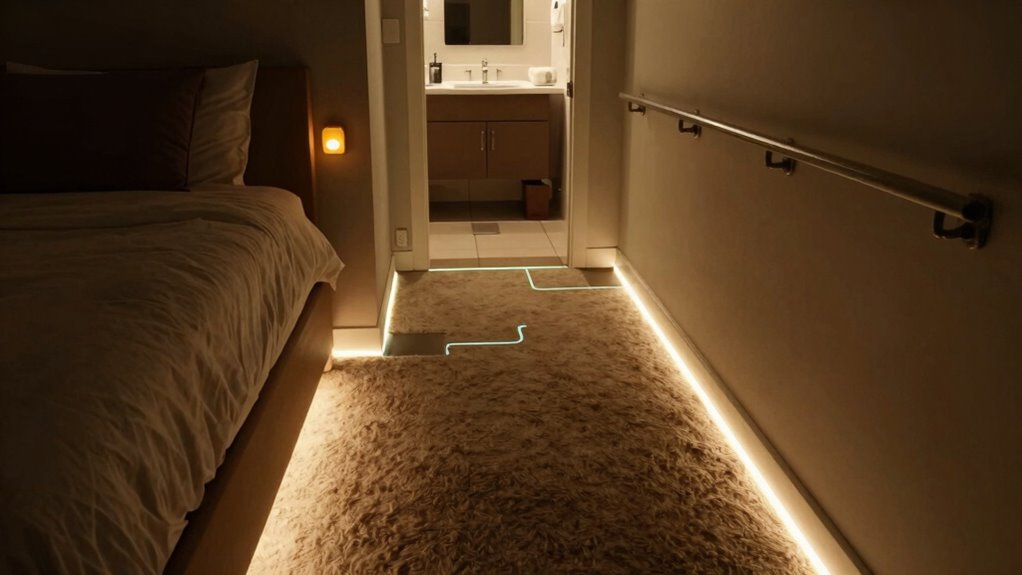
Getting up in the middle of the night can be risky, especially if your path to the bathroom isn’t well-lit or free of obstacles. To keep yourself safe, you need to focus on effective lighting solutions that illuminate your route clearly. Installing night lights along the pathway is a simple yet powerful way to prevent trips and falls. Choose low-wattage LED lights that automatically turn on when it gets dark or when you detect movement. These lights should be placed strategically—near your bed, along hallways, and around the bathroom entrance—to provide consistent, glare-free illumination. Avoid harsh, bright lighting that might impair your night vision; instead, opt for soft, warm-toned bulbs that create enough visibility without startling you awake fully.
Install motion-activated, warm LED night lights along your pathway for safe, glare-free nighttime visibility.
In addition to lighting, obstacle removal plays a critical role in creating a safer path. Walk through your route at night with a flashlight or your phone’s torch to identify potential hazards like loose rugs, clutter, or uneven flooring. Secure or remove loose rugs that can cause you to trip, and clear away any clutter along the pathway. Keep cords, shoes, or other objects out of the way, especially in areas you traverse regularly. If you have pets, ensure their toys or bedding aren’t obstructing your path. Taking these simple steps will greatly reduce your chances of stumbling and falling during those late-night trips. Incorporating safe flooring practices can further enhance overall safety and reduce the risk of slips. Additionally, using proper flooring maintenance can help prevent the development of hazards over time. Maintaining a well-lit environment also plays a vital role in early hazard detection and overall safety. Regularly inspecting and maintaining your flooring and lighting systems ensures ongoing hazard prevention, which is essential for night-time safety.
Another key aspect is maintaining a clear, dry surface. Wet or slippery floors can be just as dangerous as obstacles. Use non-slip mats or adhesive strips in areas prone to moisture, such as near the bathroom door or on tile floors. Regularly check that these mats stay in place and replace them if they become worn or damaged. If you notice any uneven flooring or loose tiles, repair them promptly to prevent accidents. Additionally, incorporating proper ventilation can help reduce humidity and moisture that contribute to slippery surfaces. Combining obstacle removal with proper lighting solutions creates an overall safety strategy that minimizes risks and helps you feel more confident when you get up at night.
motion-activated LED night lights
As an affiliate, we earn on qualifying purchases.
As an affiliate, we earn on qualifying purchases.
Frequently Asked Questions
What Is the Best Lighting Type for Nighttime Safety?
You should choose motion-activated LED lights for nighttime safety. They provide bright, focused illumination that enhances color contrast and helps you see obstacles clearly. Place lights along your path at strategic points, like near the bed and bathroom door, to guarantee proper light placement. This way, you avoid tripping hazards, maintain visibility, and navigate confidently without disturbing your sleep or others.
How Can I Prevent Falls on Slippery Floors?
To prevent falls on slippery floors, you should place non-slip rugs in high-traffic areas, especially near the bathroom and bed. Additionally, installing sturdy handrails along the path provides extra support when walking. Make sure the rugs are securely anchored and keep the floor dry to reduce slipping risks. These simple measures help you navigate safely, especially during nighttime when visibility is low.
Are Motion Sensors Effective for Nighttime Path Lighting?
Yes, motion sensors are effective for nighttime path lighting. They utilize smart technology to automatically turn on lights when you approach, providing instant illumination without fumbling for switches. This not only enhances safety but also boosts energy efficiency by lighting only when needed. You’ll appreciate the convenience and reduced risk of falls, especially if you’re steering in the dark. Motion sensors offer a smart, efficient solution for safer nighttime movement.
What Color Lights Are Safest for Night Vision?
Red or amber lights are safest for night vision. They have a warmer color temperature, which minimizes disruption to your sleep quality while providing enough illumination to see clearly. Unlike blue or white lights, these colors reduce eye strain and help you stay sleepy, making your nighttime journey calmer and safer. Choosing the right color helps protect your sleep cycle and guarantees you don’t wake up fully, keeping you comfortable and alert.
How Often Should I Check and Maintain Pathway Lighting?
You should check and maintain your pathway lighting at least once a month to guarantee it’s functioning properly. Regular inspections are essential for emergency preparedness, as reliable lighting can prevent falls. During maintenance, replace any burnt-out bulbs and clean fixtures for maximum brightness. Follow lighting installation tips to keep the system effective, and consider installing motion sensors for automatic illumination. This proactive approach helps create a safer, well-lit path during nighttime emergencies.
Conclusion
Creating a safe nighttime path from your bed to the bathroom can considerably reduce the risk of falls. Remember, over 60% of falls among older adults happen at night, often due to poor lighting or obstacles. By installing nightlights, removing clutter, and ensuring clear walkways, you can make your nightly routine safer. Taking these simple steps not only protects your health but also gives you peace of mind, so you can sleep soundly through the night.
NFL season / tailgating Picks
team gear
As an affiliate, we earn on qualifying purchases.