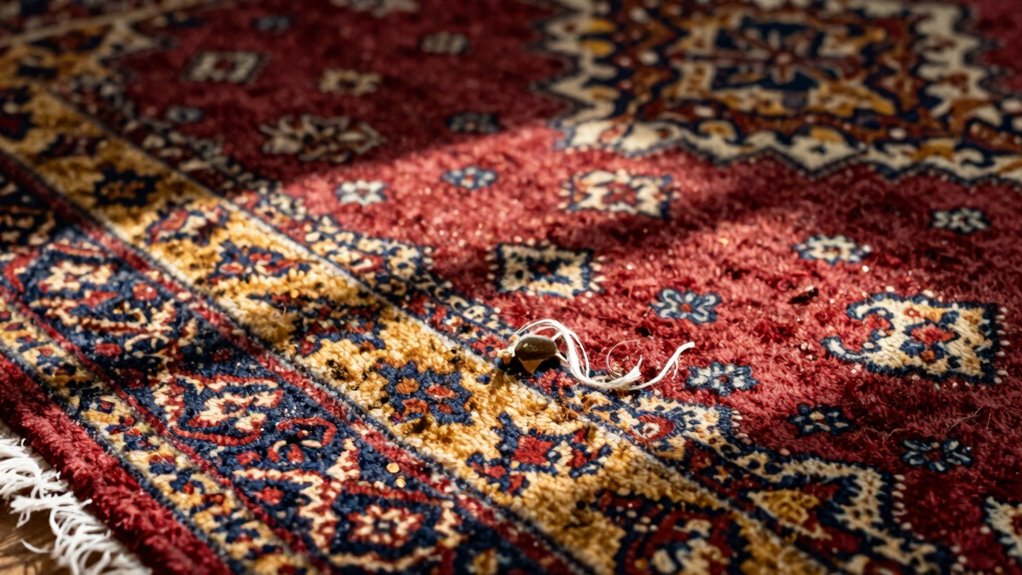

Rugs can cause more trouble than you think because they trap dust, allergens, and moisture, which makes cleaning challenging. If you neglect maintenance, mold, bacteria, and odors can develop, affecting your health and worsening the rug’s condition. Low-quality fibers tend to trap more dirt and allergens, speeding up wear. Without proper care, your rug could become a source of stress and health issues instead of comfort. Find out more to keep your space safe and fresh.
Key Takeaways
- Rugs trap dust, allergens, and bacteria, making cleaning more challenging than most realize.
- Poor maintenance leads to mold, odors, and fiber damage, increasing repair and replacement costs.
- Deep-seated dirt and moisture promote mold growth, posing health risks.
- Neglecting regular cleaning accelerates wear and shortens rug lifespan significantly.
- Improper care can turn rugs from comfort sources into sources of allergens and respiratory issues.
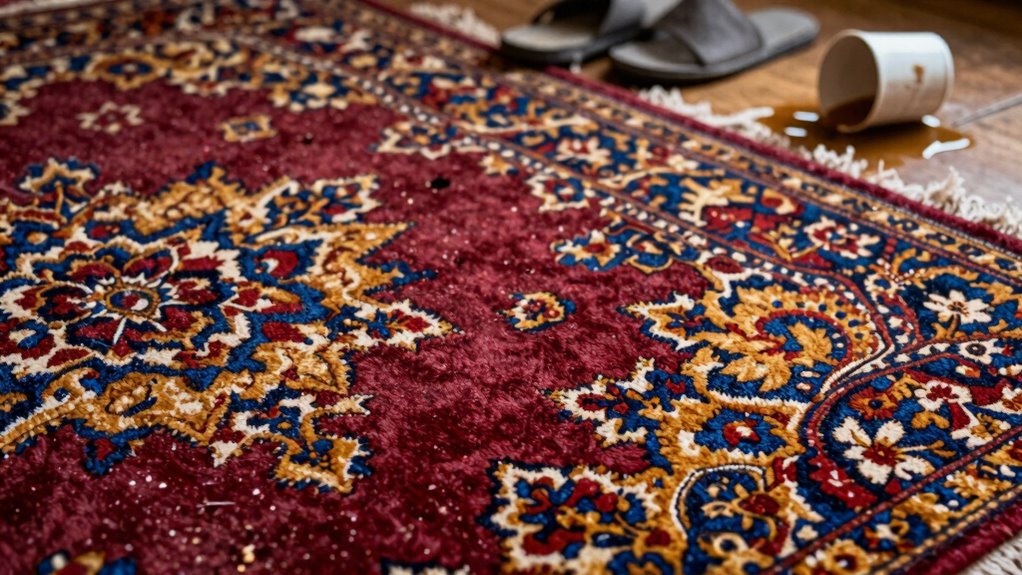
Rugs can instantly transform a room, adding warmth and style, but they often come with hidden complications. One of the biggest issues is rug maintenance. Unlike hard flooring, rugs require regular cleaning to keep them looking fresh and prevent the buildup of dirt, dust, and allergens. If you neglect this maintenance, your rug becomes a breeding ground for bacteria and mold, which can lead to unpleasant odors and even damage the fibers over time. You might find yourself constantly vacuuming, spot cleaning, or arranging professional cleanings, all of which take time and money. Without proper upkeep, your beautiful rug can quickly turn into a source of stress rather than comfort. Regular cleaning routines are essential for preserving both the appearance and health of your living space. Implementing a consistent cleaning routine can significantly reduce these risks and extend the lifespan of your rug.
Neglecting rug maintenance can lead to odors, damage, and increased allergens over time.
Another problem often overlooked is the impact rugs can have on allergy sufferers. Many rugs trap dust mites, pet dander, pollen, and other airborne particles. Over time, these allergens accumulate deep within the fibers, becoming difficult to remove completely. If you or someone in your household has allergies or asthma, this buildup can trigger sneezing, coughing, itchy eyes, and breathing difficulties. Even if you’re diligent about vacuuming, deep-seated allergens can persist, making your living space less healthy. Rugs that aren’t cleaned regularly or are made from low-quality materials tend to exacerbate these issues. The more plush and dense the fibers, the more allergens they tend to trap, increasing the risk of allergy flare-ups. Being aware of rug construction can help you choose better materials that are easier to maintain and less likely to trap allergens. Additionally, understanding proper cleaning techniques can make a significant difference in maintaining a healthier environment. Proper air quality management can also reduce indoor allergens and improve overall health.
In addition to allergy concerns, improper rug maintenance can lead to other unforeseen problems. For instance, stains and spills can become permanent if not addressed promptly, leading to discoloration and fiber damage. Over time, dirt and debris work their way into the base of the rug, causing wear and tear that’s costly to repair or replace. Moisture trapped under or within the rug can also promote mold growth, especially in humid environments. All of these issues can diminish the rug’s appearance and lifespan, forcing you to replace it sooner than expected. Recognizing the importance of proper rug care can help prevent many of these common problems before they escalate. Regularly inspecting and addressing potential issues early can save you money and hassle in the long run.
Ultimately, rugs are more than just decorative pieces—they demand ongoing care. Without consistent rug maintenance, they can become a source of allergy problems, damage, and even health risks. While they add aesthetic appeal, it’s essential to recognize that the hidden trouble lies in their upkeep. If you want your rug to serve its purpose without turning into a headache, you need to stay proactive about cleaning and maintenance routines. Otherwise, what starts as a beautiful addition can end up causing more trouble than you bargained for.

Bissell Pet Hair Eraser Allergen Lift-Off, HEPA, 39883
- Powerful Suction: Removes dirt, fur, and dust effectively
- Lift-Off Detachable Pod: Easy cleaning in hard-to-reach areas
- HEPA Sealed Allergen System: Traps allergens inside for cleaner air
As an affiliate, we earn on qualifying purchases.
As an affiliate, we earn on qualifying purchases.
Frequently Asked Questions
How Often Should Rugs Be Professionally Cleaned?
You should have your rugs professionally cleaned at least once a year, especially in high-traffic areas, to maintain their appearance and longevity. For rug stain removal or regular upkeep, try DIY cleaning tips like vacuuming frequently and spot cleaning spills promptly. Professional cleaning guarantees deep dirt and allergens are removed, preventing damage. Regular maintenance keeps your rug looking fresh and extends its life, making it worth the investment.
Are Certain Rug Materials More Prone to Causing Trouble?
Certain rug materials, like synthetic fibers, are more prone to trouble, with studies showing they trap more allergens and emit volatile organic compounds (VOCs). Natural fibers, such as wool or cotton, tend to be more durable and easier to clean but can still harbor dust mites if not maintained. You should consider how each material’s properties impact allergies and cleaning needs, especially if you have sensitivities or pets.
What Are the Hidden Dangers of Rug Padding?
Rug padding can hide hidden mold and trigger rug padding allergies, posing health risks you might not notice right away. Poor ventilation or moisture can cause mold growth beneath your rug, leading to allergic reactions or respiratory issues. Always check for signs of dampness or mold and choose hypoallergenic padding. Regular cleaning and proper installation help prevent these hidden dangers, keeping your space healthier and more comfortable.
Can Rugs Contribute to Indoor Air Pollution?
Did you know that indoor air quality can be up to five times worse than outdoor air? Rugs can definitely contribute to indoor air pollution by trapping airborne allergens and emitting chemicals from dyes and backing materials. These emissions, known as chemical emissions, can cause respiratory issues over time. Regular cleaning and choosing low-emission rugs help reduce these risks, ensuring your home stays healthier and breathing easier.
How Can I Prevent Rugs From Damaging Hardwood Floors?
To prevent rugs from damaging hardwood floors, you should focus on proper rug maintenance and floor protection. Use a non-slip rug pad to cushion the contact and prevent scratches. Regularly clean your rug to avoid dirt buildup that can scratch the wood. Additionally, make certain the rug is correctly positioned, and avoid moisture underneath, as trapped dampness can warp or stain your floors. These steps keep your hardwood looking pristine and damage-free.
Conclusion
So, next time you roll out a rug, remember it’s not just a cozy addition—it’s a hidden troublemaker. Beneath those vibrant patterns lurk dust bunnies and hidden stains, whispering secrets of messes waiting to happen. It’s easy to see a rug as a simple splash of style, but beneath the surface, it can trap dirt and cause chaos. Keep your eyes open, because what seems like a soft embrace might just hide a world of trouble.