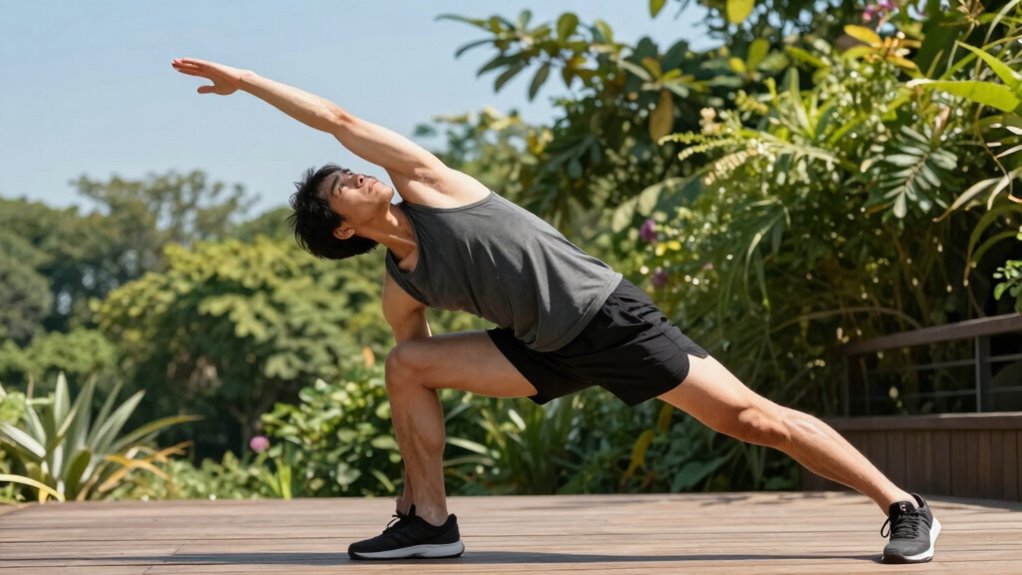

To prevent stiffness, set small, consistent movement cues throughout your day, like stretching or posture checks every few hours. Simple actions such as neck rolls, shoulder shrugs, or standing up to stretch can keep your muscles relaxed and improve flexibility. Using timers or sticky notes helps remind you to stay aware of your posture and move regularly. Keep this up, and you’ll find maintaining comfort becomes second nature—there’s more you can do to support your body’s health.

Get decor and gifts delivered free with Prime
- Fast, free delivery on millions of items
- Prime Video, Amazon Music and more included
- Member-only deals all year
Key Takeaways
- Incorporate small, frequent stretching routines targeting major muscle groups throughout the day.
- Use timers or sticky notes to remind you to check and correct your posture regularly.
- Practice brief movements like neck rolls, shoulder shrugs, or hamstring stretches every few hours.
- Develop awareness of early tension signs to adjust posture and movement proactively.
- Establish a consistent routine to make mindful movement cues a natural part of daily life.

Have you ever wondered how a simple, consistent reminder can transform your daily movement habits? It’s true—tiny cues can make a big difference in preventing stiffness and promoting better mobility. One effective daily movement cue is to incorporate regular stretching routines that target key muscle groups, especially if you spend long hours sitting or at a desk. These routines don’t need to be lengthy; even a few minutes every couple of hours can work wonders. When you pair stretching routines with a focus on posture awareness, you create a powerful combination that keeps your body flexible and reduces discomfort.
Small, consistent movement cues, like regular stretching and posture checks, can dramatically improve flexibility and reduce discomfort.
By intentionally reminding yourself to check your posture, you bring attention to how you hold yourself throughout the day. It’s easy to slip into poor posture, especially when engrossed in work or screens, which can lead to tight muscles and stiffness. A simple cue, like setting a timer or placing sticky notes around your workspace, keeps you mindful. When the alarm rings or you see the note, take a moment to straighten your back, relax your shoulders, and engage your core. Over time, this habit builds a natural awareness of your posture, helping you to maintain proper alignment without constant conscious effort.
The key is consistency. Once you establish this cue as part of your routine, it becomes second nature. As you become more aware of your posture, you naturally start to integrate stretching routines into your day. These can include neck rolls, shoulder shrugs, chest openers, and hamstring stretches—simple moves that counteract the effects of prolonged sitting. Incorporating these stretches into your routine not only alleviates stiffness but also improves circulation, which further supports your mobility. Incorporating body awareness can help you recognize early signs of tension before they develop into discomfort. Developing a deeper understanding of proper ergonomics can further enhance your efforts to maintain comfort and prevent strain.
This daily cue of checking posture and stretching isn’t just about avoiding discomfort; it’s about creating a proactive approach to your health. When you stay mindful of your body position, you’re less likely to develop chronic issues like back pain or joint stiffness. Additionally, integrating mindful movement practices such as posture awareness can enhance your overall well-being. Practicing mindful movement regularly encourages better body mechanics and reduces strain. Over time, this small, consistent action fosters a more balanced, pain-free body. It’s a habit that doesn’t demand a lot of time but offers significant benefits—fewer aches, improved flexibility, and a greater sense of control over your physical well-being. In essence, a simple reminder can serve as your daily catalyst for movement, helping you stay limber and comfortable every day.
ergonomic posture reminder timer
As an affiliate, we earn on qualifying purchases.
As an affiliate, we earn on qualifying purchases.
Frequently Asked Questions
Can This Movement Cue Improve Flexibility Over Time?
Yes, this movement cue can improve your flexibility benefits over time. By consistently practicing specific movement techniques, you strengthen muscles and increase joint range of motion. Focused, intentional movement helps reduce stiffness and promotes flexibility. Incorporating this cue into your daily routine encourages gradual progress, making your body more adaptable and resilient. Over time, you’ll notice better mobility and decreased discomfort, reinforcing the positive impact of regular, mindful movement on your flexibility.
Is This Cue Suitable for People With Joint Issues?
Yes, this cue is suitable for people with joint issues, but only if you prioritize joint safety and respect your movement limitations. It’s like walking a tightrope—balance is everything. By listening to your body and avoiding pain, you can prevent aggravating joint problems. Always consult with a healthcare professional before starting new movements, ensuring your joints stay safe and supported while you stay active.
How Often Should I Practice This Daily Movement?
You should practice this movement daily to experience its full stretching benefits and maintain flexibility. A consistent movement frequency helps prevent stiffness and keeps your joints healthy. Aim for at least 10-15 minutes each day, adjusting based on how your body feels. Regular practice guarantees your muscles stay loose, improves circulation, and reduces discomfort, making it a simple yet effective way to support your overall mobility and well-being.
Are There Any Contraindications for This Movement Cue?
Think of your joints as delicate bridges—while movement keeps them strong, certain restrictions can make crossing unsafe. If you have joint safety concerns or movement restrictions, it’s best to consult a healthcare professional before practicing this cue. Some conditions, like inflammation or instability, might worsen with certain movements. Always listen to your body, and avoid pushing through pain, to *guarantee* your joints stay healthy and pain-free.
Can This Movement Be Integrated Into Office Routines?
Yes, you can definitely integrate this movement into your office routine. Try doing simple office stretching exercises, like seated twists or shoulder rolls, throughout the day. Incorporate movement integration by setting reminders to stand, stretch, and move regularly. This helps prevent stiffness, boosts circulation, and keeps you alert. Making these small adjustments can considerably improve your comfort and productivity without disrupting your workflow.
Conclusion
Think of your daily movement cue as the gentle tide guiding your body’s rhythm. When you stay consistent, it’s like riding a wave that keeps stiffness at bay, flowing smoothly through your day. Embrace this simple cue as your daily anchor, helping you stay agile and limber. Just as the tide returns tirelessly, your movements can keep you fresh and free, turning small steps into a powerful tide of well-being that carries you forward effortlessly.
Halloween Picks
halloween
As an affiliate, we earn on qualifying purchases.