
Hydration and movement work better together because staying well-hydrated keeps your muscles flexible, responsive, and less prone to injuries. When you move, your muscles use more water and lose electrolytes through sweat, so drinking enough fluids helps maintain balance. Proper hydration also supports muscle recovery and reduces soreness, making your workouts more effective. Keep this up, and you’ll discover even more ways to optimize your fitness and overall health.
Key Takeaways
- Hydration supports electrolyte balance, enhancing muscle responsiveness during movement.
- Movement during hydration increases water demand, preventing cramps and strains.
- Proper hydration flushes out metabolic waste, reducing muscle soreness post-exercise.
- Combined, they improve flexibility, range of motion, and overall performance.
- Staying hydrated before, during, and after activity sustains endurance and accelerates recovery.
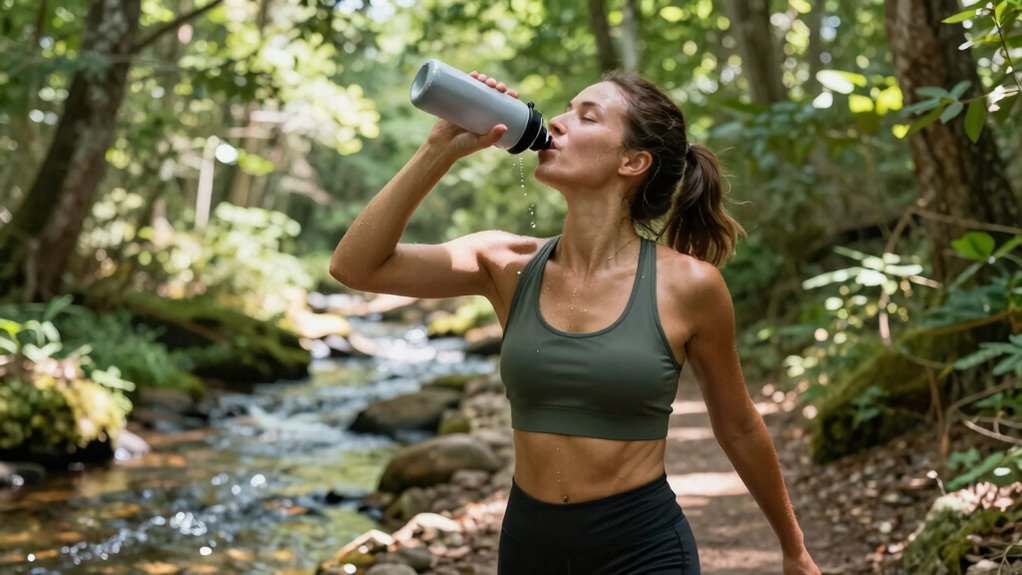
Staying hydrated and staying active might seem like separate health habits, but they actually work better when combined. When you move your body regularly, your muscles require more water to function properly. Drinking enough fluids helps maintain your electrolyte balance, which is essential for muscle contractions and nerve signaling. Without proper hydration, your muscles can become stiff and less responsive, increasing the risk of cramps or strains. By staying well-hydrated, you support the delicate balance of electrolytes like sodium, potassium, and magnesium that keep your muscles flexible and resilient, especially during physical activity.
Combined hydration and activity keep muscles flexible, responsive, and less prone to cramps and strains.
As you exercise, your body loses fluids through sweat, and if you don’t replenish those fluids, your electrolyte levels can drop. This imbalance hampers muscle flexibility, making your movements feel stiff or restricted. When your electrolyte balance is maintained through adequate hydration, your muscles stay supple and responsive. This means you can move more freely, perform exercises with better range of motion, and reduce your chances of injury. Hydration isn’t just about quenching thirst; it’s about fueling your muscles so they function optimally. When your muscles are well-hydrated, they respond more efficiently to your movements, whether you’re stretching, lifting, or running.
Moreover, staying hydrated supports the recovery process after movement. Proper fluid intake helps flush out metabolic waste products that build up during exercise, reducing soreness and aiding muscle repair. It also prevents dehydration-related fatigue, which can make even simple movements feel more strenuous. When you’re consistently drinking enough water, especially during and after activity, your body maintains a healthy electrolyte balance that promotes muscle flexibility. This flexibility isn’t just about preventing injury; it enhances your overall performance and makes physical activity more enjoyable. Electrolyte balance is a key component in maintaining muscle function during exercise and recovery. Additionally, maintaining adequate hydration levels can also help prevent muscle cramps, which are often caused by electrolyte imbalances or dehydration.
Furthermore, supporting your hydration levels aids in muscle function, which is essential for sustained activity and recovery. You can optimize the benefits by timing your hydration around your movement routines. Drinking water before, during, and after exercise ensures your muscles stay flexible and your electrolyte levels stay balanced. Incorporate electrolyte-rich beverages if you’re engaging in intense or prolonged workouts, as they help replenish minerals lost through sweat. Remember, hydration isn’t a one-time task; it’s a continuous process that supports your movement and overall health. When you combine movement with proper hydration, you create a synergy that keeps your muscles flexible, reduces injury risk, and boosts your energy levels, making your fitness journey more effective and sustainable. Proper hydration also helps maintain your body’s fluid balance, which is vital for overall health and optimal physical performance. Ensuring adequate hydration can also influence your muscle endurance, helping you sustain activity for longer periods.
As an affiliate, we earn on qualifying purchases.
Frequently Asked Questions
How Much Water Should I Drink During Exercise?
During exercise, you should aim to drink about 7 to 10 ounces of water every 10 to 20 minutes, depending on your sweat rate and workout intensity. Hydration strategies involve sipping water consistently, not chugging. Pay attention to water intake timing to prevent dehydration and maintain performance. If you’re exercising longer than an hour, consider adding electrolytes to replenish lost minerals and keep your energy steady.
Can Dehydration Affect My Mental Focus?
Dehydration can silently sabotage your mental clarity, making you feel foggy and unfocused just when you need sharpness. It impacts cognitive performance, causing lapses in concentration and sluggish thinking. Imagine losing your edge during a vital task—dehydration is the culprit lurking behind the scenes. Staying well-hydrated keeps your mind alert, ensuring that your mental clarity remains intact and your focus never wavers when it matters most.
What Types of Movement Improve Hydration Levels?
Engaging in movement types like brisk walking, cycling, or yoga can boost your hydration levels by stimulating circulation and encouraging fluid intake. Incorporate hydration strategies such as drinking water before, during, and after physical activity to stay properly hydrated. These movement types help improve hydration by promoting better absorption and distribution of fluids throughout your body, making it easier to maintain ideal hydration and enhancing overall health and focus.
Does Hydration Influence Recovery After Physical Activity?
Hydration greatly influences your recovery after physical activity. When you stay properly hydrated, you support electrolyte balance, which helps muscles recover faster and reduces soreness. Timing your hydration ensures your body replenishes fluids and electrolytes efficiently, speeding up recovery. If you ignore hydration, you risk dehydration and delayed healing. So, drink water at the right moments and maintain electrolyte balance to optimize your recovery process, leaving you ready for your next workout.
Are There Signs I’M Not Drinking Enough Water During Workouts?
You might notice signs like muscle cramps, dizziness, or dark urine, which suggest you’re not drinking enough water during workouts. These symptoms indicate disrupted electrolyte balance and poor hydration timing. To improve, drink small amounts regularly and include electrolyte-rich drinks if needed. Staying mindful of hydration cues helps maintain your performance and recovery, ensuring your body stays balanced and energized throughout your workout.
Conclusion
When you hydrate and move, it’s like fueling a vibrant garden—each sip of water awakens your body’s roots, while every step blooms energy and clarity. Imagine your muscles stretching, your mind clearing, all connected by this simple, powerful duo. Together, they turn your daily routine into a flowing river of essentiality. So, embrace hydration and movement—they’re your ticket to feeling refreshed, energized, and ready to conquer whatever comes next.