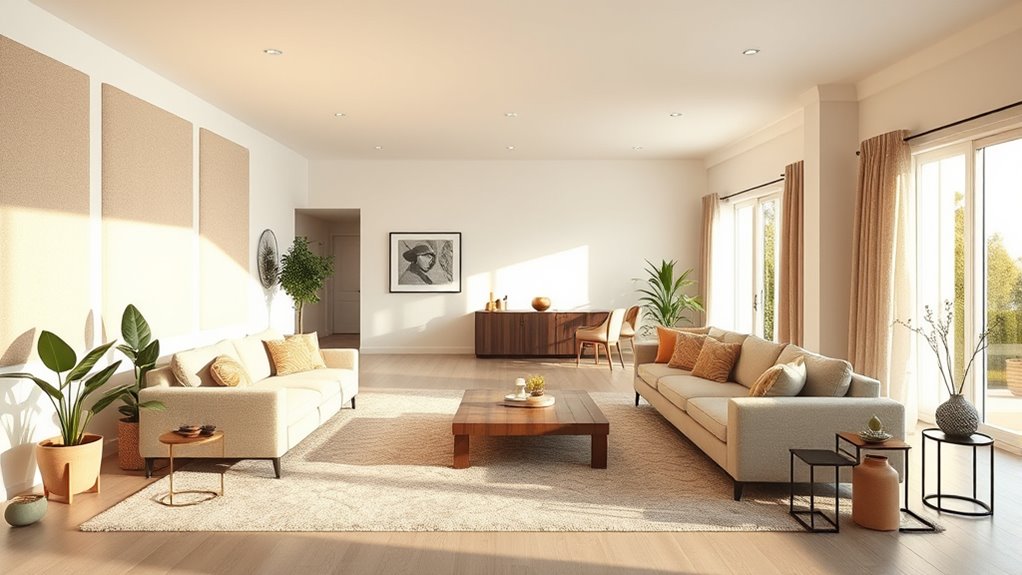

To improve acoustic comfort in your open-plan home, use sound-absorbing materials like acoustic panels, foam tiles, and soft furniture such as plush sofas and rugs. Strategically place these items around noisy areas and shared walls to cut down on sound transmission. Incorporate multi-layered curtains and decorative textiles to further dampen noise. Creating zones with furniture or small barriers helps contain sounds and maintain tranquility. Keep exploring for more practical tips to make your space quieter and more peaceful.
Key Takeaways
- Install targeted soundproofing materials like acoustic panels and foam tiles on shared walls and ceilings to reduce noise transmission.
- Incorporate soft furnishings such as plush sofas, rugs, and curtains to absorb sound and minimize echo.
- Use furniture placement and visual barriers like low shelves or consoles to define zones and contain noise within specific areas.
- Add plants and fabric wall hangings to naturally absorb sound and enhance the aesthetic of open spaces.
- Combine multiple strategies—soundproofing, furniture arrangement, and decor—to create a quieter, more tranquil open-plan environment.

Open-plan homes offer a spacious, modern feel, but they can also make noise travel easily from one area to another. If you’re finding that sounds from the kitchen, living room, or even conversations disrupt your peace, there are practical ways to enhance your acoustic comfort. One effective approach is to incorporate soundproofing materials into your space. These materials, such as acoustic panels, foam tiles, or even specialized curtains, absorb sound waves and reduce echo. Installing soundproofing panels on shared walls or ceilings can markedly cut down on noise transmission, helping you create quieter zones within your open layout. You don’t need to cover every surface; strategic placement of these materials around noisy areas makes a noticeable difference.
Another vital step is to rethink your furniture arrangement. Large, plush sofas, armchairs, and soft rugs do more than add style—they help dampen sound. Positioning furniture thoughtfully can break up sound waves and prevent them from bouncing around the room. For example, placing a sofa or bookshelf against a shared wall can act as a buffer, absorbing and deflecting noise. Likewise, using multi-layered curtains on windows or even in front of open doorways can further block sound from passing through. Incorporate different textures and materials into your decor to enhance sound absorption. Soft furnishings like cushions, throws, and fabric wall hangings can transform a noisy space into a more tranquil sanctuary. Additionally, selecting sound-absorbing materials for specific areas can further improve your acoustic environment.
You should also consider creating designated zones within your open-plan area. Use furniture placement to visually and acoustically define spaces—like a dining area separated from the lounging space by a console table or a low bookshelf. These barriers help contain noise within specific zones and prevent it from spreading uncontrollably. Additionally, adding plants not only brings life to your space but also helps absorb sound, especially when placed near noisy areas or along walls. Combining strategic furniture arrangement with soundproofing materials maximizes your efforts, making your open-plan home more comfortable and less chaotic.
Frequently Asked Questions
How Do I Choose the Best Soundproofing Materials for My Home?
To choose the best soundproofing materials, consider their material effectiveness and your installation options. Look for dense, mass-loaded options like drywall or acoustic panels that absorb sound well. Think about ease of installation—some materials, like foam or mineral wool, are simple to install yourself, while others may need professional help. Balance your budget, space, and noise reduction needs to select the right materials for your open-plan home.
Can Furniture Placement Improve Acoustic Comfort Effectively?
Yes, furniture placement can notably improve acoustic comfort. By carefully arranging furniture, you create room zones that help block and absorb sound. Use large pieces like sofas and bookshelves as barriers between noisy areas and quiet spaces. Positioning soft furnishings strategically, such as rugs and curtains, further dampens sound. This thoughtful furniture arrangement reduces noise transmission and enhances overall comfort, making your open-plan home more peaceful and enjoyable.
What Are Affordable Ways to Reduce Noise Without Major Renovations?
Did you know that simple DIY solutions can cut noise levels by up to 50%? You can use decor strategies like hanging thick curtains, adding rugs, or installing fabric wall hangings to absorb sound. Rearranging furniture to create barriers also helps. These affordable tips don’t require major renovations and are easy to implement, making your open-plan home quieter and more comfortable without breaking the bank.
How Does Window Design Impact Noise Levels in Open-Plan Spaces?
Your window design considerably impacts noise levels in open-plan spaces. Opt for windows with soundproof glass made from durable materials like laminated glass. Choose frame designs that include thick, well-insulated materials such as uPVC or timber, which help block noise. Double or triple-pane windows with tight seals can reduce exterior sounds effectively. Properly designed window installations also minimize gaps, ensuring less noise enters your space, improving overall acoustic comfort.
Are There Technological Solutions to Enhance Acoustic Comfort in Open Homes?
Did you know that smart sound systems can reduce noise levels by up to 30%? You can enhance acoustic comfort in open homes with these technologies. Smart sound systems allow you to customize sound zones, focusing audio where you need it and dampening noise elsewhere. Acoustic zoning helps maintain a peaceful environment, making your open-plan space more comfortable and inviting. Embrace these solutions to enjoy quieter, more functional living areas.
Conclusion
Now that you know the secrets to reducing noise, imagine your open-plan home transforming into a peaceful sanctuary. Quiet moments become rare treasures as sound barriers and clever design work their magic. But what if the next step could unleash complete serenity? Stay tuned—there’s more you can do to turn your bustling space into a haven of calm. The solution might be closer than you think, waiting just beyond your current reach.