Maintaining indoor humidity between 40% and 60% keeps you comfortable and protects your home. When humidity is within this range, it helps reduce allergens, prevent mold growth, and prevent damage to wood furniture and floors. Too dry or too damp can cause health issues and structural problems. For more tips on achieving the perfect balance and safeguarding your living space, you’ll find helpful insights below.

Get decor and gifts delivered free — and shop member deals
- Fast, free delivery on millions of items
- Access to Prime Big Deal Days deals on October 6–7
- Prime Video, Amazon Music and more included
Key Takeaways
- Maintain indoor humidity between 40% and 60% for optimal comfort and health.
- Proper humidity levels prevent mold growth, dust mites, and structural damage.
- Use a hygrometer regularly to monitor and adjust humidity with humidifiers or dehumidifiers.
- Adequate ventilation and filtration improve air quality and help regulate moisture levels.
- Balancing humidity supports respiratory health, preserves belongings, and enhances overall home safety.

Have you ever wondered what the perfect indoor humidity level is for comfort and health? Achieving the right balance isn’t just about feeling comfortable; it’s also about maintaining good indoor air quality and protecting your home. Proper humidity control plays an essential role in creating an environment that’s both pleasant and healthy. When the air is too dry, you might notice static electricity, dry skin, or irritated sinuses. Conversely, overly humid conditions can foster mold growth, dust mites, and other allergens, which can compromise your respiratory health. Striking the ideal humidity level helps prevent these issues and promotes a healthier living space.
Generally, the recommended indoor humidity range is between 40% and 60%. Staying within this range supports excellent indoor air quality, reducing airborne allergens and irritants. When humidity levels are too low, your home’s air becomes dry, which can lead to discomfort and increased susceptibility to colds and respiratory infections. Dry air also causes wood furniture, flooring, and musical instruments to crack or warp over time. On the other hand, high humidity creates a damp environment that encourages mold and mildew growth, which can trigger allergies and asthma symptoms. It can also make your home feel sticky and uncomfortable, especially during warmer months.
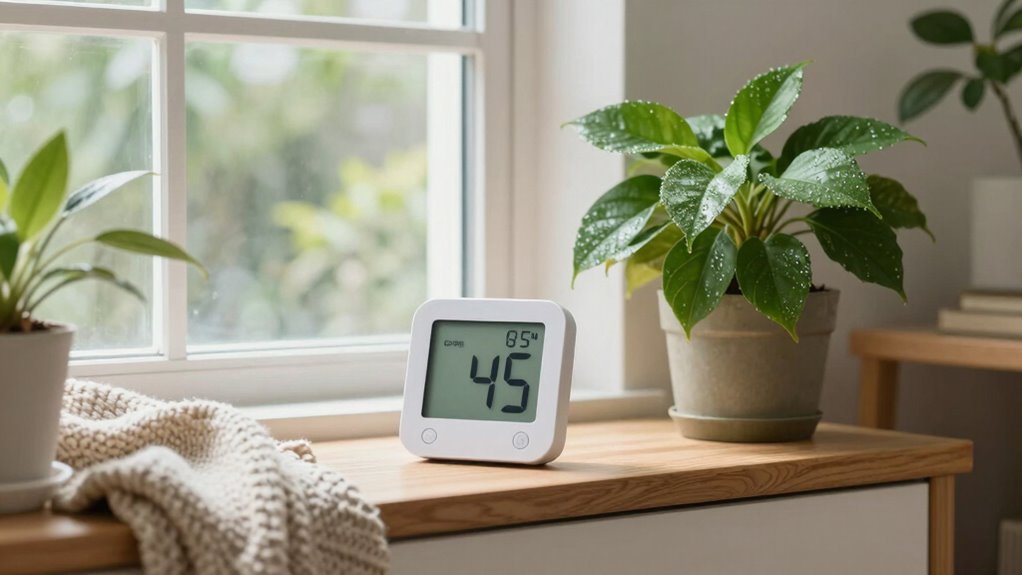
To maintain this ideal range, you might want to use a hygrometer—an affordable device that measures humidity. Regularly monitoring indoor air quality allows you to adjust your approach as needed. For example, during winter months when heating systems tend to dry out the air, running a humidifier can add moisture back into the environment. Conversely, during humid summer days, using a dehumidifier helps remove excess moisture, preventing mold and improving air quality. Proper ventilation also plays a role; opening windows or using exhaust fans can help regulate humidity levels and bring in fresh air, further enhancing indoor air quality. Additionally, understanding the importance of filtration systems can further improve air quality by removing airborne particles.
Controlling humidity isn’t just about comfort—it’s about creating a healthier and more durable home. Maintaining the right indoor humidity level supports your respiratory health, preserves your belongings, and prevents structural damage caused by excess moisture. It’s a simple yet effective way to improve your overall quality of life. By paying attention to indoor air quality and actively managing humidity, you’ll breathe easier, sleep better, and enjoy a more comfortable living space all year round. Ultimately, finding that sweet spot between dryness and dampness ensures your home remains a safe, healthy sanctuary.
digital hygrometer for indoor humidity
As an affiliate, we earn on qualifying purchases.
As an affiliate, we earn on qualifying purchases.
Frequently Asked Questions
How Does Indoor Humidity Affect Allergy Symptoms?
Higher indoor humidity levels can worsen allergy symptoms because they create a perfect environment for allergy triggers like mold, dust mites, and mildew to thrive. When humidity is too low, your nasal passages dry out, making you more sensitive to airborne allergens. Maintaining balanced humidity levels helps reduce these triggers, easing allergy symptoms and creating a more comfortable indoor environment. Keep humidity within the recommended range for ideal relief.
Can High Humidity Cause Mold Growth Indoors?
Yes, high humidity can cause mold growth indoors if you don’t practice proper humidity control. Mold prevention relies on keeping indoor humidity levels between 30-50%, preventing moisture buildup that promotes mold. Even if it seems harmless, excess humidity creates the perfect environment for mold to thrive. To keep your home safe, monitor humidity levels regularly and use dehumidifiers or vents to maintain ideal moisture balance.
What Are the Signs of Low Indoor Humidity?
You might notice dry skin, chapped lips, or irritated eyes, which are signs of low indoor humidity. Your home could feel stuffy or you might experience static electricity shocks. Using a humidifier benefits you by increasing moisture, easing discomfort. Conversely, a dehumidifier helps prevent excess dryness and maintains balance. If these signs persist, adjusting humidity levels with proper devices can improve your comfort and protect your home from issues related to low humidity.
How Do I Measure Indoor Humidity Accurately?
Imagine your home’s air as a delicate dance, and you’re the conductor. To measure indoor humidity accurately, use a reliable hygrometer and guarantee proper calibration regularly to keep readings precise. Place the humidity sensor in a central, unaffected spot away from windows or vents. This way, you’ll get trustworthy measurements, helping you maintain comfortable, balanced indoor air that protects your home’s health and integrity.
What Are Safe Humidity Levels for Pets Indoors?
You should keep indoor humidity levels between 30-50% to make certain your pets stay comfortable and healthy. Proper humidity levels help reduce pet dander, which can trigger allergies, and prevent dry skin or respiratory issues. Use a hygrometer to monitor humidity levels accurately, especially if your pets are sensitive. Maintaining this range creates a safe, cozy environment for your pets while protecting your home from excess moisture or dryness.
Conclusion
Maintaining the right humidity is like tuning a musical instrument—you want everything in perfect harmony. When your indoor air stays between 30-50%, you’re creating a cozy haven that wards off dryness and dampness alike. Think of it as wrapping your home in a gentle, invisible blanket that keeps you comfortable and your space protected. Keep an eye on those levels, and you’ll enjoy a symphony of comfort, health, and home sweet home all year round.
Evergreen bestsellers Picks
bestsellers
As an affiliate, we earn on qualifying purchases.