To achieve ultimate comfort, keep your indoor humidity between 30% and 50%. This balance prevents mold growth, allergies, and dry skin, while also protecting your home from excess moisture. Use reliable hygrometers to monitor levels accurately and adjust with humidifiers or dehumidifiers as needed. Avoid common pitfalls like over- or under-using devices or neglecting regular maintenance. Continue exploring these secrets to create a perfect, healthy indoor environment that feels just right.

Get decor and gifts delivered free — and shop member deals
- Fast, free delivery on millions of items
- Access to Prime Big Deal Days deals on October 6–7
- Prime Video, Amazon Music and more included
Key Takeaways
- Maintain indoor humidity between 30% and 50% for optimal comfort and health.
- Use reliable hygrometers to monitor moisture levels accurately.
- Employ humidifiers or dehumidifiers to adjust humidity based on seasonal needs.
- Position sensors away from heat sources and vents for consistent readings.
- Regularly calibrate devices and perform maintenance to prevent mold and dry air issues.
Understanding the Ideal Humidity Range for Your Home
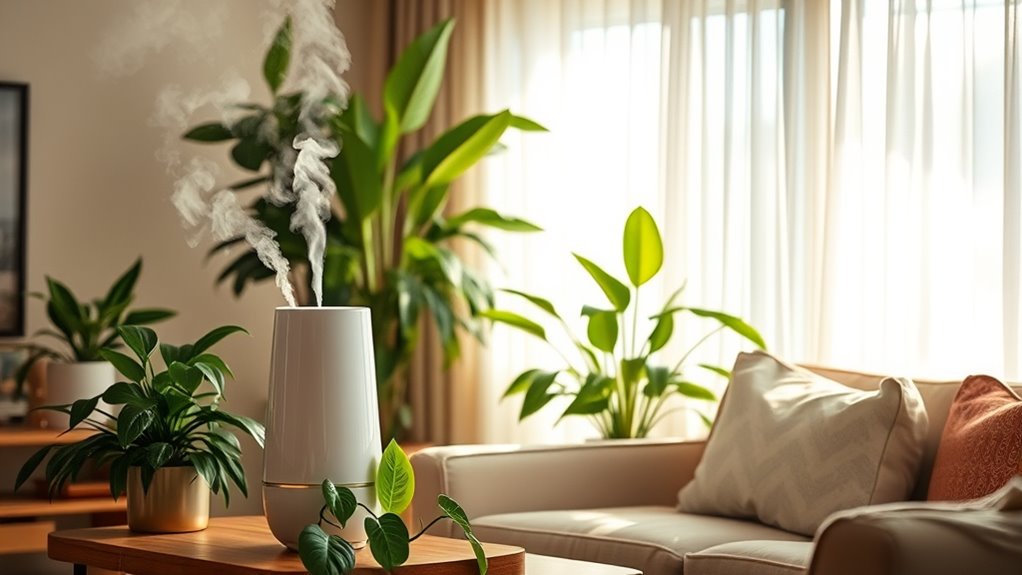
Maintaining the right humidity level in your home is essential for comfort and health. To do this effectively, you should use humidity sensors to monitor indoor moisture levels accurately. The ideal range is typically between 30% and 50%, preventing issues like mold growth or dry skin. Installing vapor barriers can also help regulate humidity, especially in basements or crawl spaces, by preventing moisture seepage that skews humidity readings. Regularly checking sensors ensures you stay within the best range. If humidity levels are too high, consider dehumidifiers; if too low, use humidifiers. Keeping humidity balanced not only improves comfort but also protects your home’s structure and belongings from moisture-related problems. Staying vigilant with sensors and vapor barriers makes maintaining the perfect indoor humidity straightforward. Additionally, understanding the water content of your environment can help you better manage indoor moisture levels.
The Impact of Humidity Levels on Health and Comfort
Humidities that are too high or too low can greatly affect your health and comfort. When humidity levels are too high, your indoor air quality drops, making it easier for mold to develop and aggravate allergies or asthma. Excess moisture promotes mold prevention issues and can cause respiratory problems. On the other hand, low humidity can dry out your skin, irritate your throat, and increase susceptibility to colds. Maintaining the right humidity helps you breathe easier and improves overall comfort. Proper humidity levels also support better air quality by reducing airborne dust and allergens. Additionally, vacuum cleaner performance metrics such as filtration systems can help remove dust and allergens more effectively from the air. By keeping humidity balanced, you create a healthier environment that minimizes mold growth and enhances your well-being, ensuring you stay comfortable and protected indoors.
How to Measure Indoor Humidity Accurately
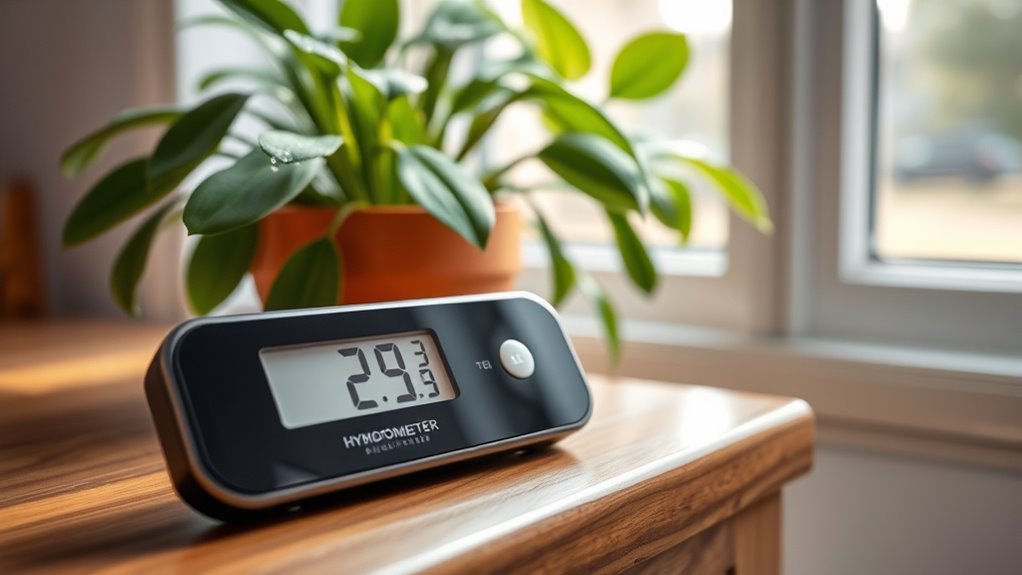
To guarantee you’re accurately measuring indoor humidity, start by selecting a reliable device such as a hygrometer. Proper hygrometer calibration is essential—check your device against a known humidity source periodically to verify accuracy. Once calibrated, focus on humidity sensor placement; position the hygrometer away from windows, vents, or direct sunlight, ideally at room height where you spend most of your time. Avoid placing it near heating or cooling sources, as these can skew readings. Consistent placement helps you monitor true humidity levels. Regular calibration and strategic sensor placement ensure your readings are precise, enabling you to maintain ideal indoor humidity comfortably and effectively. Understanding industry trends can help you stay informed about the latest tools and best practices for accurate humidity measurement. Accurate measurements are the foundation for healthy, balanced indoor air quality.
Tips for Adjusting and Maintaining Optimal Humidity
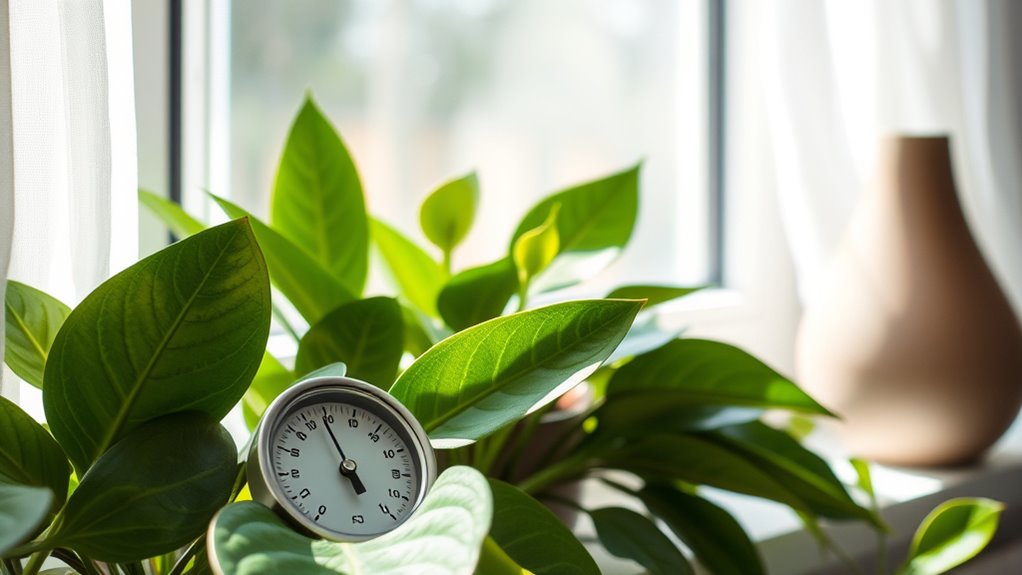
Once you’ve calibrated your hygrometer and placed it correctly, the next step is actively regulating your environment to keep indoor humidity within the ideal range of 40-60%. Regular humidifier maintenance is essential; clean filters and tanks prevent mold and bacteria buildup, ensuring healthy moisture levels. When using a humidifier, run it during dry periods or in rooms prone to low humidity. For excess moisture, use a dehumidifier and ensure proper placement—avoid corners or areas with poor airflow—so it efficiently reduces humidity. Keep doors open to promote airflow, and monitor humidity levels regularly. Small adjustments, like tweaking humidifier settings or repositioning your dehumidifier, help maintain consistent comfort and prevent issues caused by fluctuating moisture levels. Utilizing air quality indicators can further assist in maintaining optimal indoor conditions.
Common Mistakes That Disrupt Indoor Humidity Balance
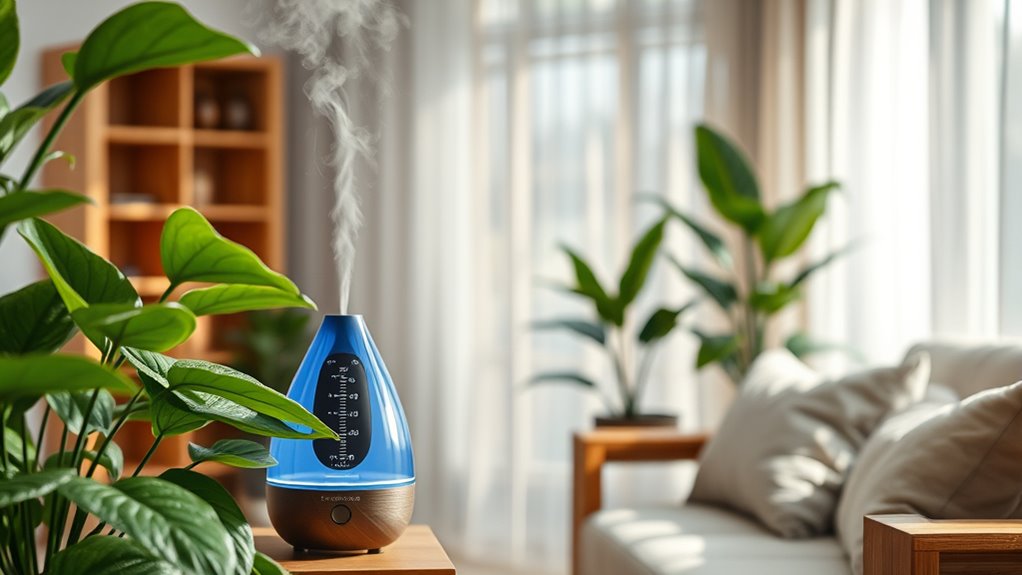
Many common mistakes can throw off your indoor humidity balance, making it harder to stay comfortable. One mistake is neglecting humidifier maintenance; dirty or improperly cleaned units can distribute mold spores, risking mold growth and poor air quality. Overusing or setting the humidifier too high can lead to excessive moisture, increasing mold prevention challenges. Conversely, running it too little leaves the air too dry, causing discomfort and static. Failing to monitor humidity levels regularly means you might not catch fluctuations early. Additionally, sealing windows and doors tightly without proper ventilation can trap excess moisture or dry air inside. To keep things balanced, clean your humidifier regularly and watch humidity levels carefully. Proper humidifier maintenance and vigilant mold prevention are essential for maintaining the perfect indoor environment. Understanding projector contrast ratios can also help you create a comfortable viewing space that minimizes glare and enhances visual clarity.
Frequently Asked Questions
How Does Seasonal Weather Affect Indoor Humidity Levels?
Seasonal fluctuations greatly influence your indoor humidity levels. During winter, cold outdoor air exchange lowers humidity inside, making it dry. Conversely, in summer, higher outdoor humidity can increase indoor moisture if your home isn’t sealed properly. You need to adjust your humidifier or dehumidifier accordingly to maintain comfort. Being aware of seasonal changes helps you control indoor humidity effectively, ensuring a cozy environment year-round despite the weather outside.
Can Indoor Plants Help Regulate Humidity Naturally?
Think of indoor plants as natural humidity heroes. They benefit your space by releasing moisture through transpiration, acting like tiny humidifiers. Yes, plants help with natural regulation, making your environment more comfortable and balanced. When you include greenery in your home, you’re inviting nature’s own air purifiers and moisture managers to work alongside you, creating a healthier, more harmonious atmosphere that responds to your needs just like a living thermostat.
What Are the Best Tools for Long-Term Humidity Monitoring?
To monitor humidity long-term, you should invest in reliable tools like smart humidity sensors and traditional hygrometers. Smart sensors connect to your devices, allowing real-time monitoring and alerts, while hygrometer maintenance guarantees accuracy over time. Regularly calibrate your hygrometers and keep your smart sensors updated. This way, you’ll maintain suitable indoor humidity, promoting comfort and preventing issues like mold or dryness.
How Do HVAC Systems Influence Indoor Humidity Control?
You rely on your HVAC system to control indoor humidity effectively. It cools or heats air while managing moisture levels, especially when paired with dehumidifier maintenance and humidifier installation. Regularly maintaining these components guarantees peak performance, preventing excess humidity or dryness. Your system balances comfort and air quality, reducing mold growth and static. Properly integrated, your HVAC keeps indoor humidity at ideal levels, making your space more comfortable year-round.
Are There Specific Humidity Levels for Different Rooms or Zones?
Think of your home as a well-orchestrated symphony, with each room playing its own tune. You should set specific humidity levels for different rooms or zones to keep everything in harmony. For example, bedrooms benefit from 40-50% humidity for comfort, while kitchens might need a bit more. Adjust humidity zones accordingly, ensuring each room maintains room-specific levels for ideal comfort and air quality.
Conclusion
By keeping your home’s humidity in the sweet spot, you create an environment that feels like a cozy hug—comfortable and welcoming. Regularly measure and tweak the levels to prevent them from drifting like a boat on choppy waters. When you master this balance, you’ll breathe easier, sleep better, and enjoy a healthier home. Think of humidity as the secret ingredient in your comfort recipe—just the right touch makes all the difference.
Fall Picks
fall essentials
As an affiliate, we earn on qualifying purchases.