
The science of scent in aromatherapy shows how essential oils affect your mood and environment. When you use diffusers properly—like choosing the right type, adding a few drops, and placing them thoughtfully—you can create a calming or energizing atmosphere. Diffusion techniques influence how scents disperse throughout your space, helping you feel more relaxed or focused. By understanding these methods, you can turn your home into a cozy sanctuary. Keep exploring to discover more ways to harness the power of scent.

Get decor and gifts delivered free — and shop member deals
- Fast, free delivery on millions of items
- Access to Prime Big Deal Days deals on October 6–7
- Prime Video, Amazon Music and more included
Key Takeaways
- Aromatherapy uses essential oils to influence mood and create a calming environment through scent stimulation.
- Diffusers disperse essential oils into the air, enhancing scent diffusion and emotional well-being.
- Ultrasonic, nebulizing, and heat diffusers offer different methods to optimize scent delivery and home comfort.
- Proper oil quantity, diffuser placement, and maintenance ensure effective and consistent aromatherapy benefits.
- The science of scent impacts brain chemistry and emotional states, promoting relaxation, focus, or sleep.
Have you ever wondered how a simple scent can transform your home into a calming sanctuary? The answer lies in the power of aromatherapy, which uses essential oils to influence your mood and create a soothing environment. When you understand how to harness these natural extracts, you can turn your living space into a haven of relaxation and comfort. One of the most effective ways to do this is through diffuser techniques, which allow you to disperse essential oils into the air in a controlled and pleasant manner.
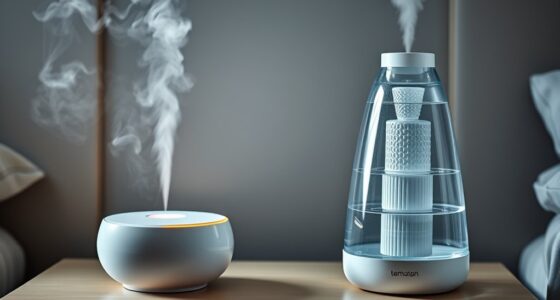
Diffusers are designed to maximize the benefits of essential oils, whether you prefer ultrasonic, nebulizing, or heat diffusers. Ultrasonic diffusers work by breaking down essential oils into tiny particles using ultrasonic vibrations, releasing a fine mist that spreads throughout your room. Nebulizing diffusers, on the other hand, use pressurized air to atomize the oils directly from their bottles, providing a more potent and immediate scent experience. Heat diffusers gently warm the oils, causing them to evaporate and fill your space with their fragrance. Whichever type you choose, mastering diffuser techniques involves understanding the right amount of essential oils to use, the ideal duration for diffusion, and how to maintain your device for longevity.
Diffuser types include ultrasonic, nebulizing, and heat, each offering unique scent diffusion methods and benefits.
To begin, add a few drops of essential oils—typically 3 to 5—depending on the size of your diffuser and the intensity of scent you desire. For a calming atmosphere, lavender, chamomile, or sandalwood are popular choices. For energizing vibes, opt for citrus oils like lemon or orange, or invigorating herbs like eucalyptus. When using your diffuser, start with a lower setting and gradually increase until you reach your preferred scent strength. It’s best to diffuse in intervals, such as 30 minutes on and 30 minutes off, to prevent scent fatigue and ensure a steady, soothing aroma without overwhelming your senses.
Practicing diffuser techniques also involves positioning your diffuser strategically within your space. Place it in a central location but away from direct sunlight or drafts, which can alter the diffusion process. Keep your diffuser clean by regularly rinsing it with water and wiping away any residue, ensuring the purest scent and the longevity of your device. Additionally, understanding the importance of proper essential oil quality can greatly influence the effectiveness of your aromatherapy experience. Experimenting with different essential oils and diffuser settings allows you to customize your environment, creating a personalized sanctuary that promotes relaxation, focus, or restful sleep. When you master diffuser techniques, you’re not just filling your home with pleasant scents—you’re actively shaping the atmosphere and your emotional well-being through the science of scent.
ultrasonic essential oil diffuser
As an affiliate, we earn on qualifying purchases.
As an affiliate, we earn on qualifying purchases.
Frequently Asked Questions
Can Aromatherapy Replace Traditional Air Purification Methods?
Aromatherapy can’t substitute traditional air purification methods, but it can complement them. While scent effectiveness can improve air quality by adding a pleasant aroma, it doesn’t remove airborne pollutants or allergens. You should rely on air purifiers for real filtration, and use aromatherapy to enhance your environment’s ambiance. Combining both ensures better air quality and a more calming, inviting home atmosphere.
Are There Any Scents Suitable for Allergy Sufferers?
If you’re allergy-prone, lavender might be a good natural scent alternative. For example, a hypoallergenic option like lavender is often well-tolerated by allergy sufferers, providing calming benefits without triggering symptoms. Look for natural scent alternatives specifically labeled as hypoallergenic to guarantee they won’t irritate your allergies. Always test a small amount first, and choose products free from synthetic fragrances and harsh chemicals for a safer, soothing aromatherapy experience.
How Long Do Essential Oils Typically Last in Diffusers?
Essential oils typically last in diffusers for about 4 to 6 hours, depending on the oil’s quality and the diffuser’s settings. Oil longevity varies with the type of oil and diffuser maintenance, so you might need to refill or clean it regularly. Keep in mind that the diffuser’s lifespan can be extended by using high-quality oils and following the manufacturer’s instructions for proper use and cleaning.
Is It Safe to Use Multiple Scents Simultaneously?
Think of scent blending like a symphony—when done carefully, it creates harmony, but too many notes can cause an aroma overload. It’s generally safe to use multiple scents simultaneously, but you should be cautious. Start with small amounts, and make sure the fragrances complement each other. If you notice headaches or dizziness, it’s a sign of scent overload. Always trust your senses and adjust accordingly to keep your space both safe and soothing.
Can Children or Pets Be Affected by Aromatherapy?
Children and pets can be affected by aromatherapy, so you should prioritize child safety and pet safety. Keep diffusers out of their reach, use only child-safe essential oils, and avoid strong or irritating scents. Always dilute oils properly and consult with a healthcare professional if you have concerns. Monitoring their reactions helps guarantee a safe environment, making aromatherapy a soothing experience rather than a hazard.
Conclusion
Now that you know how different scents can transform your space, it’s time to embrace aromatherapy as your secret weapon for home comfort. Just like a trusty alchemist of old, you can craft your own calming or energizing blends to suit every mood. So go ahead, light that lavender candle or diffuse some citrus—your sanctuary awaits, no matter if you’re in a castle or a cozy cottage. Let scent be your modern-day potion for peace.
Fall Picks
fall essentials
As an affiliate, we earn on qualifying purchases.