
Leak detectors only make sense if you understand your facility’s risk zones. Proper placement in high-risk areas guarantees you catch leaks early and avoid costly damages or environmental harm. Without identifying these zones, you risk missing leaks where they matter most, increasing safety and legal risks. Strategic detector positioning maximizes your investment, keeps your operations safe, and saves money long-term. Want to discover how to identify your risk zones effectively? Keep going to find out more.
Key Takeaways
- Proper placement of leak detectors targets high-risk zones, ensuring early detection and preventing environmental or operational damage.
- Knowing risk zones helps optimize resource allocation, reducing unnecessary detector deployment in low-risk areas.
- Strategic placement enhances compliance with environmental regulations and minimizes legal liabilities.
- Focusing on high-risk zones maximizes cost-benefit by preventing costly leaks and reducing maintenance expenses.
- Continuous assessment of risk zones ensures leak detection remains effective amid evolving facility conditions.
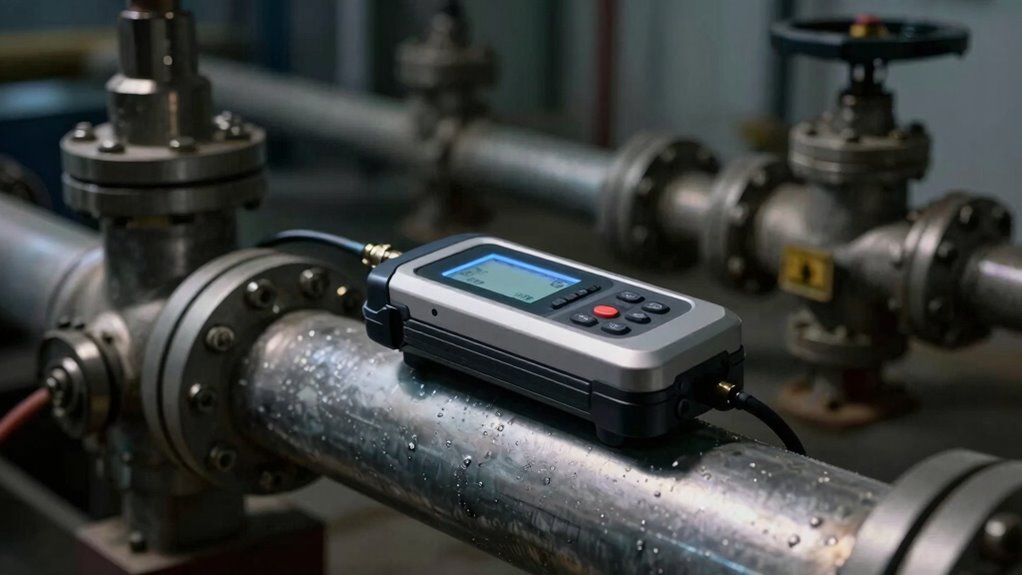
Knowing where to place your leak detectors is essential because these devices only protect what they monitor. If you put them in the wrong spots, you risk missing leaks that could cause significant damage or environmental harm. To maximize their effectiveness, you need to identify the high-risk zones within your facility or infrastructure. These zones are the areas where leaks are most likely to occur or where a leak could have the most serious consequences. By focusing on these areas, you guarantee your leak detectors provide the best protection and cost efficiency.
Proper placement of leak detectors ensures maximum protection and cost efficiency by targeting high-risk zones.
Understanding the environmental impact of leaks is fundamental when selecting where to install detectors. Leaks involving hazardous substances, like natural gas or chemicals, can pollute air, water, and soil, harming ecosystems and public health. If you ignore the risk zones, you might overlook potential leak points that, if left unchecked, could lead to environmental disasters. Proper placement helps prevent these incidents, safeguarding the environment and complying with regulations, which can also reduce fines and legal liabilities. Recognizing risk zones and their characteristics is crucial for effective leak detection. Additionally, knowing the potential consequences of leaks in different areas can guide more strategic placement of detectors. Being aware of the environmental impact of leaks allows for more informed decision-making regarding detector placement.
When performing a cost-benefit analysis, you need to weigh the expense of installing and maintaining leak detectors against the potential costs of undetected leaks. These costs include equipment damage, production downtime, environmental cleanup, legal penalties, and reputational harm. By strategically placing detectors in identified risk zones, you minimize the chances of costly leaks going unnoticed. This targeted approach guarantees that your investment in leak detection yields maximum return, preventing small leaks from escalating into costly disasters.
You should also consider the specific risks associated with different zones. For example, areas with complex piping, high-pressure systems, or stored hazardous materials require more vigilant monitoring. Placing detectors in these zones can quickly identify leaks, reducing environmental impact and avoiding costly cleanup operations. Conversely, areas with low risk might not need the same level of monitoring, allowing you to allocate resources more effectively. Recognizing high-risk zones and their characteristics is crucial for effective leak detection. Additionally, continuous monitoring and regular assessments help adapt your strategy as your facility evolves, ensuring your system remains effective over time. Being proactive in zone assessment can lead to better resource allocation and improved safety outcomes.
Ultimately, knowing where to install leak detectors is about understanding your unique risk profile. By focusing on the zones with the highest likelihood of leaks and the greatest potential for damage, you optimize both safety and economic efficiency. The right placement not only protects your facility but also minimizes environmental harm and enhances your overall cost-benefit analysis. When you thoroughly assess your risk zones, you guarantee your leak detection system works smarter, not harder, delivering peace of mind and long-term savings.

PT520A Natural Gas Detector, Gas Leak Detector with 17-Inch Gooseneck, Locating The Source Like Propane, Methane, and Butane for Home and RV (Includes Battery x3) – Orange
- Effective Gas Leak Detection: Detects methane, propane, and more
- Flexible 17-Inch Gooseneck: Access hard-to-reach areas easily
- Fast Response Time: Responds in 0.5 seconds
As an affiliate, we earn on qualifying purchases.
As an affiliate, we earn on qualifying purchases.
Frequently Asked Questions
How Often Should Leak Detectors Be Tested for Accuracy?
You should test your leak detectors monthly to guarantee accuracy. Regular testing helps prevent false alarms, which can cause unnecessary stress or shutdowns. Check the power sources during each test to confirm they’re functioning properly, especially if your detectors run on batteries or alternative power. Consistent testing keeps your system reliable, so you’re always prepared to catch leaks early and avoid costly damage or safety hazards.
Are There Specific Leak Detectors for Different Types of Fluids?
Yes, there are fluid-specific sensors designed for different types of fluids. These sensors consider chemical compatibility, guaranteeing the detector’s materials won’t degrade or give false readings when exposed to particular fluids. By choosing leak detectors tailored to the specific fluid, you improve detection accuracy and safety. Always verify that the sensor’s chemical compatibility matches the fluid you’re monitoring to prevent malfunctions and ensure reliable leak detection.
Can Leak Detectors Be Integrated With Home Automation Systems?
Yes, leak detectors can be integrated with your home automation systems. With smart integration, you can receive real-time alerts and automate responses, like shutting off water valves. However, compatibility concerns may arise depending on your existing system’s platform. Make certain to choose leak detectors compatible with your home automation setup to guarantee seamless functioning. This integration helps you monitor risk zones more effectively, providing peace of mind and quick action during leaks.
What Is the Typical Lifespan of a Leak Detector?
Most leak detectors last about 3 to 5 years. You’ll need to regularly check the sensor calibration to guarantee accuracy, especially as the device ages. Battery replacement is vital, as a dead battery can render your detector useless. Proper maintenance extends its lifespan, helping you avoid costly water damage. Keep an eye on performance and replace the device when calibration drifts or batteries no longer hold a charge.
How Do Environmental Factors Affect Leak Detector Performance?
Environmental factors substantially influence leak detector performance by affecting sensor sensitivity. For example, humidity, temperature fluctuations, and dust can cause false alarms or reduce accuracy. High humidity might dampen sensor response, while extreme temperatures can impair electronics. To guarantee reliable detection, you need to take into account the environmental impact and regularly calibrate your sensors. Proper placement away from environmental disturbances helps maintain ideal performance and minimizes false positives.
Conclusion
Remember, leak detectors only work effectively if you understand your risk zones. Some might think they’re unnecessary or overly cautious, but ignoring risk areas can lead to costly damages. By identifying where leaks are most likely, you guarantee your detector provides real protection. Don’t rely on the device alone—know your environment. Combining awareness with proper placement makes all the difference. Ultimately, understanding your risks maximizes safety and saves you money in the long run.