
Clutter isn’t just a visual annoyance; it can hide hazards and cause accidents, making your home unsafe for your family. Items left out can be knocked over or cause trips, slips, or falls, especially in high-traffic areas. During emergencies, clutter can block exits or slow evacuations, increasing danger. Addressing clutter with proper storage keeps your home safer and reduces risks for everyone. Keep going to discover simple ways to reframe clutter as a key safety concern.
Key Takeaways
- Clutter can conceal hazards, increasing the risk of trips, slips, and falls in the home.
- Unorganized items can block exits, hindering quick evacuation during emergencies.
- Falling objects or unstable stacks pose injury risks, especially to children and elderly family members.
- Regular clutter management maintains a safer environment by preventing accident-prone conditions.
- Viewing clutter as a safety concern encourages proactive storage solutions, ensuring long-term home safety.
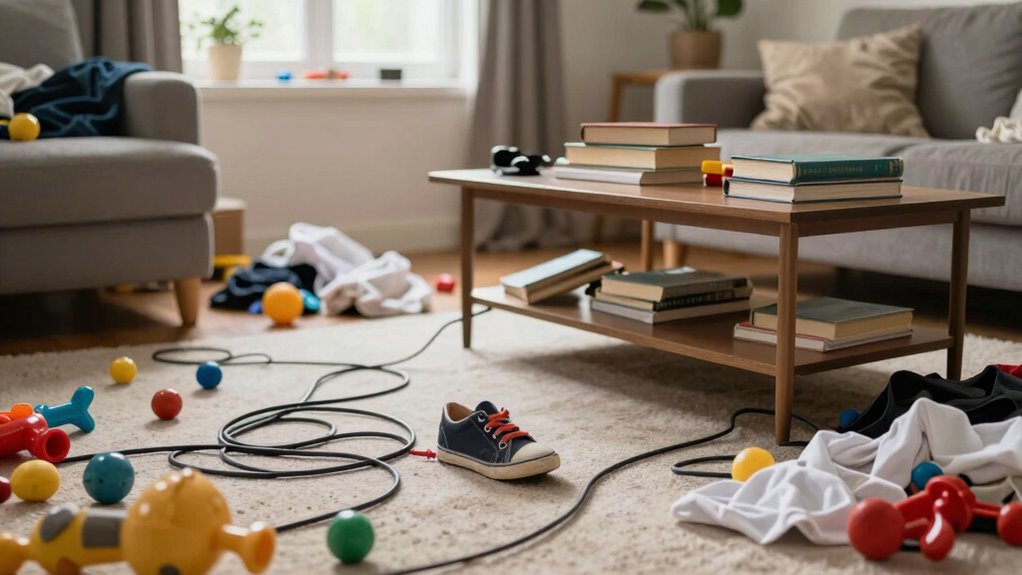
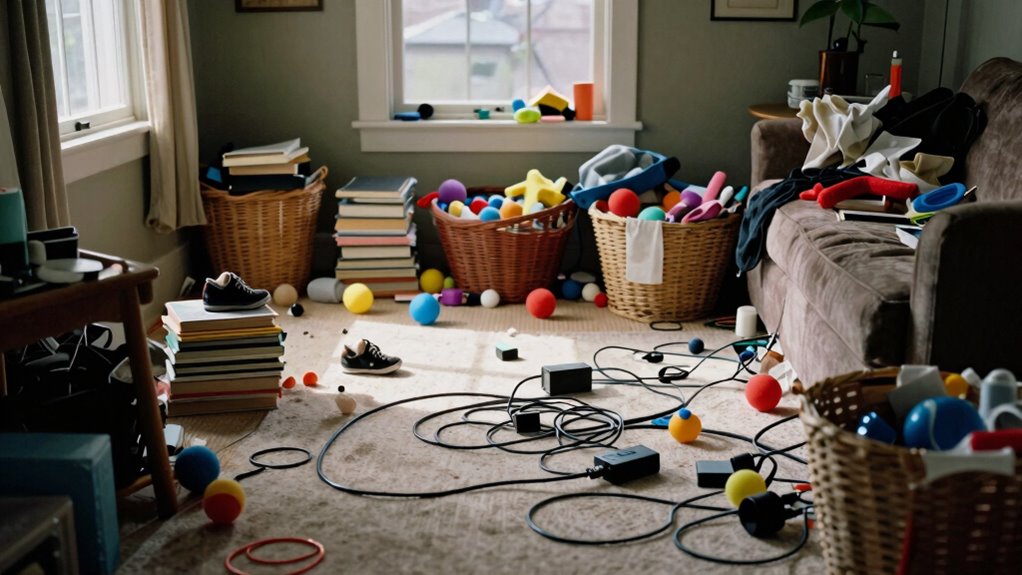
While clutter might seem like a minor inconvenience, it can pose serious safety risks for your family. The cluttered mess you see daily isn’t just an eyesore—it can hide potential hazards and make your home unsafe. When belongings are scattered everywhere, you increase the chance of trips, slips, and falls, especially in high-traffic areas like hallways, kitchens, and staircases. These accidents can lead to injuries that are entirely preventable. More importantly, clutter can block exits and pathways, turning your home into a trap during emergencies. In a fire or natural disaster, clutter can hinder quick evacuations, making it harder for everyone to escape safely.
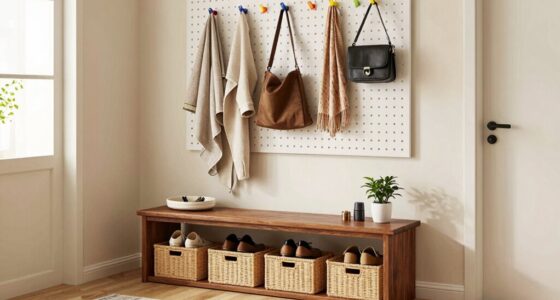
To combat these risks, you need effective storage solutions that help you organize your space. Proper storage not only clears the clutter but also guarantees that items are accessible when needed. Using shelves, bins, and cabinets allows you to keep belongings off the floors and out of walkways. When everything has a designated place, you’re less likely to leave objects lying around that could become emergency hazards. Investing in smart storage solutions also encourages your family members to maintain an organized environment, reducing the chances of accidents during busy mornings or late-night visits.
It’s crucial to recognize that clutter isn’t just a matter of aesthetics; it’s a safety issue that demands your attention. When items are left in random places, they can easily fall or be knocked over, creating additional hazards. For example, stacks of papers or boxes might topple, causing injuries or blocking exits. Small objects like toys, tools, or sharp utensils left on the floor pose tripping risks or can cause cuts and bruises. By implementing effective storage solutions, you minimize these dangers and create a safer environment for everyone, especially children and elderly family members who are more vulnerable. Additionally, understanding that home safety is linked to clutter management can motivate you to stay vigilant and proactive. Regularly practicing home organization helps prevent clutter from building up and turning into potential emergency hazards. Incorporating clutter management strategies into your routine can make a significant difference in maintaining a secure home.
You should also view clutter as an ongoing safety concern rather than a one-time cleanup. Regularly reassessing your storage solutions and decluttering can prevent accumulation that turns into emergency hazards. Making it a habit to tidy up and organize helps maintain a safe home environment. Remember, clutter isn’t just unsightly—it’s a significant safety risk that can be easily mitigated with thoughtful storage and proactive organization. Your family’s safety depends on it, and taking steps now keeps your home secure for years to come.
As an affiliate, we earn on qualifying purchases.
Frequently Asked Questions
How Can Clutter Impact Emergency Response Times?
Clutter can greatly slow down emergency response times because it blocks pathways and hides hazards. When your home is organized through home organization and clutter reduction, responders can navigate quickly and locate people or hazards more easily. Keeping clear exits and accessible routes ensures emergency personnel can do their job efficiently. Regularly reducing clutter minimizes obstacles, helping everyone stay safe and allowing faster assistance during urgent situations.
What Are Hidden Hazards Within Cluttered Spaces?
Hidden hazards in cluttered spaces include sharp objects, unstable stacks, and tripping risks. You might also overlook structural damage like weakened floors or walls concealed by piles. These hazards can cause injuries or worsen structural issues over time. By decluttering regularly, you reduce these dangers, making your home safer. Addressing hidden hazards promptly helps prevent accidents and costly repairs, ensuring your family stays protected in a safer environment.
How Does Clutter Affect Children’s Safety Specifically?
Clutter considerably impacts your child’s safety by increasing childproofing hazards, making it easier for them to trip or access dangerous items. The visual clutter impact can overwhelm your child’s senses, reducing their awareness of hazards and increasing accidents. When you reduce clutter, you create a safer environment, making it easier to supervise your kids and prevent injuries. Clearing clutter is a simple yet effective step to protect your child’s well-being.
Are There Legal Consequences for Unsafe Clutter?
Did you know that clutter-related accidents lead to over 25,000 emergency room visits annually? Yes, there are legal liabilities if someone gets injured due to unsafe clutter, especially on your property. You could face insurance claims or lawsuits if negligence is proven. Keeping clutter under control not only guarantees safety but also protects you legally, reducing the risk of costly legal consequences and financial burdens.
How Can Families Safely Manage Clutter Long-Term?
You can manage clutter safely long-term by establishing decluttering routines and using effective storage solutions. Regularly sort through items, donating or discarding what you no longer need. Invest in organized storage like bins, shelves, and clear containers to keep things accessible and off the floor. Consistency is key; set aside weekly or monthly times for decluttering to maintain a safe, tidy environment that minimizes hazards and promotes safety.
Conclusion
Remember, a cluttered home isn’t just about mess—it’s a safety hazard waiting to happen. By rethinking clutter as a safety issue, you’re protecting your loved ones from trips, falls, and injuries. Keep your home organized and clutter-free, because a tidy space is a safer space. As the saying goes, “A place for everything, and everything in its place”—it’s the simple step that can make a big difference in keeping everyone safe.