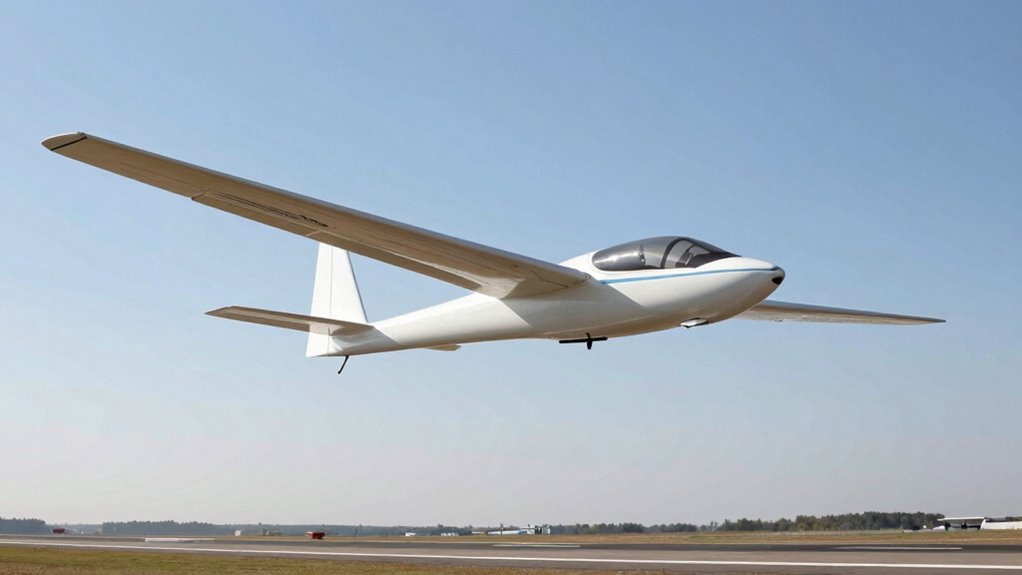

Planning the entire corner before you turn allows you to manage airflow and control inputs smoothly, resulting in more efficient and stable turns. By anticipating how your glider reacts, you can make gradual adjustments that keep airflow attached to the wings and prevent turbulence. This approach conserves energy, reduces unnecessary altitude loss, and improves overall control. If you stay attentive to these aerodynamic principles, you’ll find your turns become more precise and confident—plus, there’s more to discover for sharper flying skills.
Listen free for 30 days with Audible
Thousands of audiobooks and originals — cancel anytime.
As an affiliate, we earn on qualifying purchases.
Key Takeaways
- Planned corners ensure smooth airflow, reducing turbulence and drag for better lift and stability.
- Anticipated maneuvers optimize energy management, minimizing altitude and speed loss during turns.
- Full planning allows for gradual control inputs, preventing unresponsive or abrupt movements.
- Coordinated turns enhance aerodynamic efficiency, conserving energy and improving overall control.
- Strategic cornering leads to more precise, stable, and efficient flight performance.

Have you ever wondered why some gliders perform better in turns? The secret lies in understanding how aerodynamic principles work during cornering and how effective pilot maneuvering can make a significant difference. When you plan the entire corner, you’re not just reacting to the immediate situation—you’re coordinating your movements smoothly with the glider’s aerodynamics. This foresight allows you to optimize lift and minimize drag throughout the turn, resulting in a more efficient and controlled flight.
Planning your turn ahead ensures smoother, more efficient, and controlled glider performance by aligning your maneuvers with aerodynamics.
A key aspect is understanding how aerodynamic principles influence your glider’s behavior. As you initiate a turn, you shift the airflow over the wings, changing the lift distribution. If you’re not careful, this can cause the aircraft to lose altitude or become unresponsive. However, when you plan the whole corner, you adjust your control inputs gradually, maintaining a balanced angle of bank. This approach helps you keep the airflow attached to the wings, preventing turbulence and unnecessary drag. It’s about fine-tuning your control movements to match the glider’s response, ensuring a smooth, predictable turn.
Pilot maneuvering becomes essential when you’re thinking ahead. Instead of making abrupt or reactive movements, you anticipate how the glider will react and adjust your controls accordingly. For instance, as you approach the corner, you may start banking earlier or slightly reduce your speed to prepare for the turn’s curvature. This preemptive action keeps the airflow consistent and prevents sudden shifts that could destabilize the aircraft. When the entire corner is planned, your inputs become more deliberate, allowing the glider to follow the intended path seamlessly. Recognizing the importance of aerodynamic behavior in these maneuvers helps you refine your technique further. Additionally, being aware of energy management enables you to maintain optimal flight conditions throughout the turn.
Furthermore, planning the full corner helps you manage the energy state of the glider. By considering the upcoming turn, you can optimize your descent rate and airspeed, ensuring you don’t lose unnecessary altitude or speed. This holistic approach to maneuvering fosters better control, especially in complex flying conditions. It also reduces the tendency to overcorrect, which can lead to oscillations or inefficient flight paths. Instead, your smooth, well-timed inputs work with the glider’s aerodynamic behavior, making each turn more effective. Understanding the aerodynamic principles behind these maneuvers is crucial for enhancing your flying skills. Proper control inputs and anticipation are fundamental to executing these planned maneuvers with precision.
In essence, when you plan the entire corner, you’re aligning your pilot maneuvering with the aerodynamic principles governing the glider. This alignment results in more precise, efficient turns that conserve energy, improve control, and enhance your overall flying experience. It’s about seeing the bigger picture and executing with intention, transforming a simple turn into a mastery of flight dynamics.
glider control and maneuvering training kit
As an affiliate, we earn on qualifying purchases.
As an affiliate, we earn on qualifying purchases.
Frequently Asked Questions
How Do You Determine the Optimal Corner Design for a Glider?
You determine the ideal corner design for a glider by analyzing wing stability and pilot visibility. Start by ensuring the wing’s shape and angle promote stability during flight, reducing turbulence. Then, consider how the corner layout impacts your line of sight, giving you clear pilot visibility. Adjust the angles and materials accordingly, testing different configurations to find a balance that maximizes stability and visibility for safer, smoother gliding.
What Materials Improve a Glider’s Performance in Planned Corners?
Imagine your glider slicing through the air like a knife through butter—materials like lightweight carbon fiber and advanced composites drastically boost performance. These improve wing loading, allowing for better control and stability. When you choose high-quality, low-drag materials, your glide ratio skyrockets, making corners smoother and more efficient. This means you can hold tighter turns with less speed loss, transforming your flight into a masterful, effortless glide.
How Does Weather Affect Corner Planning for Glider Flights?
Weather patterns substantially impact your corner planning for glider flights. You need to monitor cloud formation closely, as it indicates lift and thermal activity, which are vital for a successful glide. Changing weather can alter wind directions and strength, making your planned corner less effective or even dangerous. Being aware of these factors allows you to adapt your plan on the fly, ensuring safer, more efficient flights.
Can Unplanned Corners Be Safely Used in Competitive Gliding?
In competitive gliding, unplanned corners can be risky, especially if you lack extensive pilot experience. While spontaneity might seem appealing, it often increases corner risk, making your flight less predictable. Skilled pilots understand the value of well-planned corners, reducing hazards and optimizing performance. If you’re still gaining experience, sticking to planned corners helps manage risks effectively, allowing you to focus on enjoying the challenge without unnecessary danger.
What Role Does Aerodynamics Play in Corner Planning?
Aerodynamics plays a vital role in corner planning by maximizing lift optimization and minimizing drag reduction. When you plan the entire corner, you can adjust your attitude and speed to maintain ideal lift, avoiding sudden stalls. This control allows you to smoothly navigate curves, reducing turbulence and improving efficiency. Effective aerodynamic management guarantees better energy retention, giving you more glide performance and stability throughout the turn.
Conclusion
By planning the entire corner, you guarantee every turn is smooth and controlled, making your glider’s performance more efficient. When you anticipate each movement, you reduce surprises and maximize your glide’s potential. Don’t you want to experience the thrill of flawless execution? With a well-thought-out plan, you’ll enjoy cleaner, more precise turns every time you take to the sky. So, why leave your success to chance when you can plan for perfection?
Flea & tick season Picks
flea and tick prevention
As an affiliate, we earn on qualifying purchases.