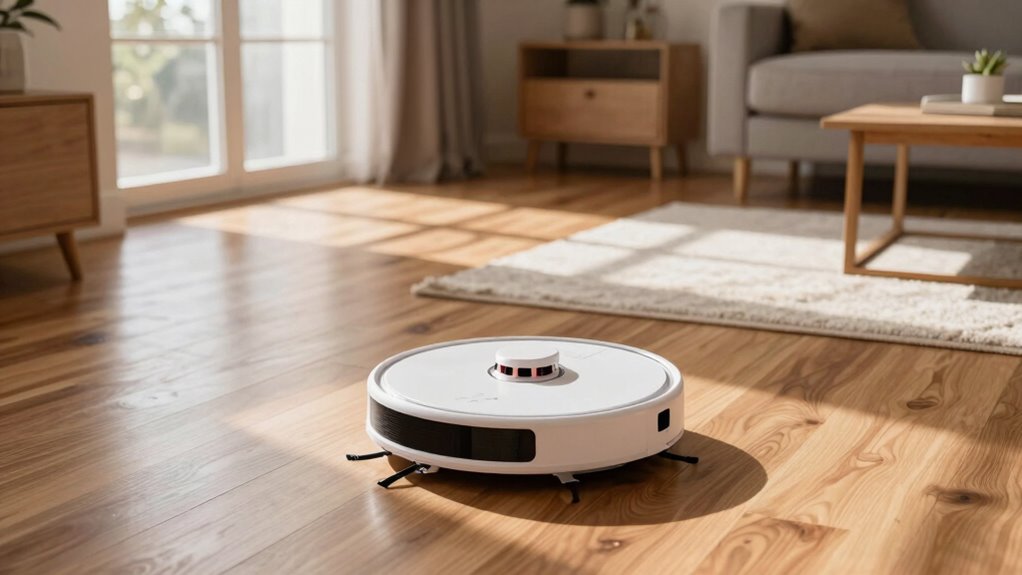

Your robot vacuum works best when your floor plan allows it to navigate easily. Clutter, tight spaces, and awkward furniture placement can block its path and reduce cleaning effectiveness. A well-designed layout with fewer obstacles enables the vacuum to cover more ground efficiently. Longer battery life and larger dustbins also help, but layout remains key. Keep these points in mind, and you’ll discover how to set up your home for smarter cleaning success as you explore further.
Key Takeaways
- An organized floor plan with fewer obstacles allows robot vacuums to navigate and clean more thoroughly.
- Strategic furniture placement minimizes tight spaces that can hinder robot movement.
- Virtual boundaries can be used to restrict cleaning areas and improve efficiency.
- Larger, open spaces enable longer cleaning sessions without frequent recharging.
- Recognizing layout limitations helps in choosing the right vacuum with suitable navigation features.
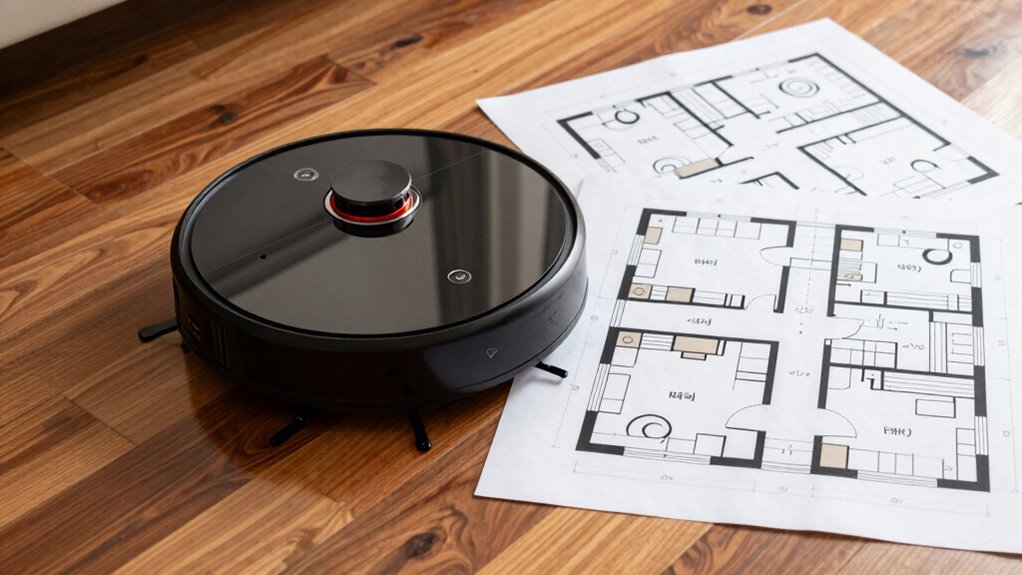
Robot vacuums have revolutionized home cleaning by offering a convenient way to maintain floors with minimal effort, but their effectiveness often depends on the layout of your space. If your floor plan is cluttered or has awkwardly placed furniture, even the smartest robot may struggle to do its job well. Two key factors that influence how well your robot vacuum performs are battery life and dust capacity. Understanding how these features interact with your floor plan can help you get the most out of your device. Additionally, indoor air quality can be affected by how efficiently your vacuum manages dust and debris, further emphasizing the importance of choosing the right features for your home. Battery life is vital because it determines how long your robot can clean before needing to recharge. In open, spacious areas, longer battery life means you can cover more ground in a single session. If your home has multiple rooms or a large open-plan living area, a robot with a limited battery might leave some spots untouched, requiring you to manually restart it or clean those areas yourself. Conversely, if your space is small or segmented with many narrow hallways, a shorter battery life might suffice, but you’ll need to plan your cleaning schedule accordingly. A longer-lasting battery provides more flexibility and reduces the need for frequent recharging, especially important if your layout includes multiple floors or extensive spaces. Dust capacity is another essential feature that impacts cleaning efficiency, especially in homes with pets or high foot traffic. A robot with a larger dustbin can hold more debris, meaning it can run longer without needing to stop and empty itself. If your floor plan includes areas prone to collecting dust, hair, or crumbs, having a vacuum with ample dust capacity helps guarantee thorough cleaning without constant interruptions. However, even the best dust capacity won’t compensate if your home’s layout creates obstacles or tight spaces that hinder the robot’s movement. home layout plays a crucial role in how easily your robot can navigate and complete its tasks. Recognizing navigation capabilities and limitations can also help you optimize your cleaning routine. Strategically placing virtual boundaries or arranging furniture can help the robot avoid problematic areas and improve overall efficiency. Additionally, understanding floor plan considerations can help you identify the most effective cleaning zones and set realistic expectations for your device’s performance. By considering both your home’s design and your vacuum’s features, you’ll guarantee your device works smarter, not harder, delivering a cleaner home with less hassle.
robot vacuum with long battery life
As an affiliate, we earn on qualifying purchases.
As an affiliate, we earn on qualifying purchases.
Frequently Asked Questions
Can Robot Vacuums Map Multiple Floors Automatically?
Yes, many robot vacuums can do multi-floor mapping automatically. They use sensors and cameras to create detailed floor plans, and with automatic updates, they can adapt if your furniture or layout changes. When you move the vacuum to a different floor, it’ll usually detect the new environment and update its map. This makes cleaning more efficient, as your robot learns each floor’s unique layout without needing manual reprogramming.
Do Robot Vacuums Work Well With Irregularly Shaped Rooms?
Ever wonder if robot vacuums handle irregularly shaped rooms well? They can work effectively if you consider room shape and obstacle placement. While some models struggle with complex layouts, many advanced vacuums adapt to odd angles and furniture placement by updating their maps. You might need to reposition obstacles or choose a model with better navigation features, but with proper setup, your vacuum can clean even the most uniquely shaped spaces efficiently.
How Often Should I Update the Floor Plan for Accuracy?
You should update the floor plan for accuracy whenever your home changes, like new furniture or renovations. Regular mapping updates help your robot vacuum navigate efficiently and clean thoroughly. Aim to review and refresh the floor plan every few months or after major changes. Keeping your floor plan accurate guarantees peak performance, preventing missed spots or collisions. Staying proactive with mapping updates maximizes your robot vacuum’s cleaning efficiency and keeps your home spotless.
Can Robot Vacuums Navigate Around Pets Effectively?
Like a skilled dancer weaving through a crowded room, your robot vacuum can navigate around pets effectively. With advanced obstacle detection, it senses pet hair and moving bodies, avoiding collisions and tangles. While it handles daily pet chaos well, occasional manual intervention might be necessary for unpredictable movements. Regular updates to its floor plan guarantee it understands your pet’s favorite spots, making cleaning smoother and more efficient for both of you.
What’s the Best Way to Optimize Floor Plans for Robot Vacuum Efficiency?
To optimize your floor plan for robot vacuum efficiency, set consistent cleaning schedules so the robot knows when to clean, reducing missed spots. Clear clutter and rearrange furniture to create unobstructed pathways, and use zoning features if available. Prioritize battery optimization by scheduling regular charges and avoiding overly complex layouts that drain power. These steps make certain your robot works effectively, covering more ground and maintaining your floors with less effort.
Conclusion
Imagine your robot vacuum as a tiny explorer, guiding your home’s maze-like spaces. When your floor plan is clear and open, it’s like giving it a map to find every corner effortlessly. But cluttered rooms or complex layouts become obstacles, trapping your little helper and leaving dirt behind. So, if you want a spotless home, tidy up first—your robot’s journey depends on the clarity of your floor plan.