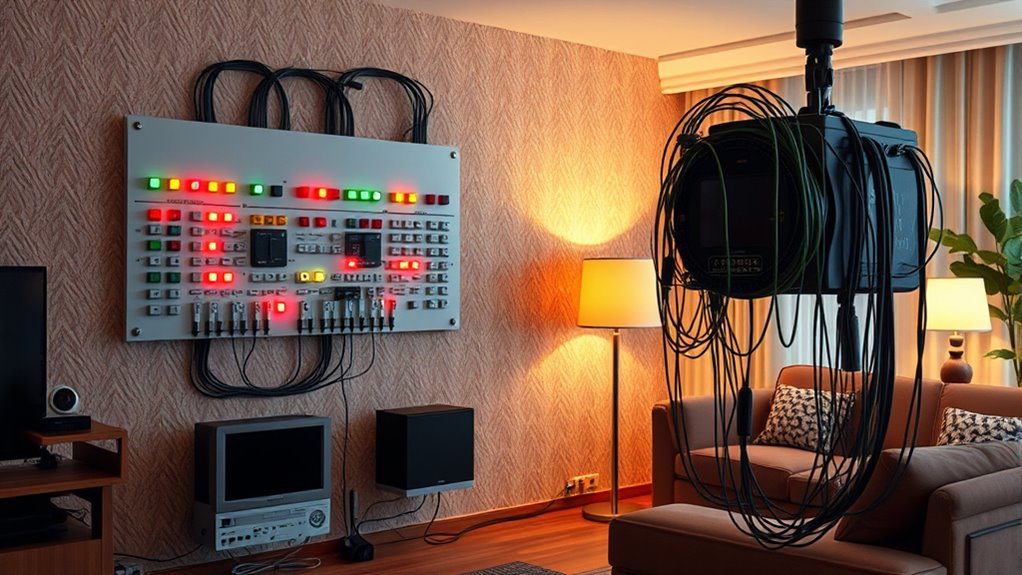

The EIB/KNX bus standard transformed home and building automation in the 1990s by creating a universal protocol that connects various smart devices seamlessly. It allows you to control lighting, heating, security, and more through a unified system, making setup and management easier. Its interoperability between manufacturers promotes innovation and flexibility. If you keep exploring, you’ll discover how this open standard continues to shape modern automation, ensuring smooth and reliable connected environments.
Play games included with Prime
Start a Prime free trial and play with Amazon Luna on your devices.
As an affiliate, we earn on qualifying purchases.
Key Takeaways
- The EIB/KNX standard emerged in the 1990s, revolutionizing home networking through open, interoperable building automation protocols.
- It enabled seamless communication among diverse smart devices, transforming residential and industrial automation systems.
- As a robust, scalable protocol, KNX supported complex networks for lighting, heating, security, and industrial control.
- Its open standard fostered innovation, allowing multiple manufacturers to develop compatible devices and systems.
- The 1990s adoption of KNX laid the foundation for modern smart homes and building automation ecosystems.

The EIB/KNX bus standard is a widely adopted protocol for building automation that enables seamless communication between various smart devices. When you think about smart home integration, this standard becomes a cornerstone, allowing different systems—lighting, heating, security, and more—to work together effortlessly. It’s designed to create a unified environment where devices can share information and respond intelligently to your needs. Whether you’re controlling lighting from a smartphone or setting up automated scenes, KNX makes it straightforward, ensuring that all components operate harmoniously. Its flexibility supports a broad range of devices, making it ideal for both residential and commercial applications. Moreover, KNX’s open standards foster interoperability among devices from different manufacturers, promoting innovation and customization.
The EIB/KNX standard seamlessly connects smart home devices for unified, intelligent automation and control.
Beyond residential spaces, the EIB/KNX standard also plays a significant role in industrial automation. You might not immediately associate building control protocols with factories or warehouses, but KNX’s robust and reliable communication capabilities make it suitable for complex industrial environments. It enables automation of processes, monitoring of equipment, and integration of control systems in factories, leading to increased efficiency and safety. With its ability to handle large networks and diverse device types, KNX helps industrial facilities streamline operations and reduce manual intervention. Its proven stability and scalability mean you can expand your automation network as your needs grow, without sacrificing performance.
KNX home automation control panels
As an affiliate, we earn on qualifying purchases.
As an affiliate, we earn on qualifying purchases.
Frequently Asked Questions
How Does Eib/Knx Compare to Modern Smart Home Systems?
You’ll find that EIB/KNX offers reliable, legacy-compatible home automation, but it faces scalability challenges compared to modern systems. While KNX guarantees long-term stability and integration with older devices, newer smart home platforms like Zigbee or Z-Wave provide greater flexibility, easier updates, and seamless integration with smartphones and voice assistants. For future-proofing, modern systems often outpace KNX’s capabilities despite its solid foundation.
What Are the Long-Term Cost Benefits of Eib/Knx?
You’ll find that EIB/KNX offers long-term cost benefits through significant cost savings and maintenance efficiency. Its durable, standardized components reduce replacement and repair expenses over time. Plus, centralized control simplifies troubleshooting, minimizing downtime and maintenance costs. Although initial setup might be higher, the system’s reliability and energy savings make it a cost-effective choice in the long run, ensuring your investment pays off over many years.
How Secure Is the Eib/Knx Communication Protocol?
You might wonder how secure the EIB/KNX communication protocol is. It uses encryption protocols to protect data and access controls to restrict unauthorized use. While no system is completely invulnerable, these measures substantially enhance security. Regular updates and proper configuration help keep your network safe. Overall, EIB/KNX offers a robust security foundation, but staying vigilant and maintaining your system is essential for ongoing protection.
Can Eib/Knx Integrate With Wireless Smart Home Devices?
You’ll be glad to know that over 60% of smart homes now use wireless integration, and KNX works with many devices. While KNX primarily relies on wired connections, it can integrate with wireless smart home devices through gateways and interfaces, enhancing device compatibility. This setup allows you to enjoy seamless control, combining wired reliability with wireless convenience for a more flexible and connected home experience.
What Are Future Developments Planned for Eib/Knx Technology?
Future developments for EIB/KNX focus on AI integration and enhancing energy efficiency. You’ll see smarter automation that adapts to your habits, optimizing energy use and reducing costs. Developers aim to make the system more intuitive, with seamless communication between wired and wireless devices. Expect advancements that allow your smart home to learn, adapt, and operate more sustainably, giving you greater control and convenience in everyday life.
Conclusion
Just like a finely tuned orchestra, the EIB/KNX bus standard brings harmony to your home automation. It revolutionized the 1990s by making devices communicate seamlessly, transforming how you interact with your living space. Embracing this technology means you’re stepping into a smarter, more connected world. Now, you can enjoy the convenience and efficiency it offers—making your home feel like a symphony of innovation, perfectly synchronized for your comfort.
Evergreen bestsellers Picks
bestsellers
As an affiliate, we earn on qualifying purchases.