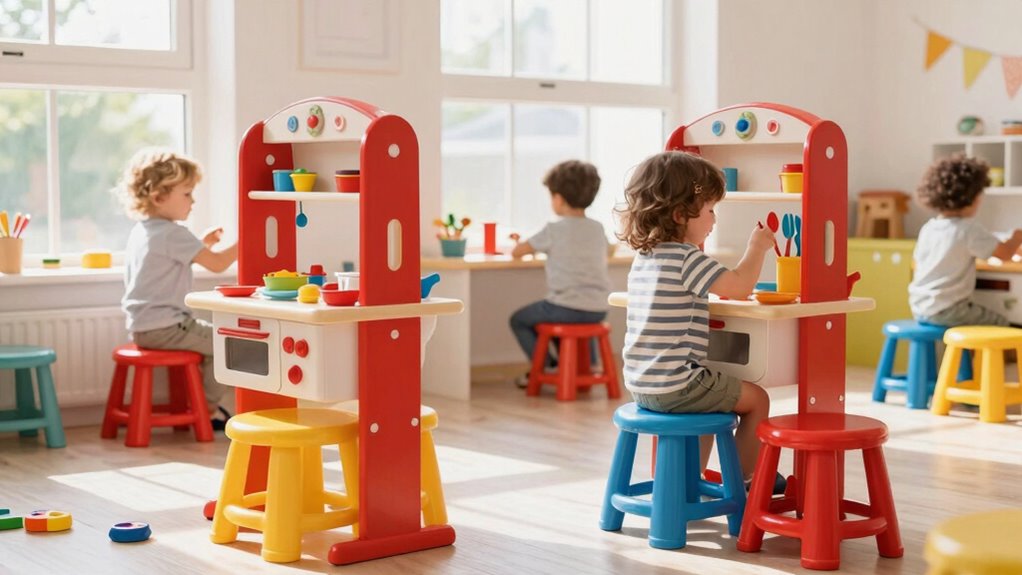

Learning towers give your child safe access to the kitchen and encourage independence, but it’s essential to set clear rules. Always supervise them during use, and teach your child to stay on the platform rather than climbing or jumping. Make certain the tower is stable, in good condition, and used on a flat surface. Regular safety checks and proper boundaries help prevent accidents. Keep an eye out for details that make safety easier, and you’ll create a safer, more enjoyable experience.

Get decor and gifts delivered free — and shop member deals
- Fast, free delivery on millions of items
- Access to Prime Big Deal Days deals on October 6–7
- Prime Video, Amazon Music and more included
Key Takeaways
- Establish clear boundaries for tower use, emphasizing it’s for helping, not climbing or jumping.
- Supervise children at all times to ensure safe behavior and prevent accidents.
- Regularly inspect and maintain the tower for stability and damage.
- Educate children about safe practices while using the tower.
- Ensure the surrounding area is hazard-free before allowing access.
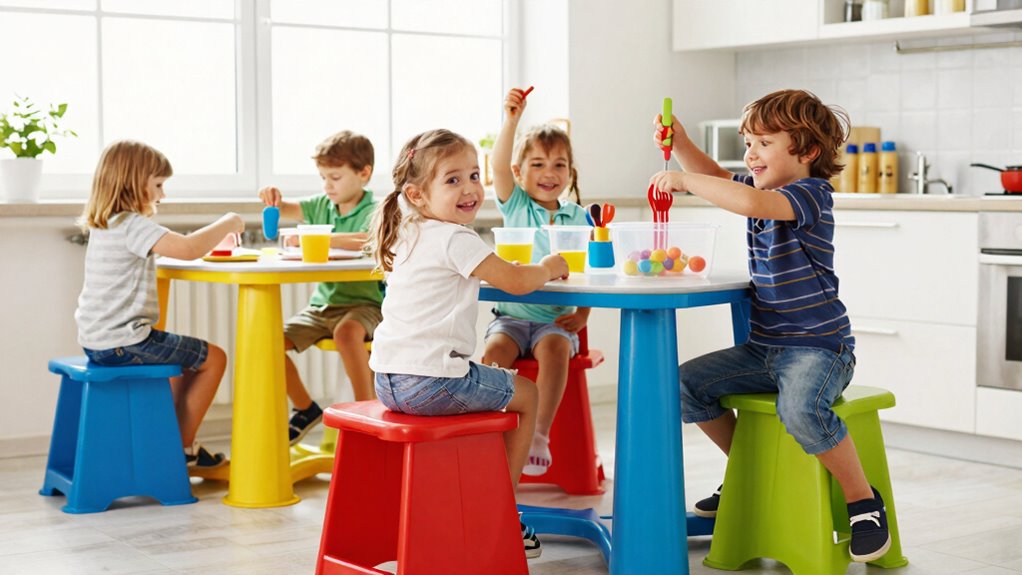
Learning towers are a popular way to give children safe access to the kitchen, encouraging independence and hands-on involvement. When you introduce a learning tower into your home, you’re opening the door for your child to explore cooking, cleaning, and other household tasks. However, guaranteeing their safety is essential. Child safety should always be your top priority, which means choosing a tower that’s sturdy and well-designed. Look for equipment stability; you want a tower that won’t wobble or tip over easily. A stable learning tower provides a secure platform, giving you peace of mind while your child climbs up and down. Proper stability isn’t just about preventing accidents—it also helps your child develop confidence as they learn to navigate their environment safely.
Choose a sturdy, stable learning tower to ensure your child’s safety and boost their confidence in the kitchen.
When selecting a learning tower, pay close attention to its construction. The base should be wide and heavy enough to support the height and weight of your child. The materials used should be durable and non-toxic, especially since children tend to touch and sometimes mouth objects. Before allowing your child to use the tower, double-check that all parts are securely assembled. Loose screws or wobbly legs can compromise equipment stability, increasing the risk of falls. Regularly inspect the tower for signs of wear or damage, and tighten any loose fittings. Never compromise on stability for convenience or aesthetics; safety has to come first. Additionally, considering the importance of child safety, choosing a learning tower with features like rounded edges and non-slip surfaces can further reduce risks. Regular maintenance and careful inspections are essential to ensure ongoing equipment safety and prevent potential hazards. Performing routine checks also helps identify any wear and tear early, maintaining a safe environment for your child. Incorporating safety guidelines into your routine can help ensure consistent safe use of the tower.
Once your learning tower is in place, establish clear rules for its use. Explain to your child that the tower is a special tool for helping in the kitchen, not a toy to climb or jump on whenever they please. Set boundaries about when and how they can use it, and always supervise their activities. Never leave your child unattended on the tower, especially while they’re reaching for something or leaning over. Make sure the area around the tower is free of hazards, such as sharp utensils or hot surfaces, to prevent accidents. Educating your child about safe behavior while on the tower helps prevent injuries and teaches responsibility.
In addition, be consistent with the rules you set. Reinforce them every time your child uses the tower, and encourage respectful and safe behavior. Remember, a learning tower is a fantastic tool for fostering independence, but it’s your vigilance that guarantees it remains a safe and effective resource. Prioritizing child safety and maintaining equipment stability will help your child enjoy their kitchen adventures without unnecessary risks.
As an affiliate, we earn on qualifying purchases.
Frequently Asked Questions
Are Learning Towers Suitable for All Age Groups?
Learning towers are not suitable for all age groups. You should consider age appropriateness and developmental suitability before using one. They work best for preschoolers and young children who can stand safely and follow safety rules. For older kids, a taller step stool might be better. Always supervise your child, set clear rules, and confirm the tower’s design supports their safety and developmental needs to prevent accidents.
How Do I Ensure Safety With a Learning Tower?
Imagine the learning tower as a sturdy lighthouse guiding your child safely to new heights. To guarantee safety, set clear rules about height safety and always supervise closely. Keep the tower on a flat, stable surface, and avoid overcrowding. Use safety features like guardrails and lockable steps. Regularly check for wear and tear, and teach your child to stay within safe zones. This way, your little explorer stays safe while reaching for new adventures.
Can Learning Towers Be Used Outdoors?
Yes, you can use learning towers outdoors, but choose one with outdoor durability and weather resistance. Look for models made from weatherproof materials like treated wood or plastic designed for outdoor use. Make certain it has a sturdy, non-slip base to prevent slipping on wet surfaces. Regularly check for damage or wear caused by outdoor elements. By selecting a weather-resistant tower and maintaining it properly, you’ll keep your child safe while they enjoy outdoor kitchen access.
What Materials Are Best for a Durable Learning Tower?
You need a learning tower that’s practically indestructible, right? Opt for high-quality, sturdy materials like solid hardwood or heavy-duty metal, which excel in material durability and withstand the wildest adventures. These materials also guarantee construction safety, preventing cracks or breaks that could harm your little explorer. Avoid flimsy plastic or particleboard—they just won’t cut it for long-term use. Invest in durable, safe materials, and your tower will last through countless kitchen adventures!
How Do I Store a Learning Tower When Not in Use?
When not in use, you should store your learning tower in a safe, accessible spot. Consider space-saving ideas like folding or disassembling the tower, if possible. Use storage solutions such as a dedicated shelf, closet, or corner, keeping it out of the way but easy to reach when needed. This way, you maintain a clutter-free area and guarantee your tower stays in good condition for future use.
Conclusion
So, while learning towers open up the kitchen world to your little one, giving them a taste of independence, don’t forget to set those clear rules. Ironically, what’s meant to empower can also create chaos—think tiny chefs tumbling or accidental messes that turn your culinary space into a disaster zone. Ultimately, with firm boundaries, those towers become the perfect bridge to safety and skills, transforming your kitchen into a shared adventure instead of a battleground.
Halloween Picks
halloween
As an affiliate, we earn on qualifying purchases.