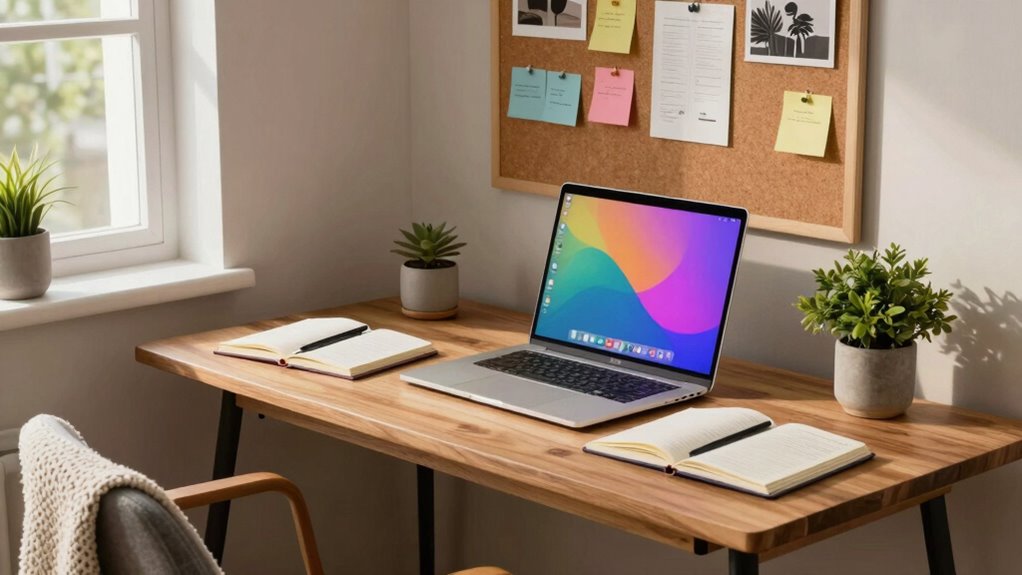

Create a dedicated workspace away from high-traffic areas, using room dividers or curtains to signal work mode. Keep essentials organized with shelves and trays, and add noise-canceling headphones or white noise machines to manage distractions. Choose a natural-lit corner or a good desk lamp for comfort, and use portable furniture like folding desks for flexibility. Set clear work hours and communicate boundaries to housemates. To explore more tips, keep going for practical strategies that will help you thrive at home.
Key Takeaways
- Create a dedicated, well-defined workspace away from high-traffic areas using room dividers or curtains.
- Use noise-canceling headphones or white noise to minimize distractions in shared environments.
- Keep the space organized with shelves, trays, and designated spots for essentials to boost productivity.
- Maximize natural light and use quality lighting to create an inviting, comfortable work environment.
- Establish clear work hours and communicate boundaries to housemates for smoother routine management.
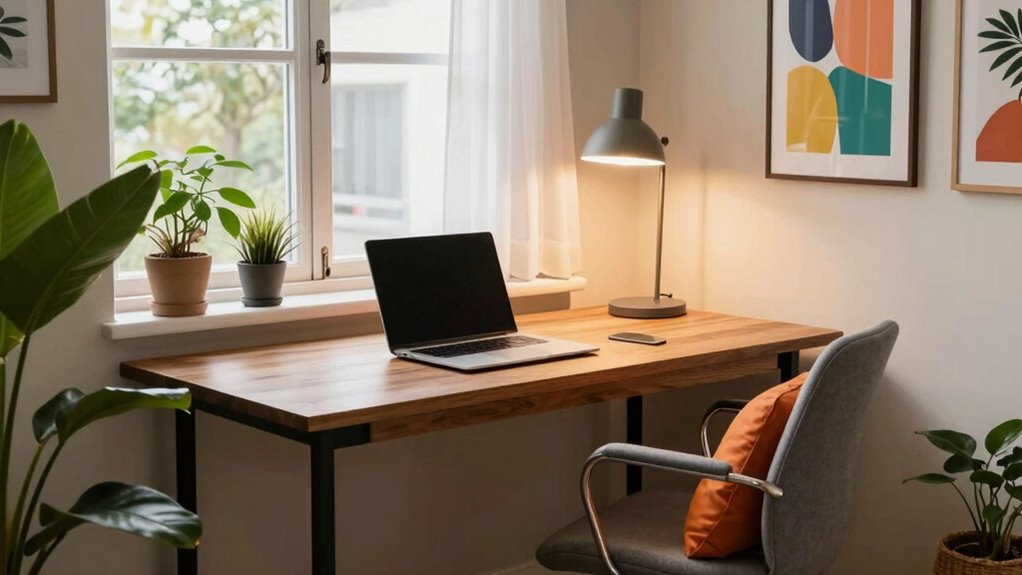
Setting up a home office in a shared house can be challenging, but with the right approach, it’s entirely doable. The key is to create a dedicated shared workspace that balances your need for focus with the realities of communal living. First, you need to identify a spot that can serve as your work zone, ideally away from high-traffic areas. If space is limited, consider using room dividers or curtains to carve out a distinct area. This not only helps define your workspace but also signals to others that you’re in work mode.
Privacy solutions become crucial in this setting. You want to minimize distractions and maintain concentration, so think about noise-canceling headphones or white noise machines that block out background sounds. If your house is particularly noisy, investing in a small, portable partition can help create a sense of separation. Additionally, establish clear boundaries with your housemates—let them know your work hours and ask for their cooperation in respecting your quiet time. Having open communication prevents misunderstandings and ensures everyone’s needs are acknowledged.
To make your shared workspace more functional, organize your essentials neatly and keep clutter to a minimum. Use stackable trays, wall-mounted shelves, or drawer organizers so everything has its place. This way, you can quickly transition from work to leisure without spending extra time searching for supplies. When possible, choose a corner or a spot with good natural light—bright spaces boost productivity and lift your mood. If natural light isn’t available, invest in a quality desk lamp to avoid eye strain and keep your workspace well-lit. Incorporating biodiversity-friendly practices, such as choosing eco-friendly desk accessories, can further enhance your commitment to sustainable living. Remember that integrating environmentally conscious choices in your setup not only benefits the planet but can also improve your workspace ambiance.
Flexibility is vital in a shared house, so consider portable solutions that can easily be moved or packed away when not in use. Folding desks or compact tables work well if your space needs to serve multiple purposes. Also, set a consistent schedule to help reinforce your boundaries and keep your work life separate from home life. This routine helps your housemates understand your work hours and reduces interruptions.
noise-canceling headphones for home office
As an affiliate, we earn on qualifying purchases.
As an affiliate, we earn on qualifying purchases.
Frequently Asked Questions
How Do I Ensure Privacy in a Shared Home Office?
To guarantee privacy in your shared home office, you should use privacy screens to block visual distractions and prevent others from easily seeing your work. Additionally, hang soundproof curtains to reduce noise and create a more secluded environment. You can also set clear boundaries with housemates about your work hours. Combining these solutions helps maintain your privacy, keeps your focus sharp, and creates a professional workspace within your shared home.
What Are Affordable Furniture Options for a Shared Workspace?
You can find affordable furniture options like ergonomic seating and budget-friendly desks at stores like IKEA, Wayfair, or local thrift shops. Look for compact desks that maximize space and adjustable chairs for comfort. Consider second-hand options or DIY solutions to save money. Prioritize ergonomic features to guarantee comfort during long work hours, and choose versatile pieces that blend seamlessly into your shared environment without breaking the bank.
How Can I Minimize Noise Disruptions in a Shared Environment?
Did you know that noise disruptions can decrease productivity by up to 66%? To minimize disruptions, try soundproofing strategies like sealing gaps around doors and windows. Use noise-canceling techniques such as headphones or white noise machines. Encourage your housemates to keep noise levels low during work hours. These simple steps can create a quieter environment, helping everyone stay focused and efficient while sharing a space.
What Are the Best Organizational Tools for Shared Home Offices?
You should try using organizational tools like labeled storage bins and desk dividers to keep your shared home office tidy. Incorporate creative decor to personalize your space and improve focus. Invest in ergonomic accessories like adjustable chairs and keyboard stands to boost comfort during long work sessions. These tools help define your workspace, reduce clutter, and create a more productive environment, making shared working easier and more enjoyable.
How Do I Set Boundaries With Housemates Working Remotely?
Think of your shared home as a garden; boundaries help it flourish. To set clear limits, personalize your workspace with a designated area and an ergonomic setup that signals “this is my zone.” Communicate openly with housemates about your work hours and needs, and respect theirs in return. By establishing these boundaries, you create a peaceful environment where everyone’s productivity can blossom without stepping on each other’s toes.
Conclusion
Creating a home office in a shared house isn’t just about finding space; it’s about carving out a zone of focus amid chaos. While the shared kitchen hums with chatter, your workspace offers quiet clarity. In this balance, you find that productivity doesn’t have to suffer—it transforms. The shared house becomes less of a distraction and more of a backdrop for your success, reminding you that even in chaos, focus can flourish.