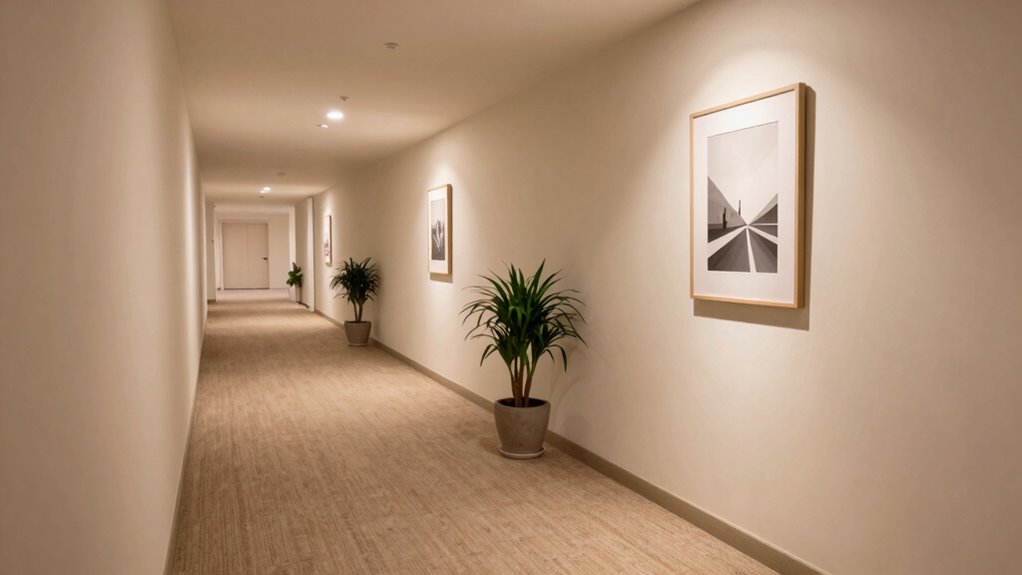

A hallway feels safe when it’s well-lit with even, bright lighting that reduces shadows. Keep pathways clear of clutter and obstacles to prevent tripping. Use safety features like handrails and slip-resistant flooring, especially in moisture-prone areas. Make certain emergency exits and signage are visible and accessible. Choose light, neutral colors to create a welcoming atmosphere, and make sure everything is well-maintained. If you want to discover more ways to make hallways inviting and secure, keep exploring these tips.
Key Takeaways
- Adequate, evenly distributed lighting eliminates shadows and enhances visibility.
- Clear, unobstructed pathways reduce tripping hazards and promote easy navigation.
- Well-maintained walls and slip-resistant flooring ensure safety and confidence while walking.
- Bright, neutral colors and welcoming decor create a calm, inviting atmosphere.
- Visible emergency exits and safety features reinforce a sense of security.
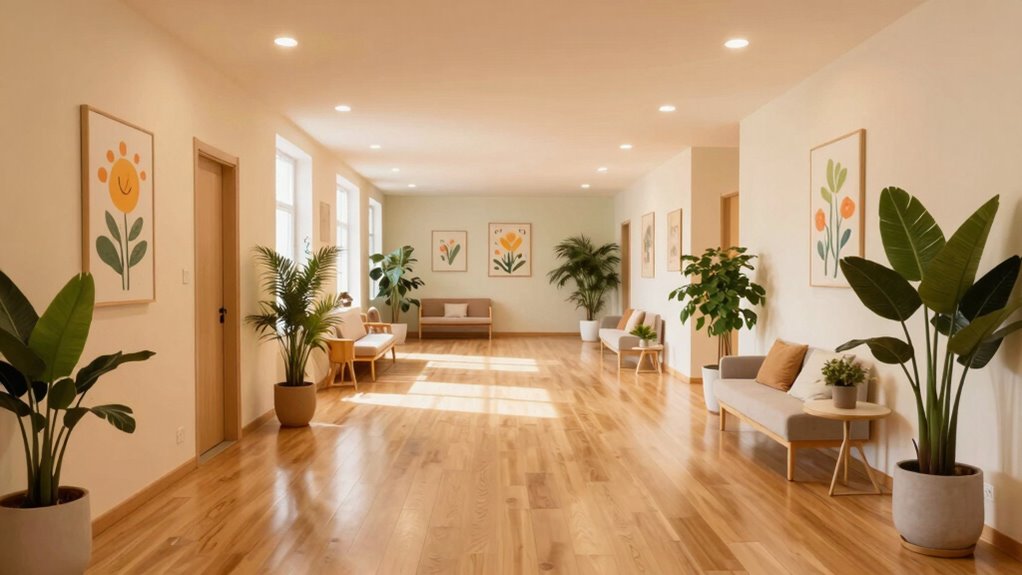
Hallways often serve as the passageways between different spaces, but their design can markedly influence how safe and comfortable you feel walking through them. One of the most critical factors is lighting safety. When a hallway is well-lit, you can see where you’re going, spot potential hazards, and feel more secure. Dim or uneven lighting can create shadows that hide obstacles or make you uneasy, especially at night or in unfamiliar settings. To improve your sense of safety, guarantee the lighting is bright enough and evenly distributed along the entire length of the hallway. Installing motion-activated lights can also help, providing illumination only when needed and reducing the chances of stumbling in the dark. Proper lighting design can also enhance the perception of space, making the hallway feel more open and less claustrophobic.
Good hallway lighting enhances safety, visibility, and comfort, especially at night or in unfamiliar spaces.
Clear pathways are equally crucial in transforming a hallway into a safe space. Cluttered hallways with furniture, boxes, or other obstacles can pose tripping hazards and make navigation stressful. You want to keep pathways free of anything that could impede your movement or cause accidents. This means regularly checking and tidying up to remove unnecessary items and assure that the walkway remains unobstructed. Wide enough pathways also contribute to safety, giving you enough room to walk comfortably without feeling cramped or worried about bumping into walls or furniture. When hallways are clutter-free and spacious, you naturally feel more at ease, especially in emergency situations where quick evacuation might be necessary. Efficient space utilization is a key aspect of making hallways safer and more inviting.
Another aspect that influences safety is the condition of the walls and flooring. Smooth, well-maintained surfaces reduce the risk of trips and falls. Consider using slip-resistant flooring materials in areas prone to moisture or spills. Handrails or grab bars along the walls can provide added support, especially for children, elderly individuals, or anyone with mobility concerns. Having visible and accessible emergency exits and clear signage also reassures you that help is available if needed. Additionally, understanding the importance of proper lighting safety can help you make more informed decisions about hallway design and maintenance.
Decor and color choices might seem less crucial, but they do matter. Light, neutral colors reflect more light and brighten the space, making it feel welcoming rather than oppressive. Avoid dark or overly busy patterns that can cause visual confusion. When combined with good lighting safety and clear pathways, these design elements create a hallway that feels secure and inviting. Paying attention to these color and decor details can significantly influence the overall perception of safety and comfort in your hallway.
In the end, a hallway that’s safe instead of stressful hinges on practical design choices. Proper lighting safety, unobstructed pathways, and thoughtful maintenance ensure you can traverse the space confidently and comfortably, turning what might be a mundane corridor into a reassuring part of your environment.

8 Pack Motion Sensor Stair Light Indoor, Battery Operated Night Lights
- Motion Sensor Activation: Detects motion in darkness within 5-16ft
- Wide Sensing Range: 120° sensing angle for coverage
- Automatic Illumination Duration: Lights for 20 seconds after detection
As an affiliate, we earn on qualifying purchases.
As an affiliate, we earn on qualifying purchases.
Frequently Asked Questions
How Does Lighting Affect Hallway Safety Perceptions?
Lighting greatly impacts your perception of hallway safety by creating a well-lit environment. Proper lighting installation guarantees even illumination, reducing shadows and hiding spots that could cause discomfort. Bright, consistent lighting enhances your perception of safety, making you feel more secure and less stressed while walking through. When lighting is thoughtfully designed, it promotes perception enhancement, helping you navigate confidently and comfortably, especially during nighttime or low-light conditions.
What Colors Are Best for Creating a Calming Hallway?
Light, soft colors are best for creating a calming hallway, as research in color psychology shows they promote relaxation and reduce stress. You should choose hues like pale blues, gentle greens, or warm neutrals to enhance hallway aesthetics and make the space feel welcoming rather than overwhelming. These colors help establish a peaceful atmosphere, making the hallway safer and more comfortable for everyone who passes through.
How Can Clutter Increase Hallway Stress?
Clutter can considerably increase hallway stress by making the space feel chaotic and overwhelming. When you have too many items or tangled belongings, it’s harder to move freely and feel relaxed. To counter this, you might add personalized decor to create a welcoming vibe, and use scent therapy to promote calmness. Keeping the hallway tidy and thoughtfully decorated helps turn it into a peaceful, stress-free zone that feels safe.
Are Security Features Important in Hallway Design?
Yes, security features are vital in hallway design. Imagine walking down a corridor where security cameras silently monitor every step, and access control guarantees only authorized individuals enter. These elements don’t just deter trouble—they create a sense of safety and calm. When you notice well-placed security cameras and clear access controls, you feel reassured. Incorporating these features transforms hallways from potential stress zones into secure, welcoming pathways.
What Role Does Soundproofing Play in Hallway Comfort?
Soundproofing plays a vital role in hallway comfort by reducing noise and creating a calmer environment. You can achieve this with acoustic barriers that block sound transmission and sound absorption materials that dampen echoes. When you incorporate these elements, it minimizes disturbances from footsteps or conversations, making the hallway feel more peaceful and welcoming. This approach helps you feel less stressed and more at ease as you move through the space.
Conclusion
Creating a hallway that feels safe instead of stressful is like designing a gentle river flow—calm, clear, and inviting. By choosing soft lighting, clutter-free pathways, and warm colors, you craft an environment that welcomes rather than warily warns. When your hallway whispers serenity rather than shouting chaos, it becomes a tranquil passage that guides you gently homeward. Remember, a peaceful hallway is the silent guardian of your daily journey—making every step feel like a comforting embrace.