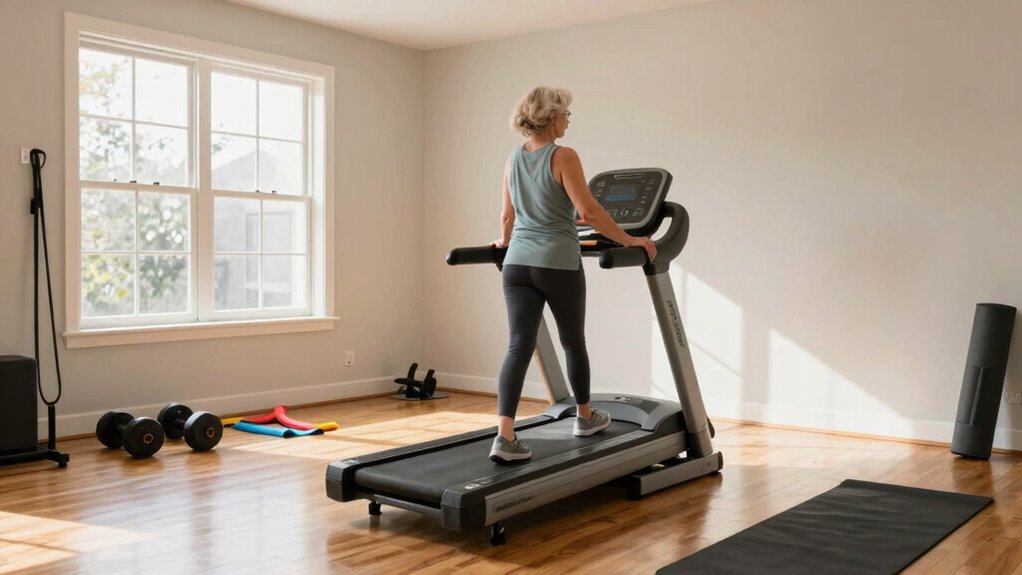

Before buying home gym equipment, ask yourself what activities you enjoy and your safety needs. Consider your available space and budget, choosing equipment that fits comfortably and is easy to use. Think about safety features and ergonomic design to prevent injuries. Pick versatile, low-impact machines or tools that boost motivation. Ensuring your equipment encourages regular use leads to better health. To explore more tips on creating the perfect setup, keep exploring these expert recommendations.

Get decor and gifts delivered free — and shop member deals
- Fast, free delivery on millions of items
- Access to Prime Big Deal Days deals on October 6–7
- Prime Video, Amazon Music and more included
Key Takeaways
- Is the equipment suitable for my current fitness level and any existing health limitations?
- Does the machine offer safety features and ergonomic design to prevent injury?
- Will the equipment fit comfortably in my available space and be easy to use regularly?
- Is the equipment affordable, durable, and easy to maintain over time?
- Does the equipment promote enjoyment and motivation to encourage consistent use?
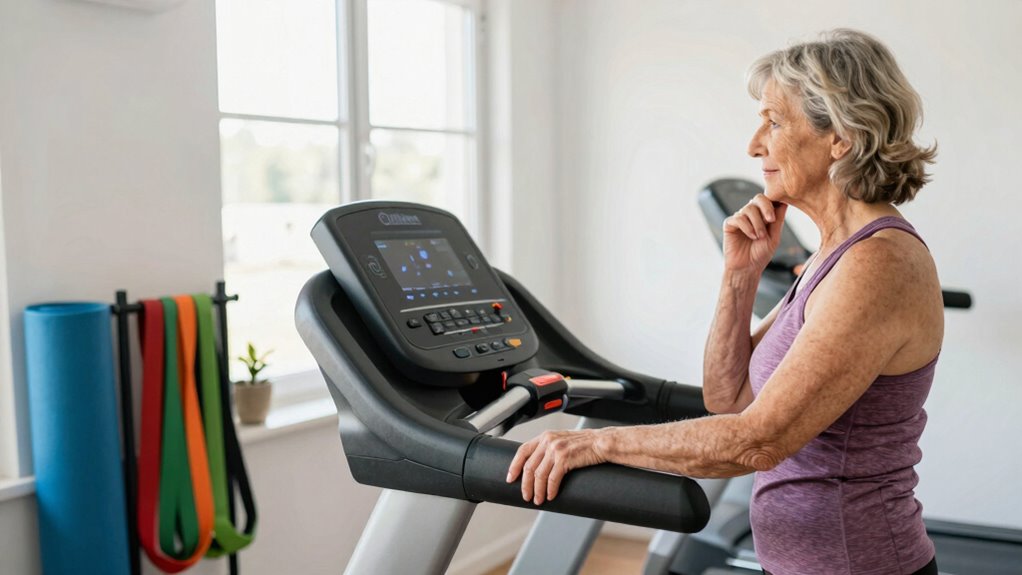
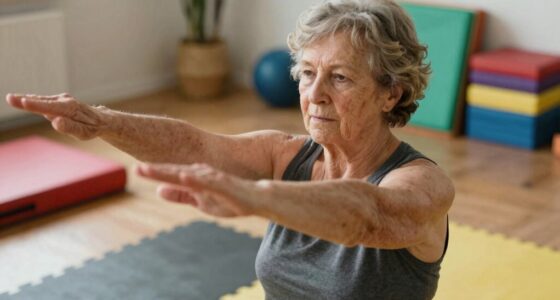
Are you considering setting up a home gym to stay active and healthy as you age? If so, you’re taking a smart step toward maintaining your independence and well-being. Before you dive in purchasing equipment, it’s imperative to ask yourself some key questions to guarantee you choose the right gear for your needs. One of the first considerations is what kind of activities you want to focus on. Do you prefer cardio options, strength training, or a combination of both? Understanding your preferences will help you select equipment that you’ll actually use regularly and that aligns with your fitness goals.
Cardio options are a pivotal part of any senior fitness routine because they help improve cardiovascular health, stamina, and overall energy levels. When considering cardio equipment, think about what’s comfortable and accessible for your current fitness level. Options like a stationary bike, treadmill, or elliptical machine are popular because they allow low-impact workouts that are gentle on your joints. If space is limited, compact machines or even a good quality jump rope might suffice. The key is choosing something you’ll enjoy using consistently because consistency is what yields long-term health benefits. Additionally, look for features like adjustable resistance or speed settings, which let you tailor workouts to your current ability and gradually increase intensity as you improve. Incorporating biodiversity considerations into your fitness routine by choosing eco-friendly equipment can also contribute positively to sustainability efforts. Interestingly, selecting equipment made from sustainable materials can also promote a mindful and environmentally conscious approach to your health journey. Moreover, choosing eco-friendly options may also inspire a greater sense of connection to your environment and motivate regular exercise.
Choose comfortable, low-impact cardio equipment like a stationary bike or elliptical for sustainable, joint-friendly workouts.
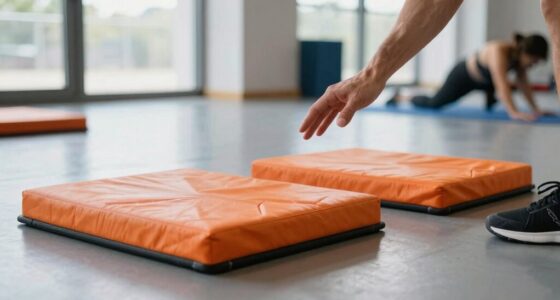
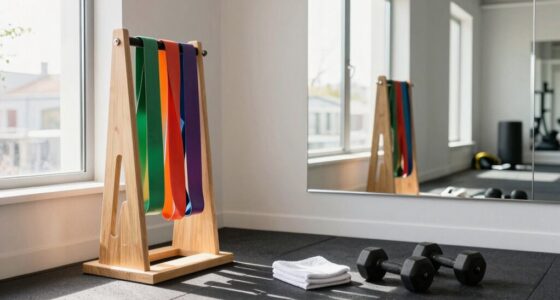
Strength training is equally important for seniors because it helps preserve muscle mass, boost bone density, and support daily activities. When evaluating strength training equipment, consider simple, versatile options such as resistance bands, dumbbells, or stability balls. These tools are easy to store and can be used for a variety of exercises targeting different muscle groups. If you prefer machines, look for user-friendly designs with safety features like adjustable seats and low starting weights. Remember, safety comes first, so avoid equipment with complicated setups or high weights that could cause injury. Start slow, with light resistance, and gradually increase as your strength improves. Consistent strength training not only enhances muscle tone but also reduces the risk of falls and injuries, making it an indispensable part of your routine. Ensuring your exercise environment is safe and comfortable will encourage regular use and help prevent accidents. Paying attention to space considerations and choosing equipment that fits comfortably within your living area will make it easier to stick to your routine. Additionally, considering ergonomic design can greatly improve comfort and reduce strain during workouts, especially for seniors with joint or mobility concerns.
Finally, think about your space, budget, and motivation level. Choose equipment that fits comfortably within your living space and is affordable enough to maintain over time. Whatever you decide, guarantee it’s something you’ll look forward to using. By asking these questions beforehand—what types of activity you prefer, what equipment suits your space, and what your safety needs are—you set yourself up for success. A well-chosen home gym can become a cornerstone of your health journey, helping you stay active, independent, and energized well into your later years.
As an affiliate, we earn on qualifying purchases.
Frequently Asked Questions
How Much Space Is Needed for Different Home Gym Equipment?
You’ll want at least 20-30 square feet for most cardio machines like a treadmill or stationary bike, and more space for free weights or larger equipment. Consider storage solutions to keep your workout area organized and safe. When choosing equipment, prioritize durability to guarantee it withstands regular use. Measuring your available space carefully helps you select the right equipment, making your home gym functional, safe, and enjoyable without feeling cramped.
Are There Any Safety Certifications to Look For?
You should look for safety certifications on the equipment, ensuring it meets certification standards. Check for clear safety labels that indicate compliance with industry safety standards, which helps prevent accidents. Certified equipment usually undergoes rigorous testing, guaranteeing reliability and safety during use. Always prioritize machines with proper safety labels and certification standards, giving you peace of mind and reducing the risk of injury while exercising at home.
What Is the Maintenance Required for Home Gym Machines?
You need to follow maintenance schedules to keep your home gym equipment in top shape. Regularly cleaning, lubricating moving parts, and checking for wear helps prevent breakdowns and extends equipment longevity. Make certain to inspect cables, belts, and bolts periodically, and replace worn components promptly. By staying consistent with maintenance, you ensure a safer workout environment and maximize your investment in your home gym, keeping everything functioning smoothly for years.
Can Equipment Be Adjusted for Different Fitness Levels?
Think of your home gym equipment as a chameleon, changing to suit your needs. Many machines come with adjustability features that allow you to personalize for different fitness levels, making workouts safer and more effective. Whether you’re just starting or advancing, this flexibility ensures your equipment evolves with you. So yes, most equipment can be adapted for various fitness levels, helping you stay motivated and on track.
How Noisy Are These Machines During Operation?
Noise levels vary depending on the equipment and its sound insulation, but most modern machines operate quietly enough not to disturb your daily routine. You should check for models with sound insulation features, such as rubberized mats or quieter motors, to minimize noise. If noise is a concern, consider placing your equipment on a padded surface to further reduce sound during operation. This guarantees a peaceful workout environment for you and your household.
Conclusion
Before you invest in home gym equipment, ask yourself if it truly fits your needs, space, and safety. Remember, the right gear isn’t just about staying active; it’s about enjoying a healthier, happier life. As you weigh your options, let your well-being be your guiding star—because a thoughtful choice today paves the way for a stronger tomorrow. Don’t rush—your perfect workout partner is out there, waiting to support your journey.
Fall Picks
fall essentials
As an affiliate, we earn on qualifying purchases.