
To make your living room more navigable without it feeling clinical, focus on decluttering and keeping only essential furniture to open up space. Arrange seating to encourage conversation while maintaining clear walkways, and consider floating furniture for better flow. Use corner placements to maximize space and incorporate layered lighting to brighten dark areas. Balancing functionality with style creates an inviting environment, and exploring these tips further will help you perfect your room’s layout and ambiance.
Key Takeaways
- Remove unnecessary items and keep only essential furniture to create open pathways and reduce clutter.
- Arrange seating to promote conversation while maintaining at least 18 inches of space between pieces.
- Use corner placements and appropriately scaled furniture to maximize space and balance room proportions.
- Incorporate layered lighting—ambient, task, and accent—to brighten dark areas and highlight pathways.
- Ensure pathways remain unobstructed by floating furniture and creating clear routes for easy, safe navigation.
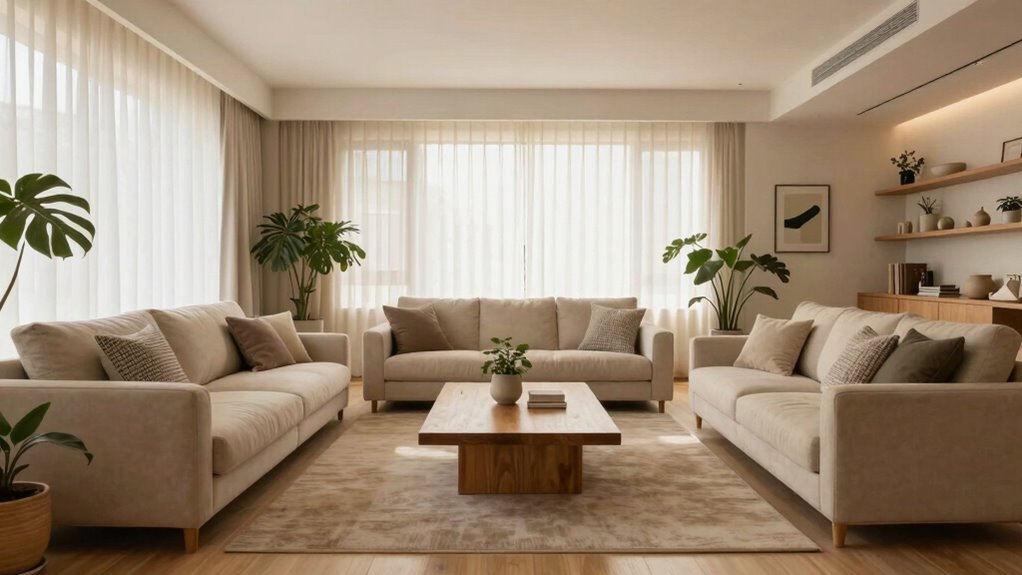
A cluttered or poorly arranged living room can make it difficult to move around comfortably, especially when you’re trying to relax or entertain guests. The key to improving navigation is focusing on furniture arrangement and lighting solutions that create a sense of openness without sacrificing style. Start by evaluating your space and removing any unnecessary items that block pathways or crowd the room. Clear clutter and keep only essential furniture to prevent the area from feeling cramped.
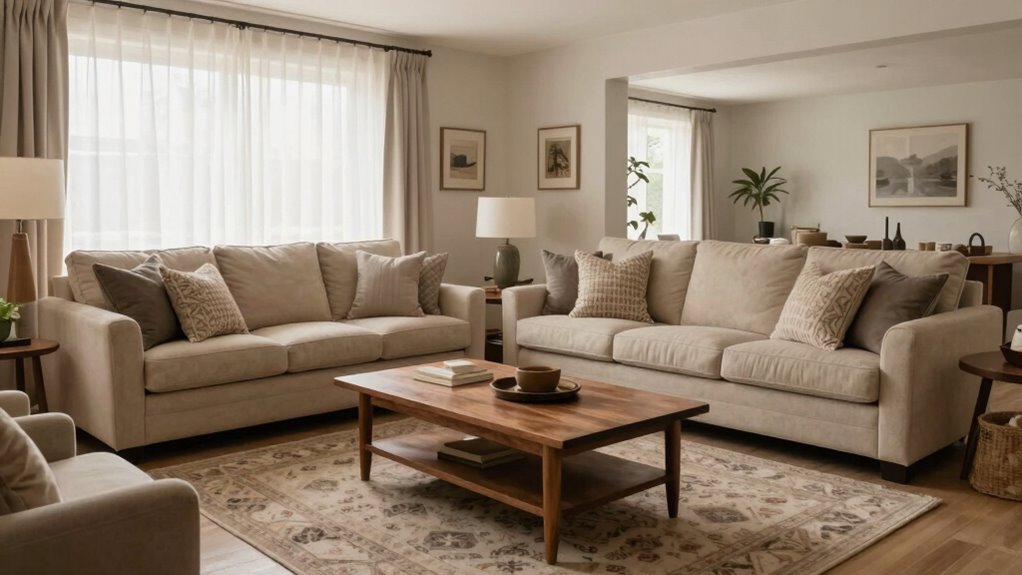
When it comes to furniture arrangement, prioritize creating clear walkways. Arrange your seating in a way that encourages conversation but leaves enough space for easy movement. For example, position sofas and chairs to face each other with enough room in between—aim for at least 18 inches—so you don’t feel boxed in. Avoid pushing furniture against the walls if it creates tight corners; instead, float pieces in a way that maintains open corridors. Corner placement can often make a room feel larger and more inviting, as long as pathways are unobstructed. Paying attention to furniture placement can greatly enhance your room’s flow and usability. Additionally, considering room proportions can ensure your layout feels balanced and functional. Properly scaled furniture can help to maximize space and improve overall comfort.
Lighting solutions play an essential role in making your living room more navigable. Use a combination of ambient, task, and accent lighting to eliminate dark corners and highlight pathways. Overhead lights should provide even illumination, but avoid harsh, glaring fixtures. Incorporate floor lamps and table lamps near seating areas to add warmth and depth, which helps visually expand the space. Well-placed lighting also guides your eye along open routes, making it easier to move around without tripping or feeling boxed in. Additionally, choosing lighting design that complements your decor can elevate both the functionality and aesthetic appeal of your living area.

Rapidesign Interior Design Template for Living/Dining Rooms, 1 Each (R718)
- Room Planning for Living and Dining: Design interior layouts for living, dining, and family rooms
- Includes Fireplace and Lighting Symbols: Features fireplace, lighting, and lamp symbols
- Notebook Ring Binder Holes: Designed with binder holes for easy storage
As an affiliate, we earn on qualifying purchases.
As an affiliate, we earn on qualifying purchases.
Frequently Asked Questions
How Can I Improve Lighting Without Cluttering the Space?
You can improve lighting by integrating smart lighting that adjusts brightness and color, enhancing ambiance without clutter. Use wall-mounted fixtures or sleek floor lamps to provide ambient illumination, avoiding bulky lamps on tables. Opt for dimmable options to control lighting levels easily, creating a cozy atmosphere. Smart lighting allows you to customize your space effortlessly, making navigation easier while keeping the room stylish and uncluttered.
What Are Space-Saving Furniture Options for Small Living Rooms?
You should consider space-saving furniture options like multi-functional pieces, such as sofas with built-in storage or fold-out beds, to maximize small living rooms. Wall-mounted solutions, like floating shelves, fold-down desks, or TV mounts, help free up floor space and keep the room organized. These choices make navigation easier without sacrificing style, creating a more open and functional environment that feels inviting rather than cramped.
How Do I Organize Cords and Electronics Neatly?
To organize cords and electronics neatly, focus on cable management by using cable clips, sleeves, or conduits to keep wires tidy and prevent tangling. Invest in a storage solution like a media console with built-in compartments or drawers for electronic organization. Label cords for easy identification, and consider using power strips with individual switches to control devices without clutter. This approach keeps your living room functional and clutter-free.
What Color Schemes Make a Room Appear Larger?
Your living room can look as vast as an ocean if you choose light, neutral shades. Monochrome palettes with soft beige, whites, or pastels create a seamless flow that tricks the eye into perceiving more space. Color psychology shows these hues evoke calmness and openness, while staying uncluttered. Avoid dark or busy patterns, as they make the room feel smaller. Keep it simple, airy, and let the light do its magic!
How Can I Add Decorative Elements Without Obstructing Pathways?
You can add decorative accents like small sculptures, vases, or framed art, but keep them low-profile and strategically placed to avoid obstructing pathways. Maintain visual balance by distributing these accents evenly across surfaces, ensuring they don’t cluster in one area. Use open shelving or wall-mounted decor to keep surfaces clear, which helps your living room feel inviting and easy to navigate without sacrificing style or clutter.
Conclusion
By simplifying your layout, organizing clutter, and choosing functional furniture, you create a living room that’s easy to navigate, inviting, and comfortable. You make movement effortless, space feel open, and daily routines smoother. You foster a room that welcomes family and friends alike, where clutter is controlled, pathways are clear, and style remains intact. With these small changes, you turn chaos into calm, confusion into clarity, and a cluttered space into a sanctuary of ease.