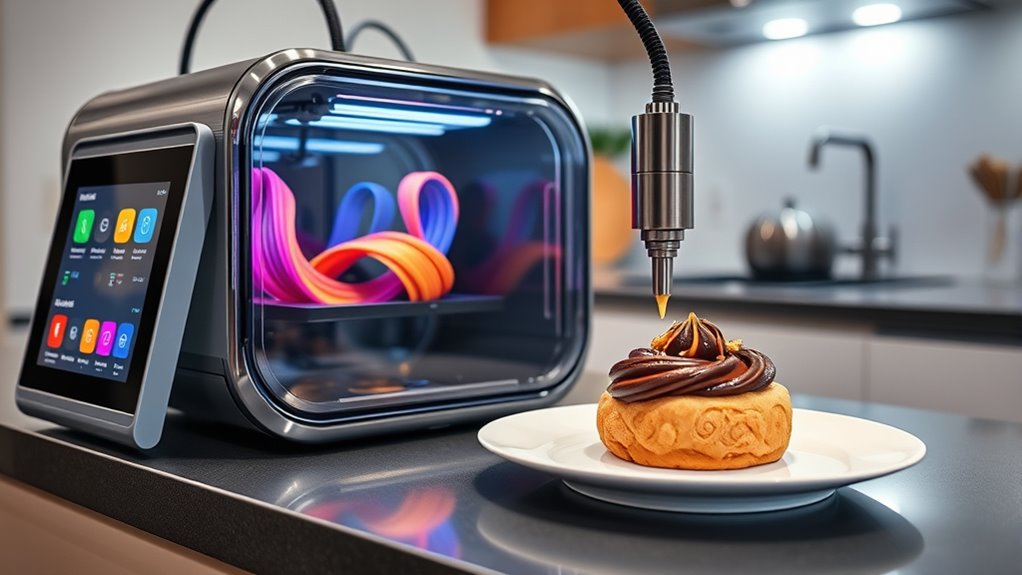

3D food printers work by layer-by-layer depositing ingredients like pastes, gels, or powders based on digital designs you create using apps or computers. They allow you to make customized, intricate dishes with precise control over presentation, portion sizes, and ingredients. This technology is increasingly accessible for home use, helping you craft healthy, personalized meals and reduce waste. If you’re curious about how these innovative devices can transform your kitchen, you’ll find more details ahead.
Key Takeaways
- 3D food printers create customized dishes layer-by-layer using ingredients like pastes, gels, or powders based on digital designs.
- They enable precise nutritional customization, catering to specific dietary needs and promoting healthier eating habits.
- These devices are becoming more compact and affordable, making home use practical and accessible.
- 3D food printing allows for intricate shapes, textures, and presentation, inspiring culinary creativity at home.
- The technology helps reduce food waste by utilizing leftovers or surplus ingredients in personalized meal preparation.

3D food printers are revolutionizing the way we prepare and enjoy meals by allowing you to create complex, customized dishes with precision. This technology opens up exciting possibilities for nutritional customization, so you can tailor your meals to meet specific dietary needs or health goals. Whether you’re managing food allergies, aiming for a high-protein snack, or trying to control sugar intake, 3D food printing gives you the power to design exactly what your body needs. Instead of relying on standard recipes or pre-made options, you can experiment with different ingredients, textures, and flavors, all while ensuring your meal aligns with your nutritional preferences. This level of control fosters culinary innovation, letting you push traditional boundaries and discover new food combinations that suit your taste and health.
Using a 3D food printer is simpler than it might seem. You start by preparing the ingredients—often in the form of pastes, gels, or powders—that can be loaded into the device. The printer then follows a digital design, which you can customize on an app or computer, to layer the ingredients precisely where needed. As it prints, it builds your dish layer by layer, creating intricate shapes and textures that would be difficult or impossible through conventional cooking. This process not only enhances the presentation but also allows for precise control over portion sizes, reducing waste and supporting mindful eating habits. Imagine printing a perfectly portioned, nutrient-rich snack or a visually stunning appetizer at home, all with minimal effort.
The home potential for 3D food printers is immense. As these devices become more compact and affordable, they could soon be standard kitchen appliances. They’re especially appealing to people with specific dietary restrictions—like vegans, diabetics, or those following keto diets—since they enable you to craft foods that match your exact nutritional profile. Additionally, the ability to create fun, visually appealing meals might make healthy eating more engaging for kids or finicky eaters. Beyond personal use, 3D food printers can inspire culinary innovation in home cooking, encouraging experimentation with new ingredients and techniques. They also offer the chance to reduce food waste by using leftovers or surplus ingredients creatively. Moreover, understanding the importance of personalized nutrition**** can help users optimize their health and dietary goals. Overall, these devices promise a future where personalized nutrition and culinary creativity go hand in hand, transforming everyday meals into customized, artful creations.
Frequently Asked Questions
Are 3D Food Printers Safe for Children to Use?
3D food printers can be safe for children if you prioritize child safety and provide proper kitchen supervision. Always supervise your kids closely to prevent accidents, especially when handling equipment or ingredients. Make sure the printer is used according to the manufacturer’s instructions, and keep small parts or sharp tools out of reach. With vigilant supervision and safety measures, children can enjoy exploring 3D food printing safely.
Can 3D Printers Create Complex, Multi-Layered Dishes at Home?
They say “practice makes perfect,” and with 3D food printers, you can definitely craft complex, multi-layered dishes at home. These devices excel in food customization, allowing you to design intricate textures and flavors. Thanks to ingredient versatility, you can experiment with various foods to create stunning, layered presentations. While it takes some skill, the potential for impressive culinary creations is huge, making your kitchen a true artist’s studio.
What Are the Costs Associated With Starting Home 3D Food Printing?
Starting home 3D food printing involves a significant equipment investment, with costs ranging from $200 to over $2,000 depending on the printer’s features. Conduct a thorough cost analysis to understand ongoing expenses like ingredients and maintenance. You’ll also need to take into account the price of compatible food cartridges and potential upgrades. While initial costs can be high, investing in quality equipment helps ensure better results and long-term satisfaction.
How Long Does It Take to Print a Typical Meal?
Picture your favorite meal unfolding layer by layer as the printer whirs softly. Generally, it takes about 30 minutes to an hour to print a typical meal, depending on its complexity. Simpler dishes print faster, letting you enjoy your customized creations sooner. Printing speed varies, but with patience, you’ll master the art of crafting delicious, personalized meals right in your own kitchen, transforming cooking into a fun, futuristic experience.
Are There Health Concerns With Consuming 3D Printed Food?
There are some health concerns with consuming 3D printed food, mainly related to food additive safety and maintaining nutritional integrity. You should verify the ingredients used are safe and approved for consumption. Additionally, check that the printing process preserves the food’s nutrients. When these factors are properly managed, 3D printed foods can be a safe and nutritious option for your diet.
Conclusion
So, now you see how 3D food printers could revolutionize your kitchen, making personalized meals with just a few clicks. Imagine designing your own pizza or intricate desserts, all at home—like something out of a sci-fi flick, but real. As these gadgets become more affordable and user-friendly, you might soon be crafting culinary masterpieces faster than you can say “Eureka!” Get ready to embrace the future of food, where innovation meets your dinner plate.