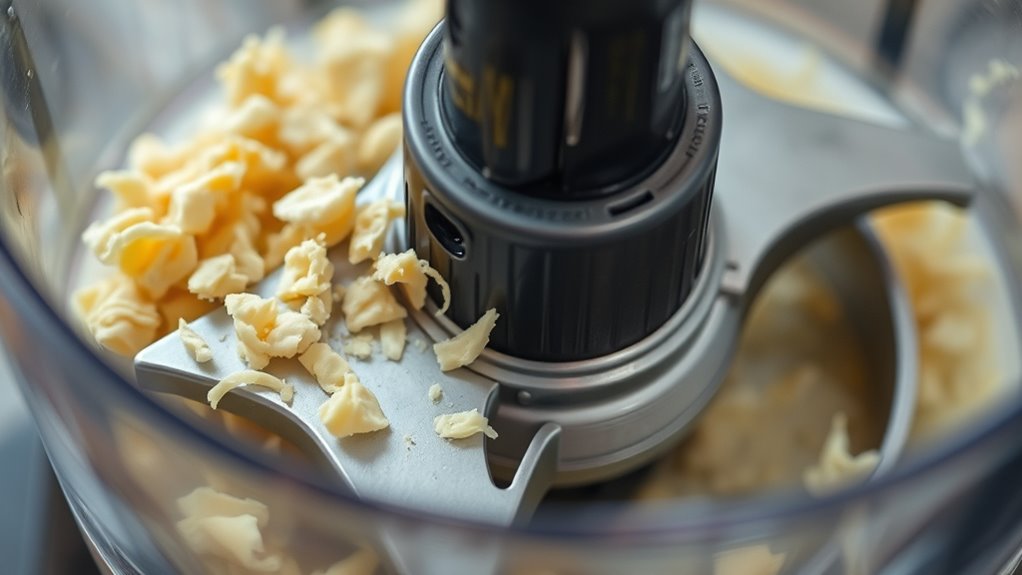

Your food processor stalls on cheese because its motor doesn’t have enough torque to handle the dense, sticky texture of the ingredient. Soft cheeses can still resist the blades, especially if the motor isn’t powerful enough to overcome that resistance. Using a processor with higher wattage or processing in smaller batches can help. Want to find out how to prevent stalls and choose the right appliance? Keep exploring to learn more.
Key Takeaways
- Cheese’s dense and sticky texture increases motor load, risking stalls if the processor lacks sufficient torque.
- Inadequate motor power or low wattage processors cannot generate enough torque to handle cheese processing.
- Processing large or hard cheese pieces overload the motor, leading to stalls or overheating.
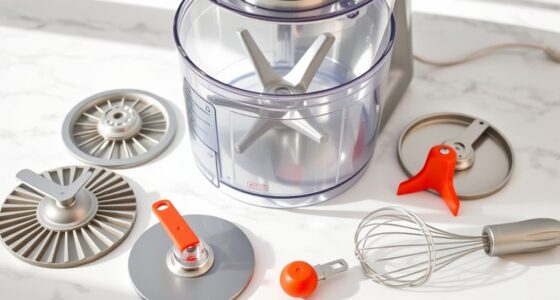
- Blade design and dull blades increase resistance, requiring more torque to process cheese effectively.
- Using the processor beyond its capacity or without proper techniques causes excessive load and stalls.

You are trained on data up to October 2023.
high torque food processor for cheese
As an affiliate, we earn on qualifying purchases.
As an affiliate, we earn on qualifying purchases.
Frequently Asked Questions
Can Low Torque Damage My Food Processor?
Yes, low torque can damage your food processor. When the motor struggles due to low torque, it may overheat as it tries to process tough ingredients like cheese, risking motor overheating. Additionally, continuous power fluctuations can cause stress on the motor, leading to potential damage over time. To prevent this, avoid forcing the processor through difficult tasks and make certain it’s suitable for the ingredients you’re processing.
Does Blade Design Affect Torque Requirements?
Blade design indeed affects torque requirements. If your blades have high efficiency, they cut through ingredients like cheese more easily, reducing the torque needed. Conversely, blades made from weaker materials or with poor design may require more torque, increasing the chance of motor stalls. So, choosing blades with ideal material strength and efficient design helps your food processor operate smoothly without overloading the motor.
How Does Processor Size Influence Torque Needs?
You’ll find that processor size, or motor size, directly influences torque needs. Larger processors with higher capacity require more torque to handle tough ingredients like cheese. If your processor has a small motor, it may struggle or stall when processing dense foods. Choosing a processor with an appropriate motor size for your capacity ensures smooth operation, especially when working with challenging ingredients that demand more power.
Are Higher Torque Motors More Durable?
Are higher torque motors more durable? Absolutely. Higher torque specifications generally mean the motor is built to handle tougher tasks, which can extend motor longevity. When you choose a motor with robust torque, you reduce strain and wear, leading to fewer breakdowns. So, if you’re planning to process dense foods like cheese frequently, opting for a higher torque motor guarantees your appliance stays reliable and lasts longer.
What Safety Features Prevent Motor Stalls?
You should know that safety features like overcurrent protection and thermal shutdown help prevent motor stalls. Overcurrent protection cuts power when the motor draws too much current, avoiding damage. Thermal shutdown automatically turns off the motor if it overheats, safeguarding components. These safety features guarantee your appliance operates safely, especially when processing tough ingredients like cheese, reducing the risk of stalls and prolonging motor life.
Conclusion
So, next time your cheese stalls your food processor, remember it’s about more than just power. It’s about understanding the torque, respecting the motor, and choosing the right settings. It’s about patience, precision, and care. When you grasp the why behind the stall, you’ll be better prepared to prevent it. Embrace the challenge, learn from it, and move forward with confidence. Because every obstacle is an opportunity to master your kitchen, one slice at a time.