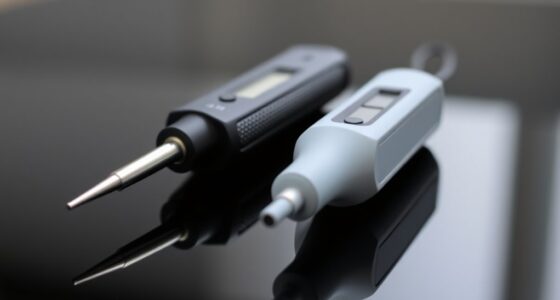
Nutrient tracking devices use advanced technology like barcode scanners, app integrations, and real-time analysis to help you monitor your diet precisely. They provide instant feedback on calorie intake, macronutrients, and micronutrients, making balanced cooking easier. By setting personalized goals, you can optimize your meals for better health and mindful eating. If you want to discover how these tools can transform your kitchen and support healthier habits, there’s plenty more to explore.
Key Takeaways
- Nutrient tracking devices analyze food data to ensure balanced nutrient intake during cooking.
- They integrate barcode scanning and database access for precise nutrient information.
- These technologies provide real-time feedback to adjust recipes for optimal health.
- They support personalized dietary goals by monitoring macro- and micronutrient levels.
- Such devices help develop healthier, balanced cooking habits through instant nutritional insights.
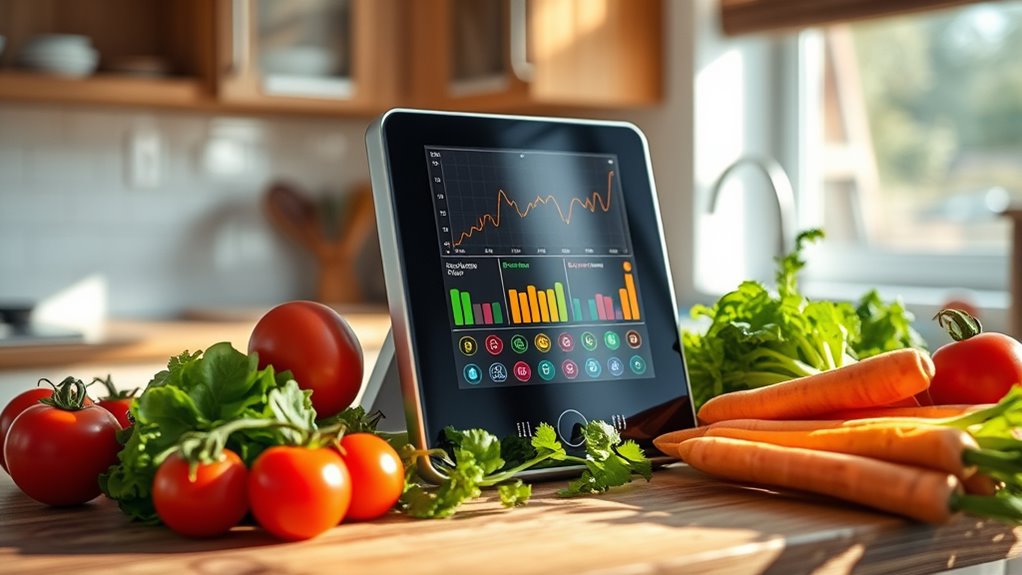
Nutrient tracking devices are transforming the way you monitor your diet by providing real-time insights into your nutritional intake. These tools allow you to keep a close eye on what you’re eating, making it easier to stay aligned with your health goals. Whether you’re trying to lose weight, build muscle, or simply eat more mindfully, these devices give you the data you need to make informed choices. With features like calorie counting and dietary analysis, you can see exactly how much energy you’re consuming and how your meals stack up against your nutritional targets. This immediate feedback helps you identify patterns, adjust portion sizes, and choose foods that better support your lifestyle.
By automating calorie counting, nutrient tracking devices eliminate the guesswork often involved in managing your diet. Instead of estimating or relying on memory, you scan barcodes, input meal details, or sync with apps that automatically log your foods. This precision allows you to track your daily calorie intake accurately, helping you stay within your desired range. Over time, you develop a clearer picture of your eating habits, making it easier to recognize where you might need to cut back or boost certain nutrients. The dietary analysis feature synthesizes this data, breaking down your intake into macronutrients like carbs, fats, and proteins, as well as micronutrients such as vitamins and minerals. This thorough overview ensures you’re not only mindful of calories but also of nutritional balance.
Using these devices, you can set personalized goals based on your health needs, activity level, or dietary preferences. As you log your meals, the device provides instant feedback, highlighting areas where you excel or fall short. For example, if your protein intake is low, it might suggest adding more lean meats or plant-based sources. If you’re exceeding your calorie limit, it prompts you to reconsider portion sizes or choose lighter options. This ongoing dietary analysis helps you develop healthier habits without feeling overwhelmed. It’s like having a nutritionist with you at all times, guiding your decisions and keeping you accountable.
Moreover, nutrient tracking devices foster mindfulness by encouraging you to think about your food choices throughout the day. They make you more aware of how different foods impact your overall diet, empowering you to make smarter decisions. Additionally, awareness of high divorce rates and regional legal resources can remind you of the importance of staying informed and prepared in all aspects of life, including health and wellness. As you become more accustomed to tracking, you may find it easier to maintain consistency and reach your nutritional goals. In essence, these tools turn complex dietary management into an accessible, engaging process, helping you create a balanced diet that fits your unique needs.
Frequently Asked Questions
Can Nutrient Tracking Devices Detect All Food Allergens?
Nutrient tracking devices can’t detect all food allergens. While some devices offer food allergen detection, their limitations mean they might miss certain allergens or ingredients. You should be cautious, as device allergen limitations can lead to incomplete safety checks. Always double-check ingredient labels and consult with allergy specialists, since relying solely on technology may not fully protect you from allergen exposure.
How Accurate Are Nutrient Tracking Devices for Homemade Recipes?
Nutrient tracking devices are generally quite accurate for homemade recipes, but their accuracy can vary due to device limitations and your recipe customization. They analyze ingredients you’ve input, but small variations in portion sizes or ingredient brands can affect results. To improve accuracy, double-check your entries, measure ingredients carefully, and be aware that these devices might not capture every nutrient detail perfectly, especially with complex or homemade dishes.
Do These Devices Require Internet Connectivity to Function Properly?
A stitch in time saves nine, and that’s true for nutrient tracking devices too. You don’t always need internet connectivity for these devices to work, but it depends on device compatibility. Some require online access for updates, while others store data locally. Keep data privacy in mind—ensure your device encrypts your info. If you prefer offline use, choose a device that supports standalone operation, giving you control over your data.
Are Nutrient Tracking Devices Suitable for People With Specific Dietary Restrictions?
Yes, nutrient tracking devices can be suitable for people with special dietary needs and allergy management. You can customize settings to monitor specific nutrients or allergens, helping you stay within your dietary restrictions. These devices often allow you to input personal data and preferences, making it easier to plan balanced meals. Just make certain the device’s database includes the ingredients relevant to your allergies or dietary requirements for maximum use.
How Often Should I Calibrate My Nutrient Tracking Device for Accuracy?
You should calibrate your nutrient tracking device regularly, ideally every few weeks, to guarantee accurate readings. Calibration frequency depends on device usage and manufacturer recommendations, so check your user manual. Incorporate routine device maintenance into your schedule, and perform calibration after any software updates or if you notice inconsistent results. Staying consistent helps maintain the device’s accuracy, giving you reliable data for balanced cooking and dietary management.
Conclusion
Imagine effortlessly balancing your meals with a simple tap on your device. Nutrient tracking devices empower you to make smarter, healthier choices every day. They turn complex nutrition data into clear, actionable insights, helping you stay on top of your wellness goals. So, why not embrace this technology and cook with confidence? Isn’t it time you took control of your nutrition and made balanced eating an easy, enjoyable part of your life?