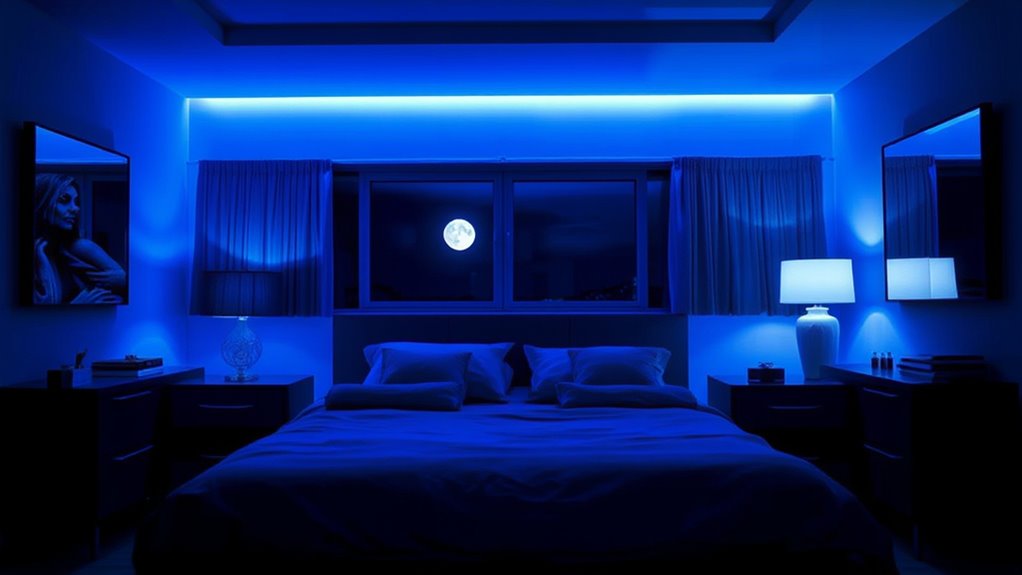
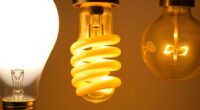
Your home lighting, especially from screens and LED bulbs, emits blue light that can disrupt your sleep by suppressing melatonin and interfering with your circadian rhythm. Exposure in the evening worsens sleep quality, making it harder to fall asleep and wake refreshed. To protect your sleep, consider switching to warmer, dimmer lights and limiting screen time before bed. If you want to find out how to minimize blue light’s effects, keep exploring these strategies further.
Key Takeaways
- Blue light from home devices and LED lighting suppresses melatonin, delaying sleep onset and disrupting circadian rhythms.
- Evening exposure to blue light prolongs wakefulness, leading to fragmented sleep and reduced sleep quality.
- Household blue light sources, like screens and energy-efficient bulbs, can unintentionally harm sleep health.
- Adjusting lighting to warmer tones and limiting screen time before bed can mitigate blue light’s negative effects.
- Poor sleep hygiene caused by blue light exposure may result in daytime fatigue and overall health issues.
Understanding Blue Light and Its Sources in the Home
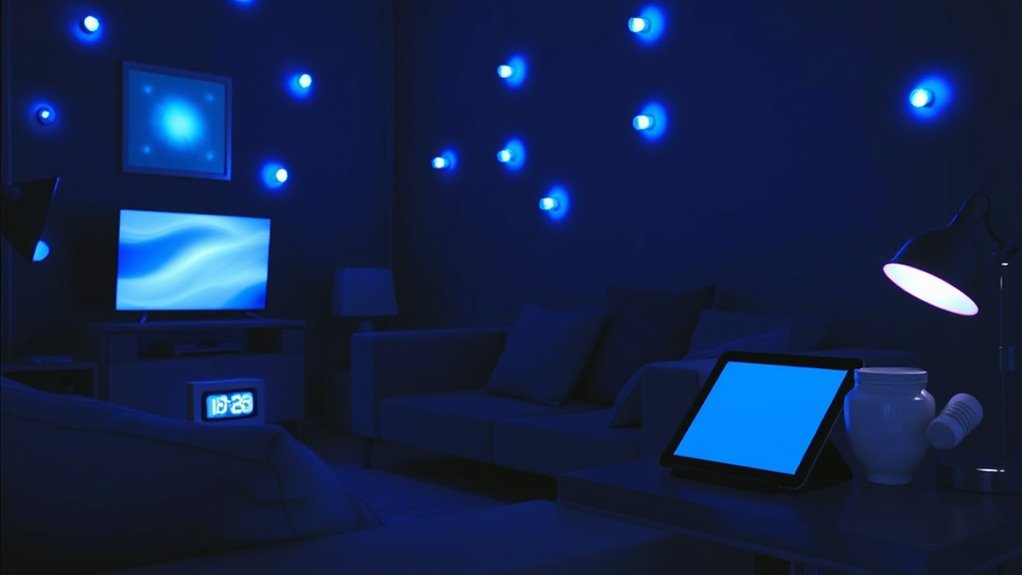
Blue light is a high-energy visible light that is emitted by many common devices in your home. It’s part of the light spectrum, which includes various wavelengths with different effects. Blue light sources are found in screens like smartphones, tablets, computers, and LED or fluorescent lighting. These sources emit a significant amount of blue light, especially during evening hours. Since blue light has a short wavelength, it delivers high energy, making it more impactful on your eyes and sleep patterns. You might not realize how often you’re exposed to these blue light sources throughout the day, but their presence in your daily environment is unavoidable. Recognizing these sources helps you understand how pervasive blue light is in your home. Additionally, the use of light-emitting diodes in home lighting has increased blue light exposure, which can further disrupt circadian rhythms.
How Blue Light Disrupts Your Circadian Rhythm
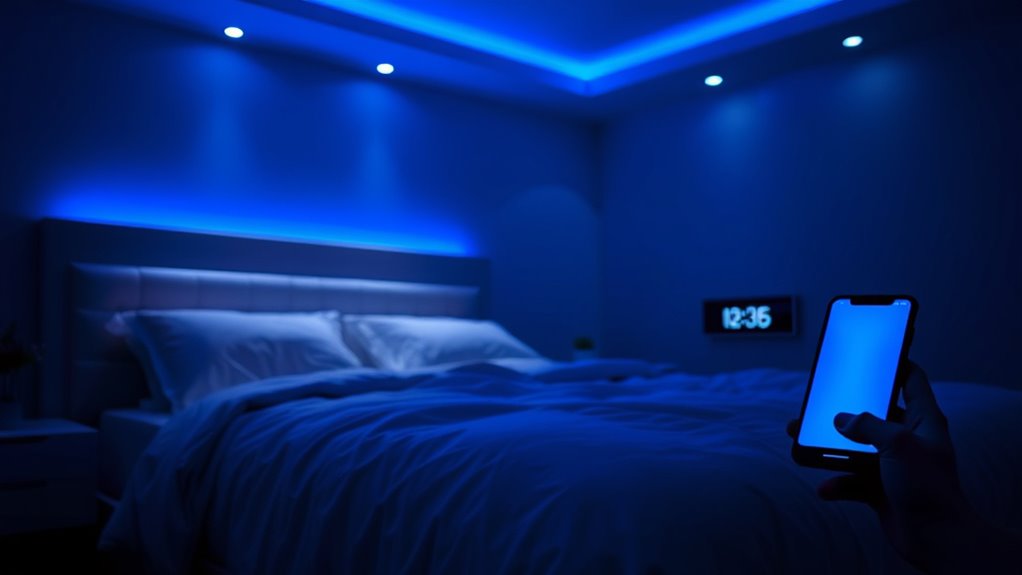
Exposure to blue light in your home, especially during evening hours, can interfere with your body’s natural sleep-wake cycle, known as the circadian rhythm. Blue light effects are particularly potent because they signal to your brain that it’s daytime, suppressing the production of melatonin, the hormone responsible for sleep. When melatonin levels stay low due to blue light exposure, your circadian disruption occurs, making it harder to fall asleep and stay asleep. This disruption shifts your internal clock, leading to irregular sleep patterns and reduced sleep quality. The more blue light you’re exposed to before bed, the greater the impact on your circadian rhythm, ultimately affecting your overall health and daily functioning. Additionally, using self-watering plant pots or other electronic devices emitting blue light close to bedtime can exacerbate these effects by increasing your exposure during critical sleep hours.
The Impact of Evening Blue Light Exposure on Sleep Quality
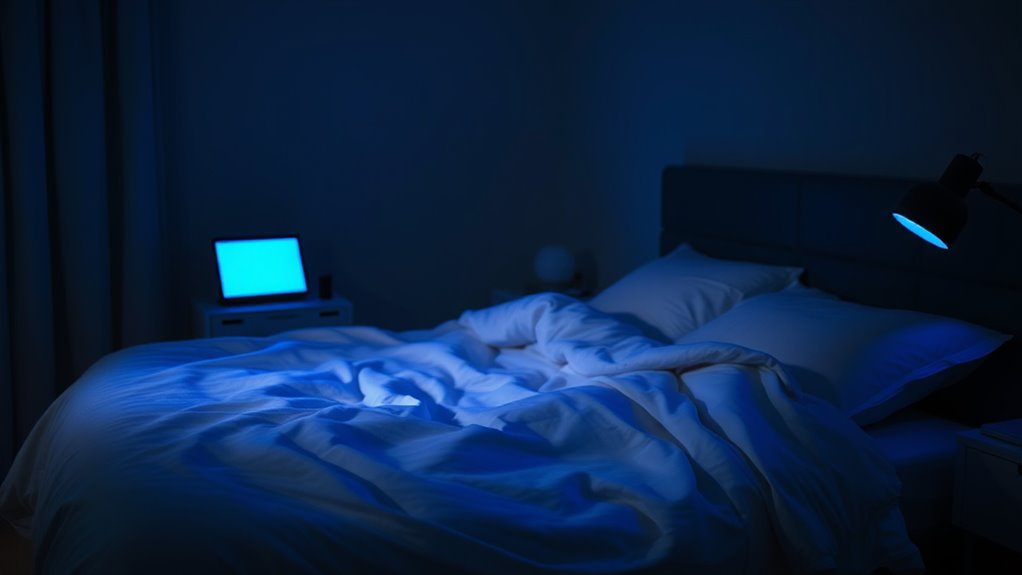
When you’re exposed to blue light in the evening, your body produces less melatonin, making it harder to feel sleepy. This delay can cause you to stay awake longer than intended and disrupt your overall sleep quality. Understanding this impact can help you make better choices about evening screen time. Additionally, being aware of other factors such as discoloration and spoilage can also influence overall health and well-being.
Disrupts Melatonin Production
Evening blue light can considerably interfere with your body’s ability to produce melatonin, the hormone that regulates sleep. When you’re exposed to blue light, it triggers melatonin suppression, making it harder for you to feel sleepy. This disruption hampers your natural sleep cycle and can lead to longer times to fall asleep. To understand its impact, consider:
- Reduced melatonin levels delaying sleep onset
- Increased alertness during nighttime hours
- Fragmented sleep patterns
- Lower sleep quality overall
- Greater difficulty waking refreshed
These effects highlight how blue light exposure causes sleep disruption by interfering with melatonin production. The more you expose yourself to blue light before bed, the more your body struggles to transition into restful sleep, leaving you tired and unrested.
Delays Sleep Onset
Blue light before bed actively delays your ability to fall asleep by suppressing melatonin production, making your body less ready for rest. Excessive screen time in the evening exposes you to blue light, which can interfere with your circadian rhythm and extend the time it takes to fall asleep. Poor sleep hygiene, such as using devices late at night, worsens this delay, leading to restless nights and reduced sleep quality. When blue light disrupts your natural sleep signals, you may find yourself lying awake longer than necessary. Incorporating eye patches into your nighttime routine can help shield your eyes from blue light and promote relaxation. Limiting screen time before bed and adopting better sleep hygiene practices can help reduce delays in sleep onset. Creating a calming, dark environment signals your body that it’s time to rest, helping you fall asleep faster.
Identifying Blue Light in Common Household Lighting
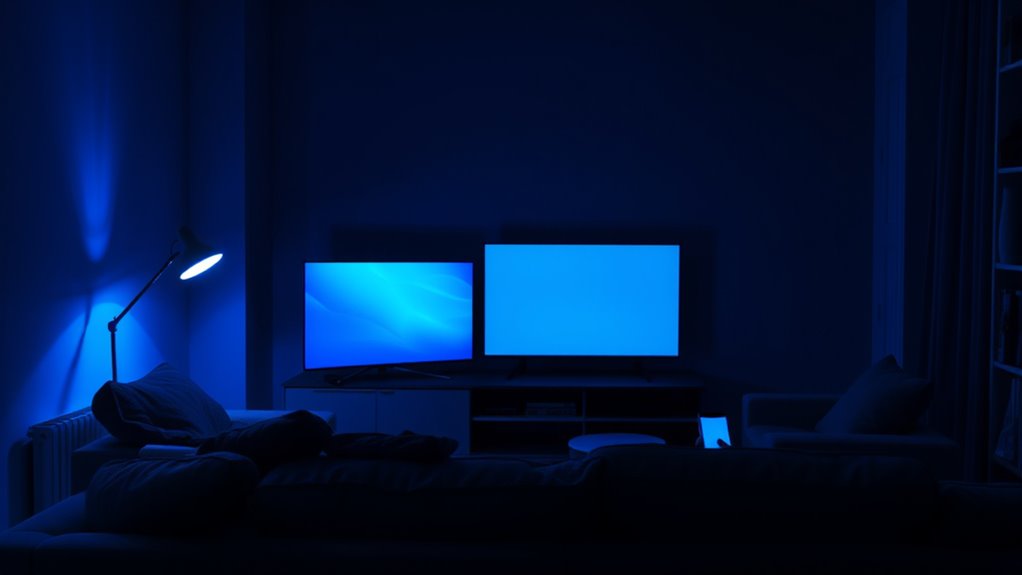
You can find blue light in many household lighting sources, from LED bulbs to fluorescent fixtures. Different types of lighting emit varying amounts of blue spectrum, making some more concerning for sleep than others. Learning how to identify blue light helps you make smarter choices for your evening environment. Additionally, understanding AI-powered personalization in smart lighting systems can help tailor your home lighting to reduce blue light exposure at night.
Sources of Blue Light
Have you ever wondered which household lighting sources emit significant blue light? Many everyday lights contribute to blue light exposure, impacting your blue light health and sleep. Recognizing these sources helps you reduce exposure, especially during evening hours. Common household items that emit blue light include:
- LED and CFL bulbs in lamps and fixtures
- Digital devices like smartphones, tablets, and laptops
- Smart TVs and computer monitors
- Energy-efficient light bulbs
- Fluorescent lighting in fixtures
While digital device usage is the primary concern, these household lights also emit blue light that can disrupt your circadian rhythm. Being aware of these sources allows you to make smarter choices about lighting in your home to protect your sleep and overall health. Additionally, understanding the specific types of household lighting that emit blue light can help you select better options for evening use.
Household Lighting Types
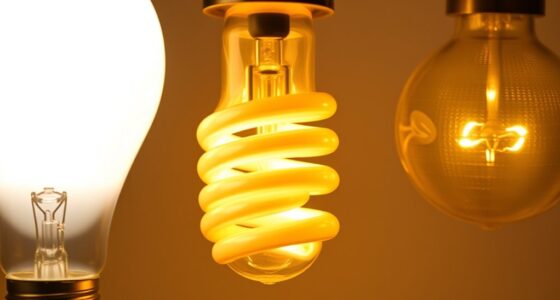
Ever wondered which household lighting sources emit blue light? Many common options, like LED technology and smart lighting, produce significant blue wavelengths. LED bulbs, especially those labeled as cool white or daylight, tend to emit more blue light than traditional incandescent bulbs. Smart lighting systems often allow you to customize color temperatures, but many default to settings that maximize blue spectrum exposure, especially during daytime hours. Fluorescent lights also emit blue light, though to a lesser extent. Understanding these types helps you identify which sources might be affecting your sleep. While LED and smart lighting provide energy efficiency and convenience, their blue light output can disrupt your circadian rhythm if used late in the evening. Recognizing these household lighting types is the first step toward minimizing blue light exposure at home. Additionally, ethical hacking principles highlight the importance of assessing vulnerabilities, such as excessive blue light exposure, and implementing strategies to mitigate their impact on health.
Detecting Blue Spectrum
Wondering how to tell if your household lights are emitting blue light? Spectral analysis tools can help you detect the blue spectrum output from your bulbs. You can use smartphone apps or specialized devices that analyze light spectra, revealing the amount of blue light emitted. Look for signs like bluish hue or increased brightness in certain areas. Light filtering options, such as blue light filters or tinted glasses, can also indicate if your lighting is problematic. Keep an eye out for these clues:
- Bluish tint in the light
- Apps showing high blue spectrum levels
- Spectral analysis devices detecting blue wavelengths
- Light intensity variations with filters
- Visual cues from light color temperature
Additionally, understanding how mindfulness practices can help mitigate the impacts of blue light exposure on sleep can be beneficial.
Practical Strategies to Minimize Blue Light Before Bed

To effectively reduce blue light exposure before bed, you can implement simple yet impactful strategies such as adjusting your device settings or establishing a nightly routine. Limiting screen time in the hour before sleep helps improve your sleep hygiene and reduces blue light’s interference with melatonin production. Use built-in features like night mode or blue light filters on your devices, or consider installing apps that shift display colors to warmer tones at night. Establishing a calming pre-sleep routine—reading a physical book, stretching, or practicing relaxation techniques—distracts you from screens and promotes better sleep. Incorporating blue light management techniques can further enhance your efforts. These small changes make a significant difference in minimizing blue light’s impact, helping you fall asleep faster and enjoy more restful, restorative sleep.
Choosing the Right Lighting to Protect Your Sleep

Choosing the right lighting in your home can substantially reduce blue light exposure and improve your sleep quality. Modern lighting technology offers options that prioritize blue light health, helping you sleep better. Opt for warm-colored bulbs with lower color temperatures, such as amber or red hues, which emit less blue light. Consider installing dimmer switches to gradually reduce brightness in the evening. Use smart lighting systems that can be programmed to switch to sleep-friendly settings at night. Incorporate blackout curtains or lampshades to block unwanted blue light from screens. Additionally, understanding the impact of AI in cybersecurity can help safeguard your smart home devices from potential vulnerabilities, ensuring your lighting environment remains secure. By choosing the right lighting, you create a sleep-conducive environment that minimizes blue light’s interference with melatonin production, promoting healthier sleep patterns and overall well-being.
Frequently Asked Questions
Can Blue Light Exposure Affect Children’S Sleep Patterns Differently?
Blue light exposure can impact children’s sleep development differently because their eyes are more sensitive, making them more vulnerable to its effects. As a parent, you should provide guidance by limiting screen time before bed and encouraging relaxing activities to promote healthy sleep patterns. This proactive approach helps protect your child’s sleep quality, ensuring their sleep development stays on track. Parental guidance is key to mitigating blue light’s potential negative effects.
Are There Any Health Risks Associated With Long-Term Blue Light Exposure?
Picture a gentle river flowing quietly, yet over time, hidden currents can cause unseen ripples. Long-term exposure to blue light hazards might subtly impact your health, potentially affecting eye comfort and circadian rhythms. While research continues, it’s wise to be mindful of prolonged blue light exposure, especially from screens. Reducing your exposure can help protect your long-term health, keeping your overall well-being steady and serene.
Do Certain Types of Light Bulbs Emit More Blue Light Than Others?
You might notice that lighting technology and bulb color influence blue light emission. Some LED and fluorescent bulbs emit more blue light than traditional incandescent bulbs. Cool white and daylight bulbs tend to produce higher levels of blue light, while warm white or amber bulbs emit less. Choosing bulbs with warmer tones can help reduce blue light exposure, especially during evening hours, supporting better sleep and overall health.
How Does Blue Light Exposure Impact Eye Health Over Time?
Blue light exposure can cause visual strain over time, making your eyes feel tired and uncomfortable. Prolonged exposure may also increase the risk of retinal damage, potentially impacting your long-term eye health. You might notice more headaches or difficulty focusing after extended screen use. To protect your eyes, try limiting blue light exposure, use blue light filters, and take regular breaks to reduce strain and safeguard your retinal health.
Can Blue Light Glasses Fully Block All Harmful Blue Wavelengths?
While blue light glasses reduce glare and offer UV protection, they can’t fully block all harmful blue wavelengths. Think of them as a helpful shield, but not a complete barrier—like sunglasses for your eyes, they lessen exposure but don’t eliminate it. So, even with these glasses, it’s wise to limit screen time and use built-in filters to protect your vision and sleep quality.
Conclusion
As you dim the lights and switch off screens, imagine a peaceful night settling in, free from harsh blue glow. By choosing warm, gentle lighting in your home, you create a cozy haven that whispers lullabies to your sleep. Embrace these small changes, and soon you’ll drift into restful slumber, waking refreshed. Your home can become a sanctuary where darkness nurtures your dreams, and every night feels like a serene retreat from the chaos of blue light.