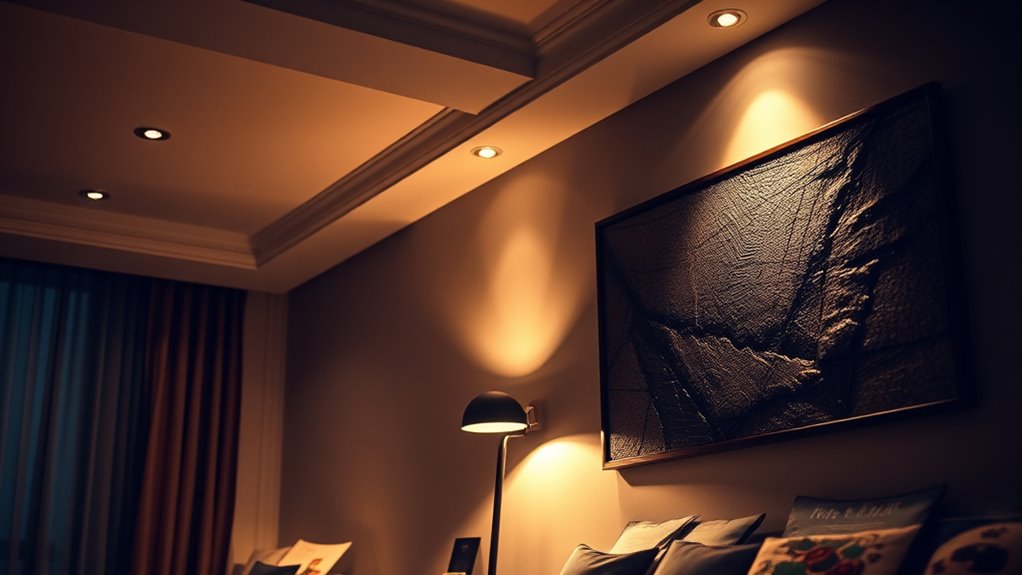

To effectively layer light in your space, start with ambient lighting like ceiling fixtures to provide general illumination. Add task lighting such as desk lamps or under-cabinet lights for specific activities, and incorporate accent lighting like spotlights or LED strips to highlight features or create ambiance. Use dimmers to adjust brightness for different moods or tasks. By combining these types thoughtfully, you’ll create a versatile, inviting environment—discover more tips on mastering this balance.
Key Takeaways
- Start with ambient lighting to provide overall illumination and set a warm, inviting mood.
- Incorporate task lighting in specific areas to facilitate activities like reading or cooking.
- Add accent lighting to highlight architectural features, artwork, or decorative elements.
- Use dimmers on each lighting layer to adjust brightness and create versatile atmospheres.
- Organize lighting into zones for independent control and energy efficiency.

Have you ever wondered how to create a warm, inviting space with just the right amount of illumination? The secret lies in layering your lighting effectively, which involves combining ambient, task, and accent lighting to achieve a balanced and functional environment. One of the best ways to control this layered lighting is by installing dimming switches, allowing you to adjust light levels to suit different moods and activities. Dimming switches are especially useful when you want to set a relaxing atmosphere in the evenings or brighten a space for detailed tasks. Additionally, organizing your lighting into distinct zones, or lighting zones, helps you manage multiple light sources independently, giving you complete control over the ambiance of each area.
When planning your lighting layers, start with ambient lighting. This is your foundation—usually ceiling fixtures, recessed lights, or wall-mounted fixtures that fill the room with a soft, overall glow. Using dimming switches here means you can easily reduce or increase the general brightness, tailoring the space to your needs. Next, incorporate task lighting, which focuses on specific areas where activities like reading, cooking, or working take place. Desk lamps, under-cabinet lighting, or pendant lights are ideal for this purpose. Dimming switches on task lights are especially handy, as they let you fine-tune brightness to prevent glare and eye strain, ensuring comfort during prolonged use. When you assign separate lighting zones, you can turn on only the lights you need, saving energy and avoiding unnecessary clutter.
Finally, add accent lighting to highlight architectural features, artwork, or décor. Spotlights, wall sconces, and LED strips are great options. Using lighting zones here allows you to showcase your favorite pieces without overpowering the space. Dimming switches become invaluable, giving you the flexibility to emphasize certain elements or create dramatic effects with subtle lighting adjustments. An understanding of lighting control systems can further enhance your ability to customize your space with precision. By combining these layers thoughtfully, you can craft a space that’s versatile and inviting, whether you’re entertaining guests or enjoying a quiet evening at home. Remember, the key is to think of your lighting as adjustable tools rather than fixed fixtures. With dimming switches and well-planned lighting zones, you gain the power to transform your room’s atmosphere instantly, enhancing both its functionality and style. This approach makes your space adaptable, comfortable, and perfectly suited to your daily routines and special moments alike.
Frequently Asked Questions
How Do I Determine the Right Brightness Levels for Each Lighting Layer?
To determine the right brightness levels, start by using dimmer switches to adjust ambient lighting for a warm, inviting glow. For task lighting, guarantee it’s bright enough for activities without causing glare, and consider the color temperature to match the room’s purpose. Accent lighting should be subtle, highlighting features without overpowering. Always test different settings, and tweak brightness and color temperature until you achieve a balanced, comfortable atmosphere.
What Are the Best Types of Bulbs for Layered Lighting?
Think of your bulbs as the brushstrokes of your lighting masterpiece. LED bulbs are your best choice—they last longer, offering a generous bulb lifespan, and are energy-efficient, saving you money and reducing waste. Choose warm whites for cozy ambient light, cool whites for task areas, and accent bulbs with dimmable features to highlight artwork or architectural details. This blend creates a dynamic, inviting space with vibrant layers of light.
How Can I Control Multiple Lighting Layers Easily?
You can easily control multiple lighting layers by installing dimming controls and smart lighting systems. Dimming controls let you adjust brightness levels on individual fixtures, while smart lighting offers remote management via apps or voice commands. Set schedules, create scenes, or tweak settings on the fly, giving you seamless control over ambient, task, and accent lights. This approach simplifies managing layered lighting and enhances your room’s ambiance effortlessly.
What’s the Ideal Placement for Accent Lighting?
You spot the perfect spot for accent lighting by imagining highlighting your favorite artwork or architectural feature. Place decorative fixtures about 6 to 12 inches away from the object, angling the light to create depth and shadow. Choose a color temperature that complements the room’s ambiance, making the feature pop. Proper placement draws attention, enhances textures, and adds a warm, inviting glow to your space.
How Do I Prevent Glare and Shadows in Layered Lighting?
To prevent glare and shadows, you should use diffuse fixtures that soften the light, reducing harsh spots. Position fixtures carefully, aiming them away from direct eye contact and reflective surfaces. Incorporate dimmers for better control, and layer lighting with both ambient and task lights to evenly distribute illumination. Regularly modify the placement to ensure a balanced, glare-free environment that highlights your space without discomfort.
Conclusion
By thoughtfully layering ambient, task, and accent lighting, you create a luminous tapestry that transforms your space into a sanctuary of warmth and elegance. Imagine soft pools of glow guiding your evenings, focused beams highlighting your favorite artwork, and gentle highlights adding depth and intrigue. When you master this dance of light, your home becomes a mesmerizing haven where every corner whispers comfort and style, inviting you to relax and bask in its radiant harmony.