
Your home lighting can considerably affect your mood and mental health. Poor lighting, whether too dim, harsh, or unattractive, can increase stress, cause fatigue, or lead to feelings of depression. Natural light boosts serotonin and supports better sleep, while improper artificial lighting disrupts your circadian rhythms. Using the right color temperature, layering lighting, and incorporating daylight helps create a calming environment. Keep exploring to discover how specific lighting choices can improve your emotional well-being.

Get decor and gifts delivered free — and shop member deals
- Fast, free delivery on millions of items
- Access to Prime Big Deal Days deals on October 6–7
- Prime Video, Amazon Music and more included
Key Takeaways
- Poor or harsh lighting can cause discomfort, glare, and shadows, increasing stress and negatively impacting mood.
- Insufficient natural light or overly dim environments may lead to feelings of lethargy and low energy.
- Excessive artificial light or blue light exposure at night can disrupt circadian rhythms, affecting sleep and emotional stability.
- Lack of layered, adjustable lighting options limits mood regulation and can contribute to feelings of depression.
- Using warm, soft lighting and maximizing daylight can enhance mood and support mental well-being at home.
The Impact of Natural Light on Mood and Well-Being
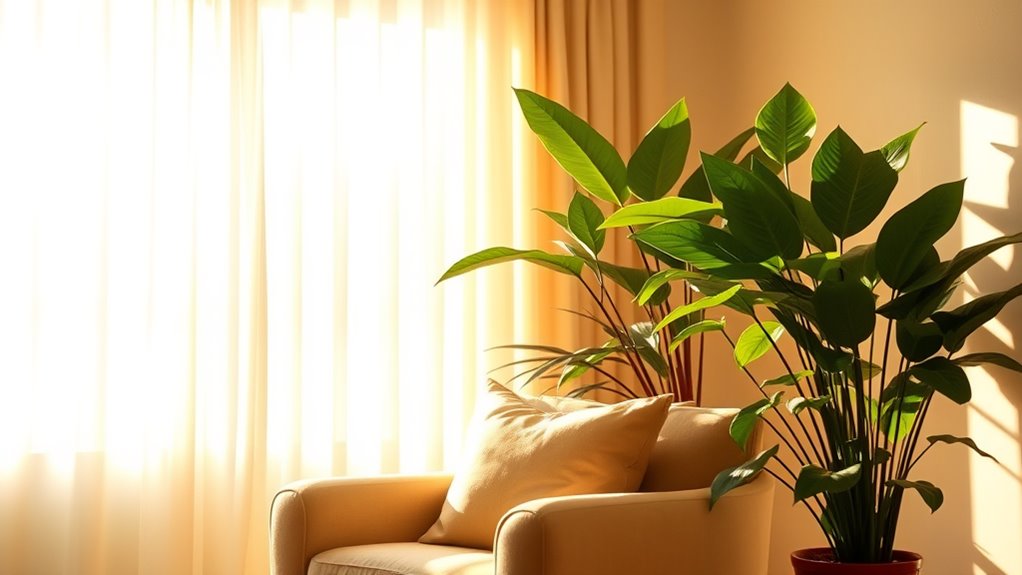
Natural light plays a crucial role in shaping your mood and overall well-being. When you embrace biophilic design, you bring nature indoors, enhancing your connection to natural light. This approach encourages the use of large windows and reflective surfaces, maximizing daylight harvesting—your home’s ability to capture and utilize sunlight efficiently. Exposure to ample natural light boosts serotonin levels, lifting your spirits and reducing stress. It also helps regulate your circadian rhythm, improving sleep quality and energy during the day. By prioritizing natural light, you create a healthier, more inviting environment that supports your mental health. Incorporating these design principles transforms your space into a sanctuary that nurtures your mood, making each day brighter and more balanced. Monitoring signs of spoiled lemon juice can help you maintain a fresh and safe environment at home.
How Artificial Lighting Influences Mental Health
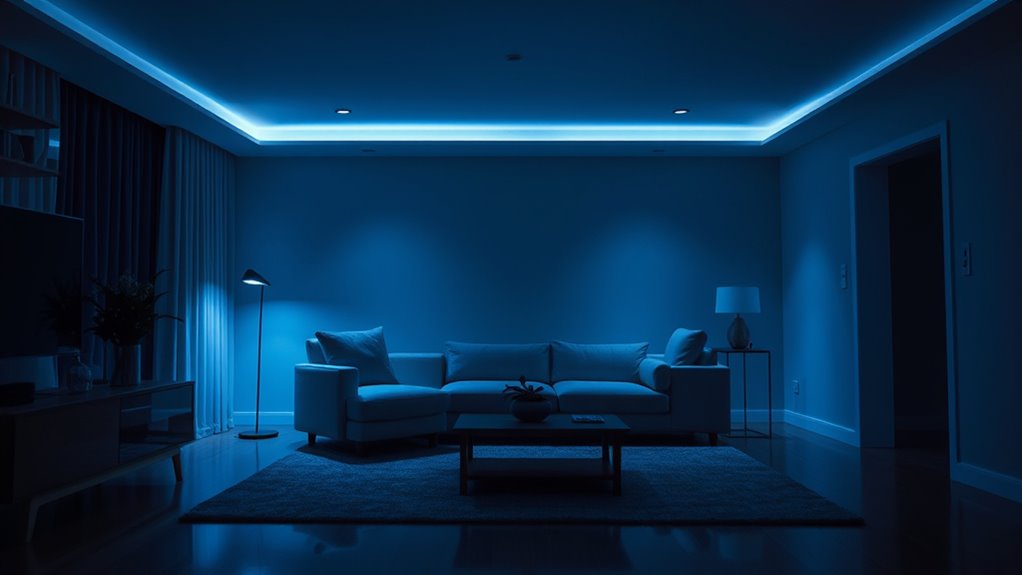
Artificial lighting can profoundly affect your mood and mental health, often in ways you might not realize. Poor lighting choices can disrupt your circadian rhythm, leading to sleep issues and increased stress. Understanding these effects can help you create a healthier, more balanced home environment. Additionally, advancements in AI are helping to develop smart lighting systems that adapt to your needs and promote better mental well-being.
Mood Regulation Effects
Since lighting directly affects your body’s internal clock, it can substantially influence your mood and mental health. Proper lighting, especially through light therapy, can boost your emotional resilience and stabilize your mood. Here’s how artificial lighting impacts you: 1. Enhances mood by increasing serotonin levels during exposure to bright, natural-like light. 2. Reduces feelings of depression, especially in darker months, supporting emotional stability. 3. Promotes alertness and focus, helping you stay motivated and productive. 4. Strengthens your mental resilience, making it easier to handle stress and emotional setbacks. Additionally, Crochet Styles for Locs can offer a relaxing and creative outlet that contributes to overall mental well-being.
Circadian Rhythm Disruption
Have you ever noticed how late-night screen time can leave you feeling off-balance or groggy the next day? Artificial lighting, especially exposure to blue light at night, disrupts your circadian rhythm, the internal clock that governs sleep and alertness. When your rhythm is off, your body struggles to regulate melatonin, the hormone that signals sleep time. This disruption can lead to sleep problems and affect your mental health over time. To counteract this, light therapy devices can help reset your circadian rhythm by providing the right light at the right time. Prioritizing natural light during the day and minimizing exposure to artificial light at night supports melatonin regulation, helping you maintain a healthy sleep cycle and improving your overall mood. Additionally, using portable lighting options like light therapy devices can be highly effective in managing circadian rhythm disruptions, especially in environments with limited natural light.
The Role of Light Color Temperature in Emotional State
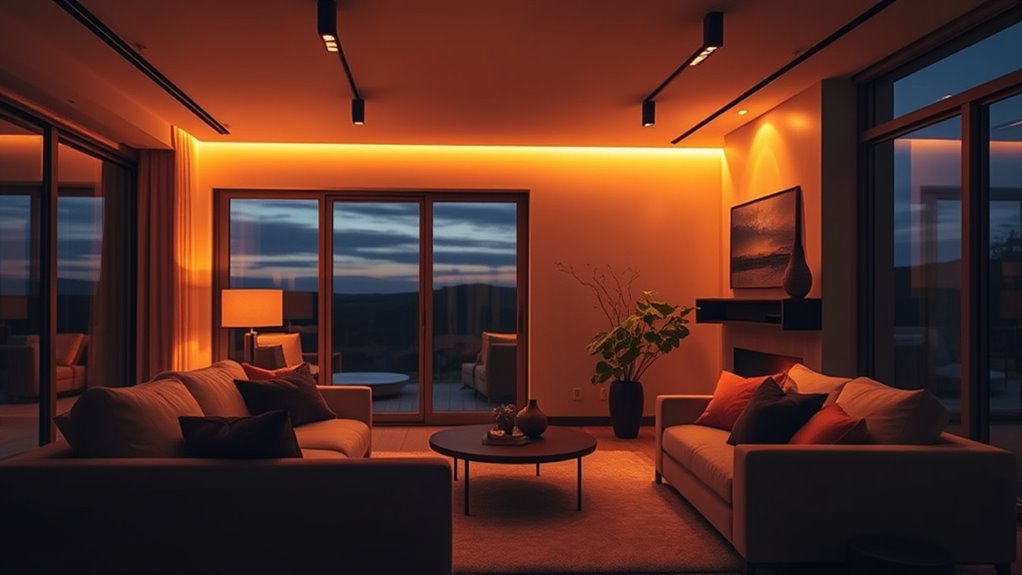
Light color temperature profoundly impacts your mood, with warm tones creating a cozy atmosphere and cool tones boosting alertness. When your lighting aligns with your circadian rhythm, it helps regulate your emotional well-being naturally. Understanding how different hues influence your feelings can help you choose lighting that enhances your mood and comfort at home.
Warm vs. Cool Tones
How does the color temperature of your home’s lighting influence your mood? Warm tones, with yellow or orange hues, evoke feelings of coziness, relaxation, and comfort, aligning with positive color psychology. Cool tones, with blue or white hues, promote alertness and focus but can sometimes feel sterile or impersonal, affecting your emotional influence negatively. Consider these key points:
- Warm lighting enhances relaxation, reducing stress and promoting intimacy.
- Cool lighting boosts concentration, helpful during work or study.
- Mixing tones can balance emotional states, preventing overstimulation.
- Your choice impacts mood directly, highlighting the importance of intentional lighting design.
- Understanding how light color temperature interacts with emotional wellbeing can help you create a more supportive and comfortable home environment.
Circadian Rhythm Alignment
Did you know that the color temperature of your home’s lighting can directly influence your body’s internal clock? Properly aligned lighting supports your circadian rhythm, helping you wake up energized and wind down naturally. Using daylight simulation bulbs that mimic natural sunlight can boost alertness during the day and improve sleep at night. Light therapy, especially in the morning, helps reset your internal clock if it’s out of sync, reducing feelings of depression and fatigue. Cooler, blue-enriched light promotes wakefulness, while warmer tones signal your body to relax later in the day. By paying attention to light color temperature and timing, you can enhance your emotional stability and overall well-being, maintaining a healthy circadian rhythm right at home.
Mood Enhancement Effects
The color temperature of your home’s lighting can considerably influence your emotional state, shaping how you feel throughout the day. Warm, softer tones tend to promote relaxation and comfort, while cooler, bluish lights can boost alertness and focus. This effect is the foundation of emotional lighting and light therapy, which use specific color temperatures to improve mood. Here are some ways to leverage this:
- Use warm, amber hues in the evening to unwind and foster coziness.
- Incorporate cooler, daylight-like lighting during the day to energize and enhance focus.
- Experiment with adjustable lighting to match your activity and mood needs.
- Consider emotional lighting solutions that adapt to your circadian rhythm, supporting overall mental well-being.
- Understanding lighting effects on mood can help you create an environment conducive to emotional balance and mental health.
This strategic use of light color temperature can help uplift your mood naturally.
Seasonal Affective Disorder and Home Lighting Solutions
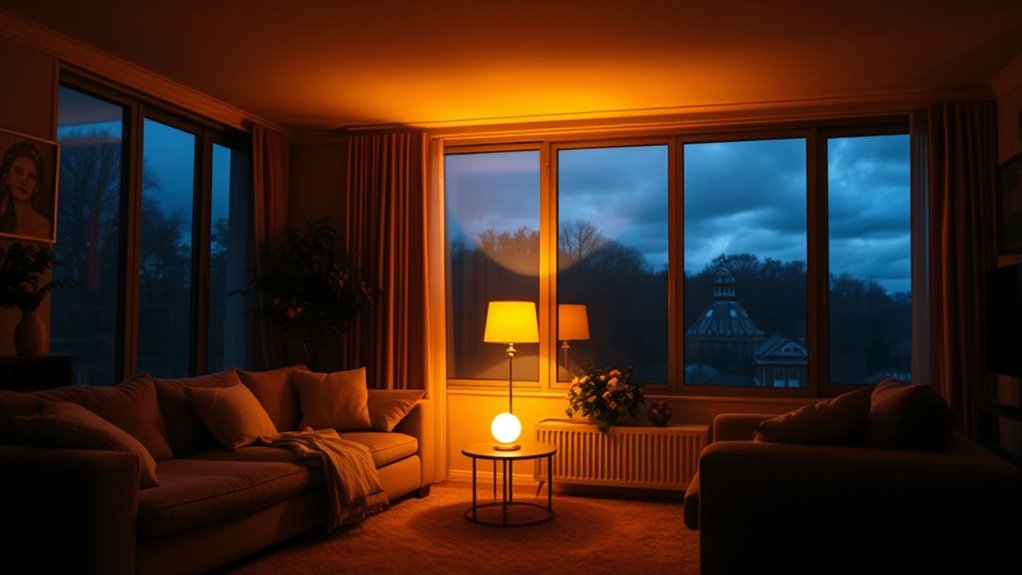
As winter days grow shorter and sunlight diminishes, many people experience increased feelings of fatigue and low mood, a condition known as Seasonal Affective Disorder (SAD). To combat this, consider using home lighting solutions like light therapy lamps that mimic natural sunlight, boosting your mood. Incorporate mood lighting such as warm, soft bulbs in common areas to create a cozy environment. These strategies can help regulate your circadian rhythm and improve overall well-being. Here’s a quick comparison:
| Solution | Benefits | Ideal Use |
|---|---|---|
| Light therapy lamps | Simulates sunlight, lifts mood | Morning, daily use |
| Warm mood lighting | Creates comfort, reduces stress | Living rooms, bedrooms |
| Natural light | Enhances mood and energy | During daytime |
Adjusting your home lighting can make a significant difference during darker months. For a more inviting ambiance, incorporating rustic decor elements can also enhance your space and promote a relaxed, cozy atmosphere.
The Psychological Effects of Dim and Harsh Lighting
While warm, soft lighting can create a cozy atmosphere and lift your mood, harsh or dim lighting often has unintended psychological effects that can negatively impact your well-being. High or uneven lighting intensity can lead to:
- Increased stress levels due to glare or shadows
- Reduced focus and productivity
- Feelings of gloom or depression
- Disrupted circadian rhythms, affecting sleep quality
Dim lighting might make you feel lethargic or isolated, while harsh lighting can create feelings of discomfort and irritability. Both extremes can impair your mood over time. Your mind responds to lighting intensity by influencing emotions and energy levels, so inadequate or overly aggressive lighting setups can harm your mental health. Implementing lighting management strategies can help create a balanced environment that supports mental well-being.
Tips for Creating a Bright and Uplifting Home Environment
Creating a bright and uplifting home environment starts with maximizing natural light whenever possible. Open curtains and keep windows unobstructed to let sunlight flood your space. During darker months, consider light therapy lamps to boost your mood and energy levels, mimicking natural sunlight. Incorporate colored lighting, such as warm or soft hues, to create a cheerful atmosphere and improve your overall sense of well-being. Use adjustable fixtures to tailor the brightness to your needs, avoiding harsh or dim zones. Adding mirrors can reflect light and make your space feel more open. Keep your environment clean and clutter-free, as a tidy space enhances light distribution. Embracing modern farmhouse decor trends that incorporate natural materials and vintage accents can also enhance the cozy, inviting feel of your home. These simple adjustments can substantially influence your mood and help you feel more positive at home.
The Connection Between Light Exposure and Sleep Patterns
Light exposure directly influences your sleep patterns by regulating your body’s internal clock, or circadian rhythm. When you get enough natural light during the day, it helps keep your sleep-wake cycle on track. Conversely, inadequate light can disrupt your sleep hygiene, making it harder to fall asleep or wake up refreshed. To improve this connection:
- Spend time outside during daylight hours to boost your circadian rhythm.
- Use light therapy lamps in darker months or rooms to simulate natural light.
- Limit screen time before bed to reduce exposure to blue light, which can interfere with sleep.
- Maintain a consistent sleep schedule, supporting your body’s natural rhythm.
Proper light exposure and noise levels of modern heat pumps can help you sleep better and feel more energized throughout the day.
Choosing the Right Lighting for a Positive Atmosphere
To foster a positive atmosphere at home, choosing the right lighting is essential. Start by incorporating lighting automation, which allows you to adjust brightness and color temperature effortlessly throughout the day. This helps create a welcoming environment that aligns with your mood and activities. Opt for energy-efficient bulbs, like LEDs, that provide warm, soft light to promote relaxation and reduce stress. Use dimmers to control light levels, making spaces adaptable for different times and tasks. Avoid harsh, fluorescent lighting, which can negatively impact your mood. Instead, focus on layered lighting—combining ambient, task, and accent lights—to make your space feel cozy and uplifting. Thoughtful lighting choices enhance your well-being and foster a positive, calming atmosphere at home.
Future Trends in Lighting Design and Mental Health
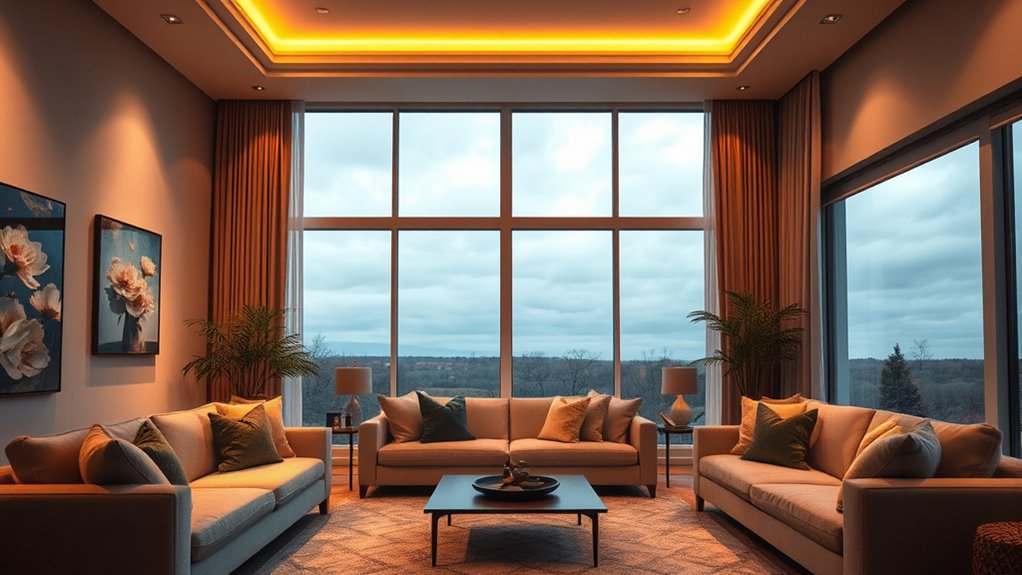
As technology advances, lighting design is increasingly focusing on supporting mental health through innovative solutions. Smart lighting systems will adapt to your daily rhythms, adjusting brightness and color to boost mood and reduce stress. Biophilic design will become more prominent, integrating natural elements and light patterns to foster connection with nature indoors. Future trends include:
- Personalized lighting settings tailored to your circadian rhythms
- Dynamic lighting that mimics natural daylight cycles
- Integration of smart lighting with wellness apps for mental health support
- Use of biophilic elements like plant-inspired fixtures and natural textures
These developments aim to create healthier, more uplifting environments that improve your overall well-being and combat feelings of depression.
Frequently Asked Questions
Can Specific Light Colors Improve Mood Instantly?
Certain light colors can indeed improve your mood instantly. Color therapy suggests that warm tones like yellow and orange boost energy and positivity, while cool shades like blue promote calmness. By choosing lighting based on your needs, you can enhance your mood and overall well-being. This simple change in lighting can serve as an effective mood enhancement tool, helping you feel better quickly and naturally.
How Does Lighting Affect Anxiety Levels at Home?
Imagine walking into a room bathed in soft, warm light, instantly calming your nerves. Your lighting choices, like color temperature and light intensity, directly influence your anxiety levels at home. Cooler, brighter lights can heighten alertness and stress, while warm, dimmer lighting promotes relaxation. By adjusting these factors, you create a soothing environment that helps reduce anxiety and fosters peace of mind.
Are There Particular Lighting Setups Recommended for Depression?
You should consider lighting setups that promote mood enhancement and incorporate color therapy principles. Use warm, soft lighting to create a cozy atmosphere and avoid harsh, bright lights that can increase stress. Integrate adjustable lights to change colors or brightness based on your needs, helping to lift your mood. This approach can positively influence your mental state, making your home a more supportive environment for managing depression.
Does Smart Lighting Technology Help Manage Seasonal Affective Disorder?
Did you know that about 10-20% of people with seasonal affective disorder find relief through light therapy? Smart lighting technology can help manage this condition by adjusting brightness and color to support your circadian rhythms. By mimicking natural sunlight, smart lights can improve mood and sleep patterns, making it easier for you to stay balanced during darker months. It’s a practical way to boost your mental health at home.
Can Adjusting Home Lighting Reduce Stress and Increase Productivity?
Adjusting your home lighting can significantly reduce stress and boost productivity. Bright, natural light enhances your mood and provides an energy boost, helping you stay focused and motivated. Use layered lighting with warm tones during relaxing moments and cooler, brighter lights when working. This mood enhancement and energy boost create a ideal environment, making it easier to stay calm and productive throughout your day.
Conclusion
If your home lighting isn’t bright enough or is too harsh, it could be turning your world into a gloomy, stormy cloud. Imagine living in a constant fog of sadness or feeling drained every day simply because of the lights around you. But don’t worry—by choosing the right lighting, you can transform your space into a vibrant oasis that lifts your spirits and energizes your mind. Brighten up and reclaim your happiness today!
Evergreen bestsellers Picks
bestsellers
As an affiliate, we earn on qualifying purchases.