To place motion lights indoors, install them in high-traffic areas like hallways, staircases, and entry points, ensuring they’re about 6-8 feet high and angled downward for best coverage. Keep sensors away from heat sources, drafts, or direct sunlight to prevent false triggers. Clear obstructions and avoid placing near vents or sunny windows. Proper calibration and positioning help save energy and prolong bulb life. For more tips on optimizing your indoor motion lights, keep exploring.

Get decor and gifts delivered free — and shop member deals
- Fast, free delivery on millions of items
- Access to Prime Big Deal Days deals on October 6–7
- Prime Video, Amazon Music and more included
Key Takeaways
- Install sensors in high-traffic areas like hallways, staircases, and entry points for optimal coverage.
- Mount sensors at 6-8 feet height and angle downward to maximize detection area.
- Ensure clear sightlines by avoiding obstructions such as furniture or decorative objects.
- Keep sensors away from heat sources, drafts, and direct sunlight to prevent false triggers.
- Calibrate sensitivity and detection range according to manufacturer instructions for reliable performance.
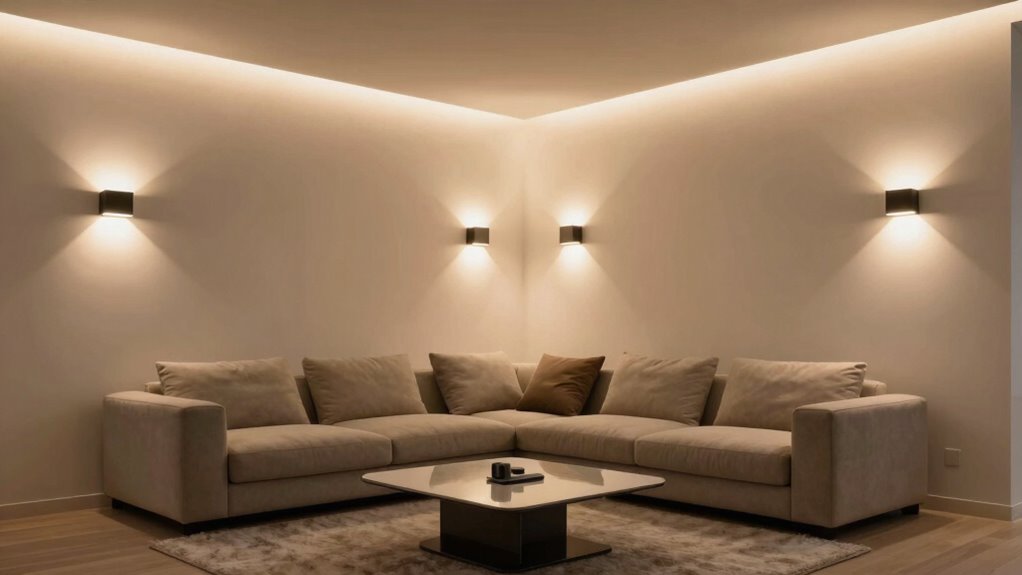
If you want your indoor motion lights to work effectively, placing them in the right spots is essential. Proper placement guarantees that the sensors detect movement accurately, which in turn improves the overall efficiency of your lighting system. To get the best results, you need to think carefully about sensor calibration—making sure each motion sensor is correctly adjusted so it responds only when necessary. Misaligned sensors can cause false triggers or missed detections, leading to unnecessary energy consumption or inadequate lighting. Take the time to follow the manufacturer’s instructions for calibration, adjusting sensitivity and detection range as needed. This fine-tuning helps prevent your lights from turning on when no one’s around and keeps them off when they’re not needed, ultimately saving you energy and reducing electricity bills. Additionally, understanding the importance of sensor calibration can make a significant difference in your system’s performance.
When deciding where to install your motion lights, avoid placing sensors near sources of heat, cold drafts, or direct sunlight, as these can interfere with detection accuracy. For instance, placing a sensor near an air vent or a window exposed to sunlight might cause it to trigger unexpectedly or fail to detect movement altogether. Instead, position your lights in high-traffic areas like hallways, staircases, or near entry points, where movement is predictable and consistent. Keep in mind that the height and angle of installation matter too. Mounting sensors too high or too low can affect their ability to detect motion properly. Generally, a height of about 6-8 feet works well, with the sensor angled downward to maximize its coverage area. Proper placement also involves considering sensor placement to ensure optimal detection.
Another key factor is considering the layout of your space. Avoid obstructions like furniture or decorative objects that could block the sensor’s view. Clear sightlines ensure the sensor can pick up movement without obstruction, which improves responsiveness and minimizes false triggers. Proper placement also minimizes energy consumption because your lights only turn on when needed, and the sensor calibration ensures they turn off promptly after movement ceases. This balance prevents lights from staying on too long or turning on unnecessarily, saving energy and prolonging the lifespan of your bulbs. Ensuring your space is free of obstructions, like clutter or decorative fixtures, can greatly enhance sensor performance and reliability.
As an affiliate, we earn on qualifying purchases.
Frequently Asked Questions
Can Motion Lights Be Used With Smart Home Systems?
Yes, motion lights can be used with smart home systems. You can integrate them for seamless smart home automation scheduling, allowing lights to turn on or off based on motion detection. With smart home integration, you control your motion lights remotely or set specific routines. This makes your home more energy-efficient and convenient, ensuring lights operate only when needed, all managed effortlessly through your smart hub or app.
How Do I Prevent False Triggers From Pets?
To prevent false triggers from pets, pet-proof your motion lights by adjusting sensor calibration so it doesn’t detect small movements. Use pet-proofing tips like placing lights higher or using shields to block pet activity zones. Also, set the sensitivity lower to avoid false alarms caused by pet movement. Regularly test and fine-tune the sensor to make sure it only activates when necessary, keeping your system reliable and pet-friendly.
Are There Specific Brightness Levels Recommended for Indoor Use?
Think of indoor illumination as a gentle sunrise—bright enough to guide you without blinding. You should aim for brightness levels around 100-300 lumens, which provide clear visibility without overwhelming the space. Adjust your motion lights to a moderate setting so they softly brighten hallways or entryways when needed. This creates a welcoming glow, ensuring safety and comfort while preventing harsh glare or unnecessary energy use.
What’s the Ideal Height for Installing Indoor Motion Lights?
You should install indoor motion lights at about 7 to 8 feet high for ideal lighting automation and energy efficiency. This height ensures the sensors detect movement effectively without false triggers from pets or small objects. Proper placement helps conserve energy by activating only when needed. Keep the lights directed toward high-traffic areas, and consider adjustable mounts for precise positioning to maximize coverage and efficiency in your space.
How Often Should Indoor Motion Lights Be Maintained or Replaced?
You should check your indoor motion lights every 6 to 12 months to guarantee maximum energy efficiency. Replace bulbs or fixtures when they dim or stop working. Regular maintenance keeps them running efficiently and extends their lifespan. Follow installation tips like ensuring proper positioning and clean sensor covers to maximize performance. Staying proactive helps you save energy, reduces costs, and keeps your indoor lighting reliable and effective.
Conclusion
Remember, a stitch in time saves nine, so taking a moment to properly place your indoor motion lights guarantees safety and convenience. By positioning them near entryways, hallways, and dark corners, you create a well-lit, welcoming space while conserving energy. Don’t wait for accidents to happen—think ahead and install your lights thoughtfully. With the right placement, you’ll enjoy both peace of mind and a brighter home, proving that good planning truly pays off.
Evergreen bestsellers Picks
bestsellers
As an affiliate, we earn on qualifying purchases.