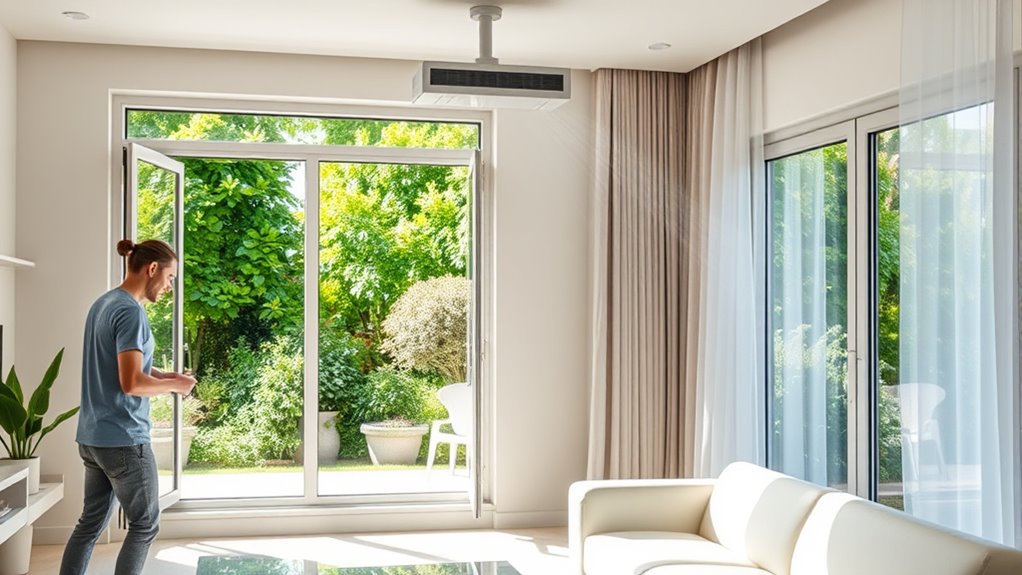

To improve your indoor air quality and minimize VOCs, focus on using natural cleaners like vinegar, baking soda, and lemon juice, which emit fewer harmful chemicals. Ventilate your space by opening windows, using exhaust fans, and running fans to help disperse VOCs during and after cleaning. Air purifiers with HEPA filters also catch airborne particles and some VOCs, further enhancing air quality. Keep these practices in mind to create a healthier indoor environment as you explore more effective tips.

Get decor and gifts delivered free — and shop member deals
- Fast, free delivery on millions of items
- Access to Prime Big Deal Days deals on October 6–7
- Prime Video, Amazon Music and more included
Key Takeaways
- Use natural cleaners like vinegar, baking soda, and lemon juice to reduce VOC emissions during cleaning.
- Ensure proper ventilation by opening windows and doors to disperse VOCs effectively.
- Activate exhaust fans in kitchens and bathrooms to vent fumes outside during and after cleaning.
- Employ air purifiers with HEPA filters to continuously remove airborne particles and some VOCs.
- Maintain good airflow with ceiling fans or air exchangers to dilute indoor VOC concentrations over time.
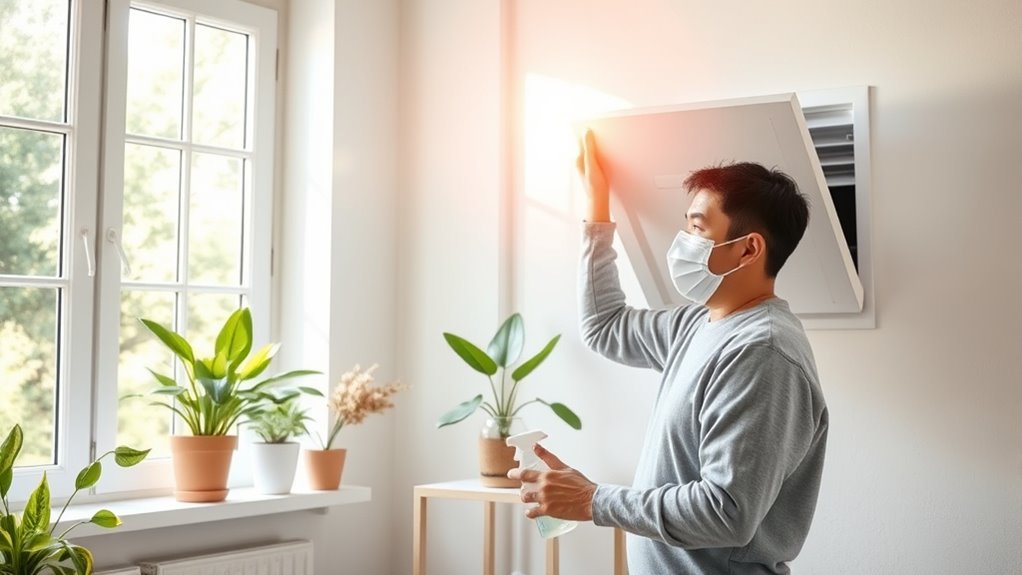
Have you ever wondered how much your cleaning routine can impact the air you breathe? The truth is, it plays a larger role than you might think. Many household cleaners release volatile organic compounds (VOCs) into the air, which can cause respiratory issues, allergies, and other health problems over time. To keep your indoor air clean and healthy, it’s essential to focus on reducing VOCs through proper ventilation and smart cleaning choices.
Your cleaning habits significantly influence indoor air quality and health.
One effective way to minimize VOCs is by switching to natural cleaners whenever possible. These products contain fewer chemicals and are less likely to emit harmful fumes. Natural cleaners like vinegar, baking soda, and lemon juice can tackle dirt and grime just as well as conventional cleaners without adding toxic substances to your indoor environment. When you opt for natural cleaners, you’re actively reducing the number of VOCs released into your air, making your home safer and more breathable.
In addition to choosing natural cleaners, incorporating air purifiers into your space can considerably improve air quality. Air purifiers equipped with HEPA filters capture airborne particles, including dust, pollen, pet dander, and some VOCs. This helps remove contaminants that can cause respiratory discomfort or exacerbate allergies. Keep in mind that an air purifier isn’t a substitute for good ventilation, but it complements your efforts by continuously filtering the air, especially in rooms where natural ventilation might be limited.
Ventilation is an essential element in managing VOC levels indoors. When you clean, open windows and doors to allow fresh air to circulate. This helps disperse VOCs that are released from cleaning products and natural cleaners, preventing their buildup. If outdoor air quality is poor, consider using exhaust fans in kitchens and bathrooms to vent out fumes directly outside. Running ceiling fans or air exchangers can also help improve airflow, diluting VOC concentrations and bringing in fresh air from outside. Additionally, choosing VOC-reducing cleaning products can further support healthier indoor air quality by minimizing the emission of harmful compounds during cleaning routines.
HEPA air purifier for VOC removal
As an affiliate, we earn on qualifying purchases.
As an affiliate, we earn on qualifying purchases.
Frequently Asked Questions
How Often Should I Ventilate My Home for Optimal Air Quality?
You should ventilate your home at least once or twice daily to maintain ideal air quality. Aim for an air exchange rate of about 4-6 air changes per hour in living spaces. This frequency helps dilute and remove VOCs and other pollutants effectively. Keep windows open or use exhaust fans during and after activities like cooking or cleaning to guarantee fresh air circulates and indoor air remains healthy for you.
Are There Specific Cleaning Products That Emit Fewer VOCS?
You should choose eco-friendly cleaners with natural ingredients to emit fewer VOCs. Look for products labeled as low or zero VOCs, and avoid harsh chemicals like ammonia and bleach. Using these safer options helps improve indoor air quality and reduces harmful emissions. Always read labels carefully, and consider making your own cleaning solutions with natural ingredients like vinegar, baking soda, and lemon for an even healthier home environment.
Can Houseplants Help Reduce VOC Levels in Indoor Air?
You might think your houseplants are just pretty decor, but their plant efficacy in VOC absorption is real. Ironically, while they add charm, they can help reduce VOC levels in indoor air. By absorbing toxins through their leaves and roots, plants actively improve air quality. So, next time you see a lush fern, remember it’s working hard to clean your air, making your space healthier without extra effort.
What Are the Signs of Poor Indoor Air Quality Caused by VOCS?
You might notice signs of poor indoor air quality caused by VOCs, such as frequent airborne irritants, lingering chemical smells, or allergy symptoms like sneezing and itchy eyes. You may also experience headaches, fatigue, or respiratory discomfort. If these symptoms persist, it’s a sign you should improve ventilation and reduce sources of VOCs. Recognizing these signs helps you take action to create a healthier indoor environment.
How Does Outdoor Pollution Affect Indoor Air Quality During Ventilation?
Ironically, outdoor pollution can turn your ventilation into a double-edged sword, worsening indoor air quality. When you open windows for fresh air, outdoor pollution, like smog and vehicle emissions, sneaks inside. This reduces the benefits of indoor air exchange, making your efforts counterproductive. To truly improve air quality, you need to carefully balance ventilation, keeping out outdoor pollutants while allowing fresh air in.
Conclusion
Now that you know how proper cleaning and ventilation can reduce VOCs, imagine what other hidden pollutants might be lurking in your home. Are you truly safeguarding your air, or could unseen dangers still be lingering? The steps you’ve taken are just the beginning—there’s more to uncover. Stay vigilant, because the quest for pure air isn’t over yet. The next discovery could change everything you thought you knew about your home’s safety.
Fall Picks
fall essentials
As an affiliate, we earn on qualifying purchases.