
To prevent sun fading and mold, choose outdoor fabrics labeled UV-resistant, water-repellent, and mold-resistant, ensuring their durability over time. Store cushions indoors during bad weather and use covers that promote airflow to reduce moisture buildup. For cushions, opt for high-density foam; it provides better support and lasts longer in outdoor conditions. If you want to discover more tips on maintaining your outdoor furniture’s look and comfort, keep exploring these insights.
Key Takeaways
- Choose high-quality outdoor fabrics labeled UV-resistant, water-repellent, and mold-resistant for durability against sun and moisture.
- Use fabrics with built-in UV protection and place furniture in shaded areas to prevent sun fading.
- Select mold-resistant fabrics, ensure proper drainage, and regularly inspect to prevent mold growth.
- Regularly clean fabrics with mild soap, avoid harsh chemicals, and use breathable covers to maintain fabric integrity.
- Opt for high-density foam cushions for better support and longevity, and store cushions indoors during harsh weather.
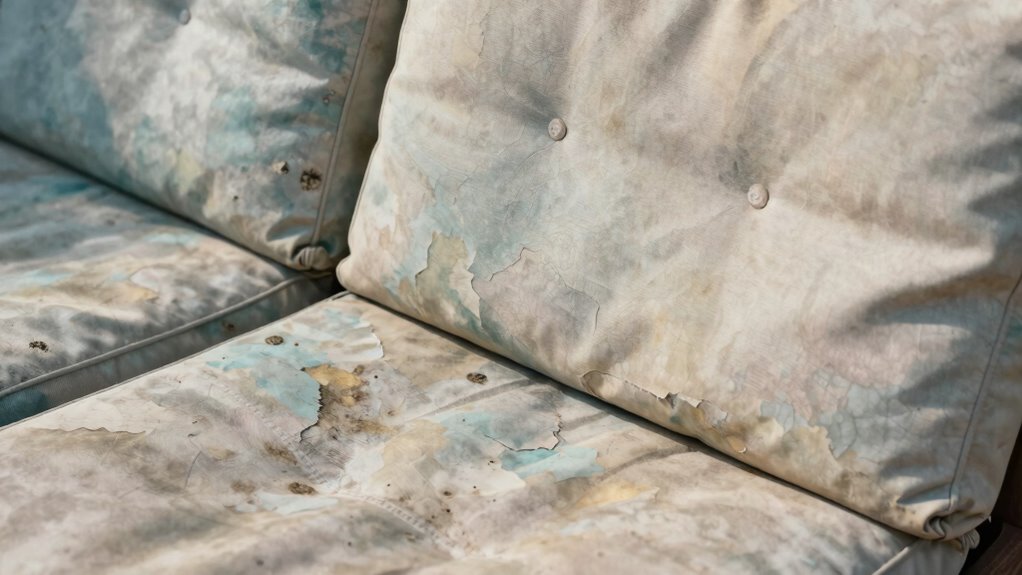
Choosing the right outdoor furniture fabrics is vital for creating a durable and stylish outdoor space. When selecting fabrics, you want materials that can withstand the elements without quickly fading, molding, or deteriorating. Fabric durability is a key factor because it directly impacts how long your furniture will look good and function well. High-quality outdoor fabrics are specially designed to resist sun damage and moisture, making them a smart investment. You should look for fabrics labeled as UV-resistant, water-repellent, and mold-resistant. These features help guarantee your furniture maintains its appearance over time, even after exposure to harsh weather.
Choose outdoor fabrics that resist sun, water, and mold for lasting style and durability.
Sun fading is one of the biggest concerns when it comes to outdoor fabrics. Constant exposure to sunlight can cause colors to fade and fabrics to weaken. To combat this, choose fabrics with built-in UV protection or those treated with fade-resistant coatings. Additionally, using outdoor furniture covers or placing your furniture in shaded areas can markedly slow down the fading process. Regular cleaning is also vital; gentle washing with mild soap and water keeps fabrics looking fresh and prevents dirt buildup that can accelerate fading. Remember, maintaining your outdoor fabrics isn’t just about protecting their appearance but also about prolonging their lifespan. Follow maintenance tips like avoiding harsh chemicals and using fabric protectants designed for outdoor use, which can add an extra layer of defense against sun damage and stains.
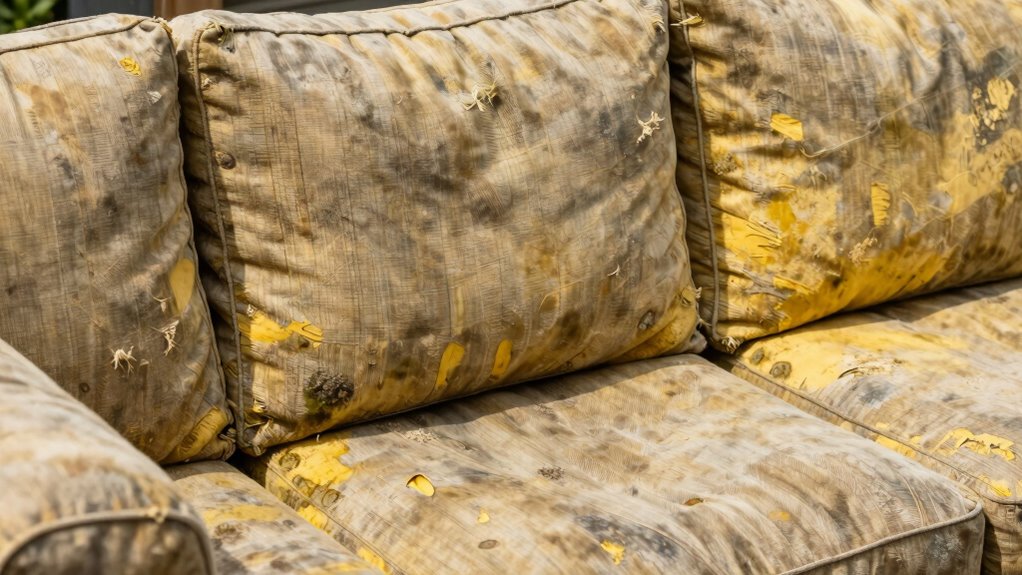
Mold is another common issue that affects outdoor fabrics, especially in humid or rainy climates. Mold can not only stain your cushions and upholstery but also pose health risks. To prevent mold growth, opt for fabrics with mold-resistant properties, and ensure proper drainage wherever your furniture is placed. Regularly inspecting your cushions and fabrics allows you to catch any early signs of mold or mildew. If you notice mold, clean it immediately with a solution of mild detergent and vinegar or a specialized mold remover. Air out cushions frequently and avoid leaving them damp for extended periods, as moisture encourages mold growth. Proper maintenance tips include storing cushions indoors during heavy rain or winter months and using protective covers that allow airflow. Additionally, understanding the Free Floating concept can help you better manage outdoor cushions and fabrics by allowing for flexible placement and avoiding water accumulation in specific areas.
As an affiliate, we earn on qualifying purchases.
Frequently Asked Questions
How Often Should Outdoor Furniture Fabrics Be Cleaned?
You should clean your outdoor furniture fabrics every 1 to 2 months to keep them looking fresh. Regular fabric stain removal helps prevent dirt buildup, while applying UV protection sprays can minimize sun fading. If you notice mold or stains, clean immediately with a gentle solution. Consistent maintenance extends the life of your fabric, keeps colors vibrant, and protects against weather damage.
What Are the Best Storage Practices for Outdoor Cushions?
To keep your outdoor cushions in top shape, follow these storage tips: store cushions in a dry, ventilated area when not in use, ideally in waterproof storage bins. Make sure cushions are clean and completely dry before storing to prevent mold. Regular cushion maintenance includes inspecting for damage and cleaning fabric according to manufacturer instructions. Proper storage protects against sun fading and mold, extending the life of your outdoor furniture.
Can Outdoor Fabrics Be Repaired After Sun Damage?
Yes, you can often repair outdoor fabrics after sun damage. Start by evaluating the extent of the sun fading or fabric deterioration. You might need to perform fabric repair using specialized patch kits or fabric glue for minor tears. For significant sun damage, consider reupholstering or replacing the fabric. Regular maintenance and protective sprays can help prevent further sun damage and prolong the life of your outdoor furniture.
Are There Eco-Friendly Options for Outdoor Fabric Dyes?
You might think eco-friendly dyes can’t match vibrant colors, but studies prove otherwise. These dyes, often derived from natural coloration sources like plants and minerals, offer sustainable options for outdoor fabric. By choosing fabrics dyed with eco-friendly dyes, you help reduce environmental impact while maintaining durability and color richness. So, yes, you can enjoy beautiful, eco-conscious outdoor furniture that aligns with your sustainability goals without sacrificing style or quality.
How Do I Prevent Mold Growth on Outdoor Furniture?
To prevent mold growth on outdoor furniture, you should regularly clean and dry your pieces thoroughly after use, especially in damp conditions. Use a fabric treatment designed to resist mold and mildew, applying it according to the manufacturer’s instructions. make certain of proper airflow around your furniture to reduce moisture buildup, and consider covering or storing it during rainy or humid weather to minimize mold prevention issues effectively.
Conclusion
Just like a timeless voyage across calm seas, choosing the right outdoor fabric keeps your furniture vibrant and inviting. By understanding sun fading, mold, and cushion foam density, you’re steering clear of hidden storms that threaten your outdoor haven. Think of it as your own Odyssey—equipped with knowledge, you’ll navigate weather’s challenges with confidence, ensuring your outdoor space remains as welcoming as a legendary port. Keep these tips in mind, and your furniture will stand the test of time.