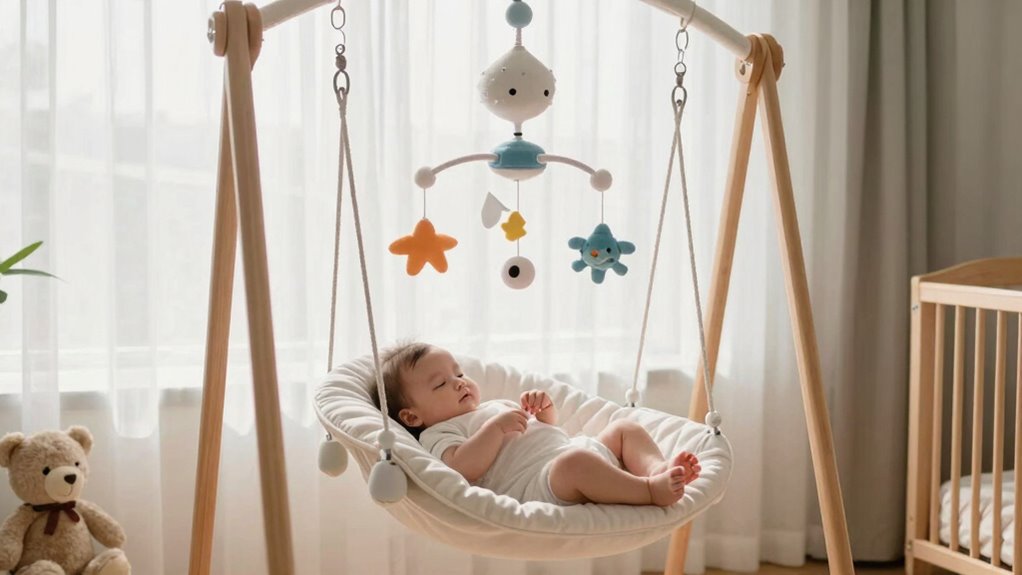
Baby swings can support your routine by providing a safe, soothing space for your baby to relax during feeding or nap times. They help calm your baby and reinforce consistency, but they don’t build routines on their own. Routines require thoughtful planning around feeding, sleep, and comfort cues. Relying too much on swings can create dependency and slow progress. Keep exploring how to integrate swings effectively into your overall plan for healthy development.
Key Takeaways
- Baby swings provide a calming environment but do not establish independent routines; they should be integrated thoughtfully.
- Over-reliance on swings may hinder developing self-soothing skills necessary for routine building.
- Swings support routines by calming baby during feeding and nap times but require consistent cues and environment.
- They can aid in transitioning to sleep but should not replace other routines or self-soothing techniques.
- Incorporating swings into broader, consistent routines helps promote healthy sleep habits and independence.

Baby swings can be a lifesaver for busy parents, offering a safe and soothing space for your little one to relax or nap. While they can support your efforts to establish routines, they don’t build routines on their own. Instead, you need to use swings thoughtfully within your broader plan for feeding schedules and sleep training. You might find that a swing helps your baby settle after feeding or during nap times, but it’s not a substitute for consistent routines that foster independence and healthy sleep habits.
When you incorporate a swing into your daily schedule, it can serve as a calming tool during times when your baby needs extra comfort. For example, if your little one struggles to settle after feeding, a gentle swing can help them relax and digest. However, this should be part of a pattern, not the entire routine. If you rely solely on the swing, your baby may become dependent on it to fall asleep, which can complicate sleep training efforts later on. The key is to use the swing as a stepping stone, helping your baby get used to being soothed in different environments, but always moving toward more independent sleep cues. Establishing routines is essential to help your baby develop healthy sleep habits and independence.
In terms of establishing feeding schedules, a swing can sometimes help your baby stay calm and comfortable, especially if feeding times are predictable. Consistency is essential here, as regular feeding times help your baby develop a sense of security and rhythm. But don’t forget that routines involve more than just timing; they also include cues and environments that signal to your baby what’s coming next. The swing can be a part of that environment, but it shouldn’t replace regular feeding cues or the practice of recognizing your baby’s hunger signs. Incorporating gentle consistent cues can further reinforce your routines and help your baby understand what to expect. Additionally, understanding child development stages can guide you in adjusting routines appropriately as your baby grows and gains new skills.
When it comes to sleep training, a swing can be a useful tool, but it shouldn’t be the foundation of your approach. Sleep training relies on consistent bedtime routines, such as dimming the lights, reading a story, or singing a lullaby. Using a swing can help your baby transition from wakefulness to sleep, but over-reliance on it can hinder your progress. Instead, aim to gradually teach your baby to fall asleep independently, using the swing only as a temporary aid. Over time, your goal should be to replace the swing with other soothing techniques that encourage self-soothing and independent sleep habits. Moreover, understanding the importance of routine consistency can help ensure your sleep training efforts are effective and sustainable. It’s also helpful to recognize that developmental milestones can influence your baby’s sleep needs and responses to routines, so adjusting your approach as they grow can be beneficial.

Bright Starts Playful Paradise Portable Compact Automatic Baby Swing with Music, Unisex, Newborn +
- Portable and lightweight design: Foldable for travel and storage
- Interactive toy bar: Includes 2 toys for engagement
- Easy to remove toy bar: Simplifies baby pickup
As an affiliate, we earn on qualifying purchases.
As an affiliate, we earn on qualifying purchases.
Frequently Asked Questions
Can Baby Swings Replace Naps or Bedtime Routines?
Baby swings can’t replace naps or bedtime routines, but they do support them. You can use gentle rocking in the swing to soothe your baby, providing sensory stimulation that helps calm them. However, establishing consistent routines involves more than just the swing; it includes quiet activities, dim lighting, and predictable cues. So, while swings help, they should complement, not replace, your overall routine for nap and bedtime success.
How Long Should a Baby Stay in a Swing Daily?
You should limit your baby’s time in a swing to about 30 minutes per session, ensuring they don’t stay longer than an hour daily. Proper swing duration is essential to prevent developmental impact, like delayed motor skills or overstimulation. Always supervise your baby and watch for signs of discomfort. Balancing swing time with tummy time and other activities promotes healthy development while enjoying the benefits of soothing motion.
Are There Safety Concerns With Extended Swing Use?
Did you know that babies under four months spend up to 30% of their awake time in swings? Swing safety concerns arise with extended use, which can restrict movement and impact development. While swings are helpful, overusing them may delay motor skills or cause positional issues. To guarantee safety, limit swing time, always follow manufacturer guidelines, and prioritize supervised tummy time for healthy development.
Do All Babies Respond Well to Swing Use?
Not all babies respond well to swing use; some may find it overstimulating, while others enjoy the gentle motion. You should still prioritize tummy time and sensory play to support their development, as swings can’t replace these essential activities. Observe your baby’s reactions closely, and if they seem distressed or uninterested, limit swing time and focus on engaging, developmentally beneficial activities instead.
Can Swinging Affect a Baby’s Development?
Swinging can influence a baby’s development by stimulating sensory development and encouraging motor skills. As you gently sway your baby, they experience different sensations that help their sensory systems grow. However, swinging alone doesn’t build these skills; active play and interaction are essential. Use swings as a supplement to other activities, ensuring your baby’s overall development progresses healthily and holistically.
Conclusion
Baby swings can support your routine, but they can’t build one. They provide comfort, they offer consistency, and they help you manage your day. But remember, they don’t create the structure, the habits, or the skills your little one needs to thrive. You’re the one who sets the rhythm, establishes the boundaries, and nurtures growth. Use baby swings as tools, not crutches, and watch your routine—and your baby’s development—flourish.