TL;DR

Get decor and gifts delivered free — and shop member deals
- Fast, free delivery on millions of items
- Access to Prime Big Deal Days deals on October 6–7
- Prime Video, Amazon Music and more included
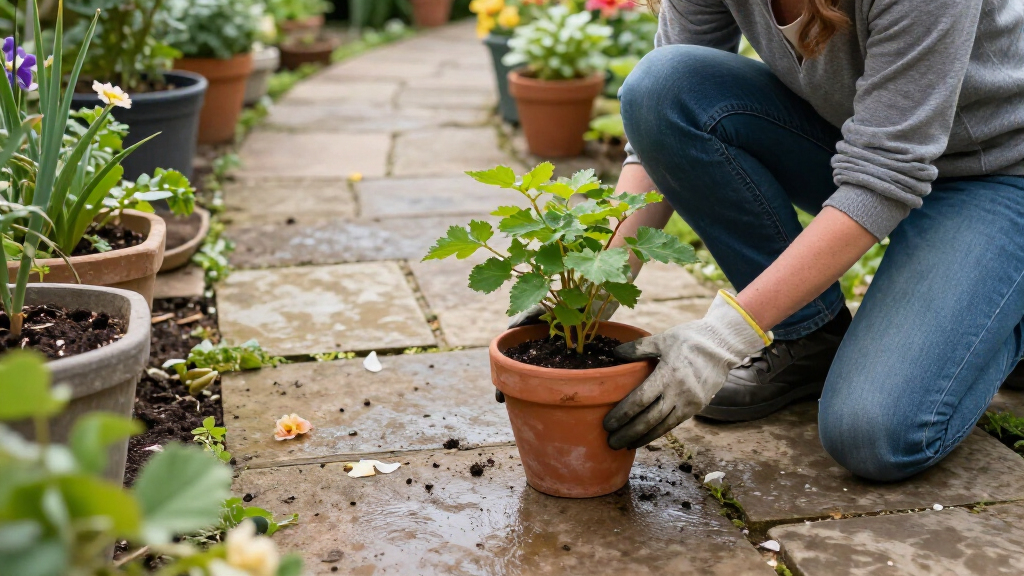
An Instagram photo of Monty Don’s garden path shows an informal arrangement of terracotta pots beside the paving. Garden designer Christopher O’Donoghue says staggered containers, varied heights and foliage that spills onto the path can soften its hard edges; the advice is a design approach, not a guaranteed result for every garden.
A photo of Monty Don’s garden path, shared on Instagram and described by Ideal Home, shows an informal group of terracotta pots softening the paving beside the entrance to his doghouse. The image prompted the outlet to explain how staggered containers and plants allowed to spill toward the path can make a hard-edged route feel more integrated with surrounding planting.
The arrangement does not use matching pots placed in a neat line or balanced pairs. Instead, plants and containers gather unevenly along the path’s edges, while the greenery beyond appears to meet the paving. The visual effect, as described in the report, is to make the path feel less like a separate corridor and more connected to the garden.
Christopher O’Donoghue, director of Gardens Revived, told Ideal Home that pots can break up the straight lines of paving, particularly beside narrow paths or larger areas of brick and concrete. He recommends staggering containers: for example, placing a cluster on one side and a larger pot farther along on the other, rather than lining identical pots up opposite one another.
O’Donoghue’s advice is to vary both container height and plant shape. Taller plants can add vertical structure, while lower bowls and trailing foliage help soften the boundary at ground level. He suggests combining plants that spill over pot rims with more upright or architectural varieties, and grouping containers so they read as small planting pockets rather than isolated displays.
How Pots Soften Paving
The idea offers a flexible way to soften a path without changing the paving itself. Containers can introduce leaves, flowers and varied heights along a route, helping break up long straight edges. That can be useful for renters or gardeners who want to alter the feel of a space without undertaking a larger landscaping project, although the source does not make claims about cost or suitability for every site.
O’Donoghue also points to a practical benefit in the UK: pots give gardeners control over the soil and drainage around individual plants. That may be helpful in wet winters, he told Ideal Home. The approach still depends on choosing plants suited to the path’s light and conditions, and containers will need appropriate watering and care.
terracotta plant pots for garden path
As an affiliate, we earn on qualifying purchases.
As an affiliate, we earn on qualifying purchases.
The Garden Behind the Photo
Ideal Home reports that Don bought his home in 1991 with a two-acre garden described as overgrown with nettles and brambles. The article says he has worked on the garden over the years. His Instagram photo shows a path leading from the timber-framed doorway of a doghouse, providing the specific example behind the planting advice.
The report frames the arrangement as an illustration of a broader container-gardening technique, rather than a formal plan or a newly announced project by Don. Its step-by-step recommendations come from O’Donoghue, whose company, Gardens Revived, was established with his brother Andrew in 2018, according to the article.
“Using potted plants is an excellent way to blur the harsh, straight lines of paving.”
— Christopher O’Donoghue, director of Gardens Revived, speaking to Ideal Home
What the Photo Does Not Show
The source does not identify when Don took or posted the Instagram photo, give the path’s dimensions or describe its sun exposure, soil, or drainage. It also does not report Don explaining his own planting choices; the detailed design recommendations are attributed to O’Donoghue, not Don.
The suggested plants are examples, not a universal planting list. Ideal Home reports O’Donoghue’s recommendations of Mexican fleabane and creeping thyme for sunny paths, and trailing ivy, hostas, Japanese forest grass and hart’s tongue fern for shade. Which options will work depends on local growing conditions and container care. The supplied source material does not include a complete answer to its FAQ about the most common container-plant mistake.
Adapting the Arrangement at Home
The next step for gardeners interested in the look is to assess the route’s light and available space, then choose containers and plants suited to those conditions. O’Donoghue’s suggested method is to begin with ordinary pots, allow plants to establish, and move the strongest specimens into more prominent containers when they have enough growth. Smaller pots can then be added around them at different heights.
As the plants grow, gardeners can see whether foliage is softening the edge without obstructing the route. The source gives no timetable for establishing the planting or promise that a particular arrangement will produce the same effect. Its central recommendation is to let the plants, rather than symmetry, guide the final layout.
Key Questions
What is Monty Don’s potted plant trick?
The Instagram photo described by Ideal Home shows an informal arrangement of terracotta pots beside a garden path, with plants making the boundary between paving and planting feel less rigid.
How should pots be arranged beside a path?
Christopher O’Donoghue advises staggering them rather than placing identical pots in straight, matching rows. He suggests mixing clusters with individual containers and varying their heights.
Which plants does the report recommend?
For sunny paths, O’Donoghue names Mexican fleabane and creeping thyme. For shade, he suggests trailing ivy, hostas, Japanese forest grass and hart’s tongue fern. Suitability depends on the conditions where the pots will sit.
Do I need expensive terracotta pots to try the look?
The report does not say that expensive containers are necessary. O’Donoghue’s advice is to start with ordinary pots, let plants establish, and move the strongest specimens into more prominent containers if desired.
Source: rss
Fall Picks
fall essentials
As an affiliate, we earn on qualifying purchases.