
Motion lights do more than brighten dark spaces in aging homes; they improve safety by reducing trip risks, especially for seniors or those with mobility challenges. They also save energy by turning on only when needed, lowering your utility bills and carbon footprint. Plus, they add convenience by automating lighting in areas like hallways, garages, and outdoor paths. Keep going to discover how these smart upgrades can transform your home in ways you might not expect.
Key Takeaways
- Motion lights improve safety by preventing trips and falls in dark, aging home areas like basements and bathrooms.
- They enhance energy efficiency, reducing electricity costs and environmental impact through automatic lighting.
- Automation provides convenience by eliminating manual switch use in frequently accessed spaces.
- Customizable settings and smart integration modernize homes, supporting future upgrades and tailored lighting.
- Installing motion lights promotes overall home safety, cost savings, and adaptability for aging infrastructure.

As homes age, replacing traditional lighting with motion-activated lights does more than just brighten dark hallways; it enhances safety, conserves energy, and adds convenience. When you upgrade to motion sensors, you’re stepping into a smarter home that adapts to your needs without wasting electricity. These lights turn on only when needed, so you’re not leaving switches on or squandering energy illuminating empty spaces. This approach considerably improves energy efficiency, especially in older homes where lighting systems might be outdated or inefficient. With motion-activated lights, you can cut down on electricity bills and reduce your carbon footprint, making your home more eco-friendly.
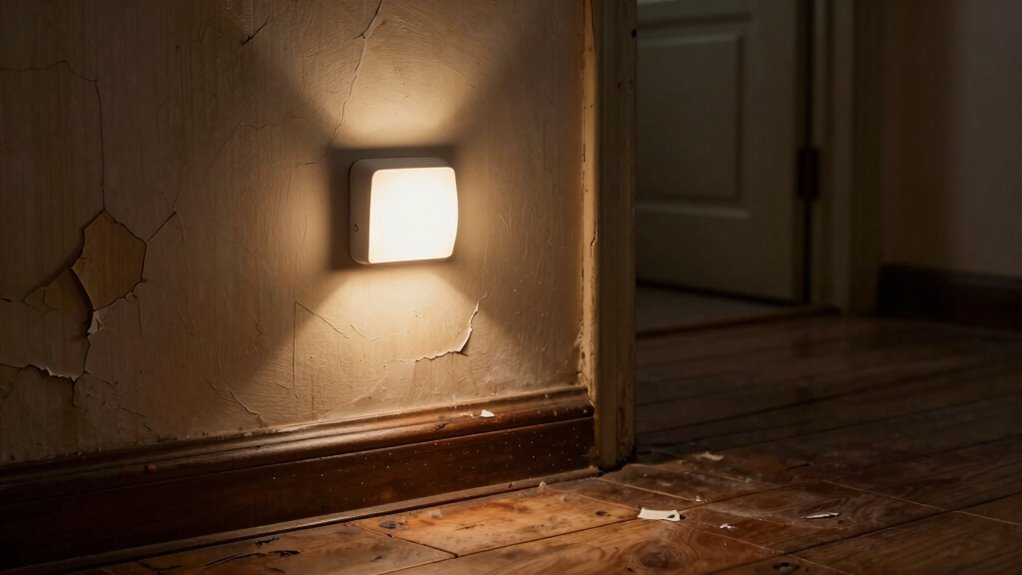
In an aging house, safety becomes a top priority, and motion lights play a key role in preventing accidents. Imagine walking into a dark basement or bathroom in the middle of the night—motion sensors automatically light your path, reducing the risk of trips or falls. These systems are especially beneficial for seniors or anyone with mobility challenges, providing immediate illumination without fumbling for switches. Plus, with smart home integration, you can control these lights remotely or set schedules to ensure every corner of your home is well-lit when needed. This not only boosts safety but also gives you peace of mind, knowing your home responds intelligently to your presence. Incorporating energy-efficient lighting can further optimize your system’s benefits.
Beyond safety and energy savings, motion lights add a level of convenience that modern homeowners appreciate. You don’t have to remember to turn on or off lights anymore; your home takes care of it. When you enter a room, the lights automatically turn on; when you leave, they switch off after a set period. This seamless automation simplifies daily routines and reduces the hassle of manual switches, especially in areas you use sporadically, like closets, garages, or outdoor walkways. The integration of motion sensors into a smart home system creates a cohesive environment where lighting responds intuitively to your habits, making everyday living more comfortable and efficient. Additionally, smart home technology can be tailored to further enhance your lighting setup and overall home automation.
Furthermore, these smart lighting solutions can be customized to suit your lifestyle. You can program different settings for various times of day or specific zones in your house. Over time, you’ll notice how much easier it is to manage your lighting resources, all while reducing unnecessary energy consumption. As your home ages, embracing motion-activated lighting isn’t just about convenience—it’s a clever investment that enhances safety, boosts energy efficiency, and modernizes your living space for the future. Incorporating energy-efficient lighting can also contribute to a healthier environment and lower utility bills over time. Additionally, understanding the importance of biodiversity and conservation can inspire eco-friendly choices throughout your home and community.
As an affiliate, we earn on qualifying purchases.
Frequently Asked Questions
How Long Do Motion Lights Typically Last Before Needing Replacement?
Motion lights usually last between 3 to 5 years before needing replacement, depending on usage and quality. If you have smart bulb integration, those bulbs might last longer because they’re designed for durability, but battery lifespan is a key factor if your lights are battery-operated. Regularly check and replace batteries to guarantee consistent performance. Upgrading to LED motion lights can also extend their lifespan, saving you time and money in the long run.
Can Motion Lights Be Installed Outdoors or Are They Indoor-Only?
Yes, motion lights can be installed outdoors, and they’re perfect for enhancing your outdoor security, lighting pathways, and deterring intruders. You can choose weatherproof models designed for outdoor use, ensuring durability against the elements. Many outdoor motion lights also support smart home integration, allowing you to control them remotely. Whether for outdoor security or illuminating your yard, outdoor motion lights are versatile and effective, improving safety and convenience for your entire property.
Are There Energy-Efficient Motion Light Options Available?
Yes, you can find energy-efficient motion light options that use smart sensors and solar power. Smart sensors help reduce energy waste by turning lights on only when needed, while solar options eliminate the need for wiring and electricity costs. These eco-friendly choices are perfect for outdoor and indoor use, offering reliable illumination without increasing your energy bills. Upgrading to solar or sensor-based motion lights helps you save money and supports sustainability.
Do Motion Lights Require Professional Installation?
Motion lights don’t always require professional installation, especially with smart home options. If you’re installing modern, wireless motion sensors, you can often set them up yourself without worrying about wiring considerations. However, for wired smart motion lights, you might want to hire a professional to handle the wiring safely and make certain of compatibility with your home’s electrical system. In any case, check the product instructions carefully before starting your installation.
What Maintenance Is Required for Motion Lighting Systems?
Maintaining your motion lighting system is like tending a garden—you need to check on it regularly. You should clean sensors gently, guarantee smart sensor integration works smoothly, and replace batteries or bulbs as needed. If you have solar-powered options, keep panels clean for maximum efficiency. Periodically, update firmware if available, and verify the system’s functionality. Proper maintenance keeps your lights reliable, saving you energy and enhancing safety.
Conclusion
So, next time you install those motion lights to chase away darkness, remember they’re doing more than just brightening your path. In your aging home, they quietly fix safety issues, prevent accidents, and add convenience—all while you thought you were just avoiding fumbling in the dark. Ironically, it’s the simple switch that might be the most sophisticated upgrade you make, silently transforming your space into a safer haven, one flicker at a time.