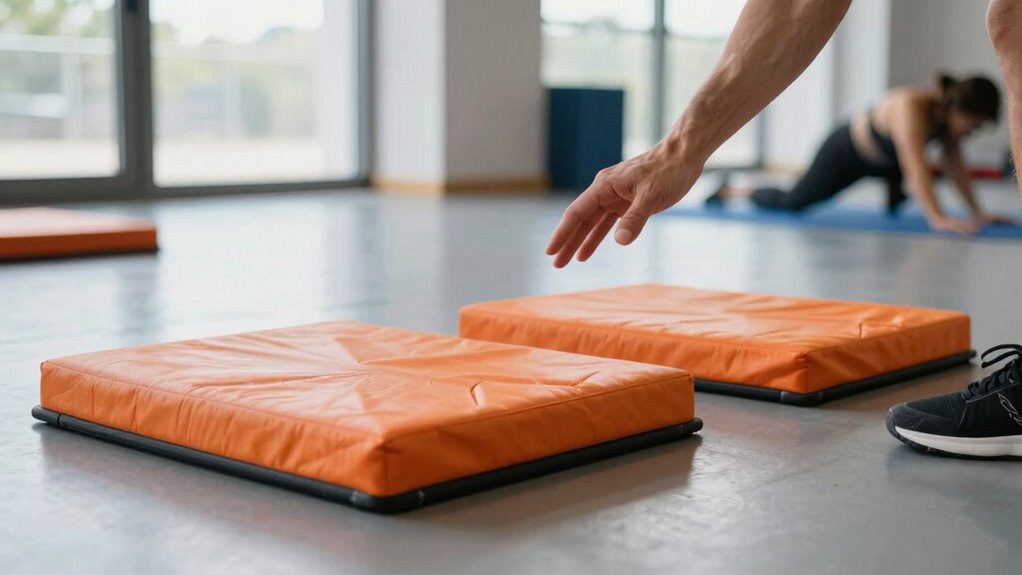
Relying solely on courage when using balance pads can lead to accidents and injuries, so supervision is key. You need to evaluate hazards, guarantee proper footwear, and start with simpler exercises. An experienced supervisor can provide feedback, correct your technique, and intervene if you lose control. Safe practice combines mental readiness with safety protocols. Keep exploring to uncover how a structured approach boosts your skills and keeps you secure through every step.
Key Takeaways
- Supervision ensures adherence to safety protocols, reducing injury risks beyond just having courage to try exercises.
- Proper oversight provides immediate feedback, correcting techniques and preventing falls during balance pad activities.
- Relying solely on courage ignores environmental hazards; supervision helps assess and mitigate these risks effectively.
- Structured supervision guides gradual skill progression, ensuring safe advancement beyond initial bravery.
- Safety protocols, reinforced by supervision, are essential for injury prevention, regardless of an individual’s confidence level.
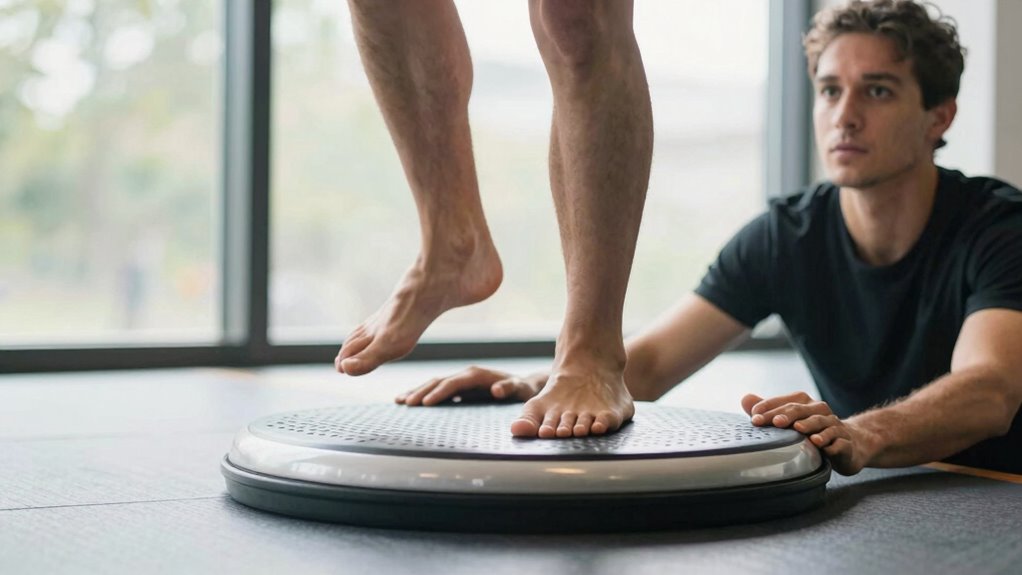
While courage is essential for attempting challenging tasks on balance pads, it’s not enough to guarantee safety or success. You might feel confident enough to try, but without proper risk assessment and adherence to safety protocols, you’re putting yourself at unnecessary risk. Jumping onto a balance pad with just bravery can lead to falls, injuries, or setbacks that could have been avoided. That’s why supervision and careful planning are vital, especially when you’re pushing your limits or learning new skills.
Courage matters, but safety measures and supervision are essential for secure progress on balance pads.
Risk assessment becomes your first line of defense. Before stepping onto the balance pad, evaluate the environment and your own readiness. Is the surface stable? Are there any obstacles nearby? Do you have the appropriate footwear? Is the area clear of hazards? These questions help you identify potential dangers and prepare accordingly. Recognizing your current ability level is equally important. If you’re new to balance training, starting with simpler exercises or shorter durations minimizes the chance of losing control. As you progress, gradually increase complexity and difficulty—never rushing into advanced moves without proper preparation.
Supervision acts as a safeguard, whether it’s a coach, trainer, or a knowledgeable observer. Supervision ensures safety protocols are followed consistently. They can provide immediate feedback, correct improper techniques, and intervene if you’re at risk of falling or injuring yourself. This oversight is particularly important when practicing alone, as it reduces the likelihood of accidents going unnoticed or unaddressed. A supervisor can also help you develop a structured training plan that emphasizes safety and gradual skill development rather than reckless attempts driven by courage alone. Additionally, understanding the importance of safety protocols can significantly reduce the risk of injury during balance pad training. Incorporating risk mitigation strategies into your routine further enhances safety and confidence. Being aware of the hazards associated with balance training allows for better preparation and accident prevention.
balance pad safety supervision system
As an affiliate, we earn on qualifying purchases.
As an affiliate, we earn on qualifying purchases.
Frequently Asked Questions
How Do Supervision Logic Systems Improve Balance Pad Safety?
Supervision logic systems improve balance pad safety by integrating sensors that monitor user movements in real-time. When unusual activity or potential risks are detected, automated alerts notify you instantly, allowing quick intervention. This combination of sensor integration and automated alerts guarantees you can supervise effectively, reducing accidents and enhancing safety. With these systems, you rely on technology’s precision, not just courage, to keep users safe during balance training or therapy.
What Are Common Mistakes When Using Balance Pads Without Supervision?
You might think user confidence on balance pads means supervision isn’t needed, but that’s a mistake. Common errors include neglecting balance pad customization to suit individual needs and overestimating your stability. Without supervision, you risk improper use, which can lead to falls or injuries. Relying solely on courage ignores the importance of tailored adjustments and safety checks, risking your well-being despite feeling confident. Supervision and proper setup are essential for safe, effective use.
Are There Specific Supervision Features Recommended for Balance Pads?
Yes, specific supervision features are recommended for balance pads. You should look for balance pad customization options that tailor difficulty levels and safety settings. Additionally, integrating a supervision system, like real-time monitoring or alert notifications, helps guarantee safe use. These features help prevent accidents, promote proper technique, and adapt to individual needs, ensuring users stay safe while benefiting from the training.
How Does Supervision Logic Differ From Traditional Safety Measures?
Supervision logic differs from traditional safety measures by focusing on proactive monitoring and adaptive protocols rather than just static safety features. You implement supervision protocols that continuously assess user behavior and device responses, ensuring safety standards are met dynamically. Unlike traditional safety measures, which rely on physical barriers or alarms, supervision logic involves real-time oversight, making it more effective in preventing accidents and promoting safe use on balance pads.
What Training Is Needed to Effectively Supervise Balance Pad Use?
To supervise balance pad use effectively, you need training on balance pad design and user confidence. You should understand how different designs impact stability and how to assess a user’s skill level. Your training must include spotting techniques, safety protocols, and ways to build user confidence without risking injury. This guarantees you can monitor users properly, provide necessary guidance, and adapt supervision strategies to individual needs.
Conclusion
So, next time you’re tempted to toss a balance pad into the mix, remember: bravery alone won’t keep you upright. Supervision logic is your real safety net—otherwise, you’re just daring the fall. Sure, courage is great for adventure, but when it comes to balance pads, a little brains beats a big bravado. After all, falling might make a good story, but it’s even better with a dash of common sense—preferably before you take that leap.