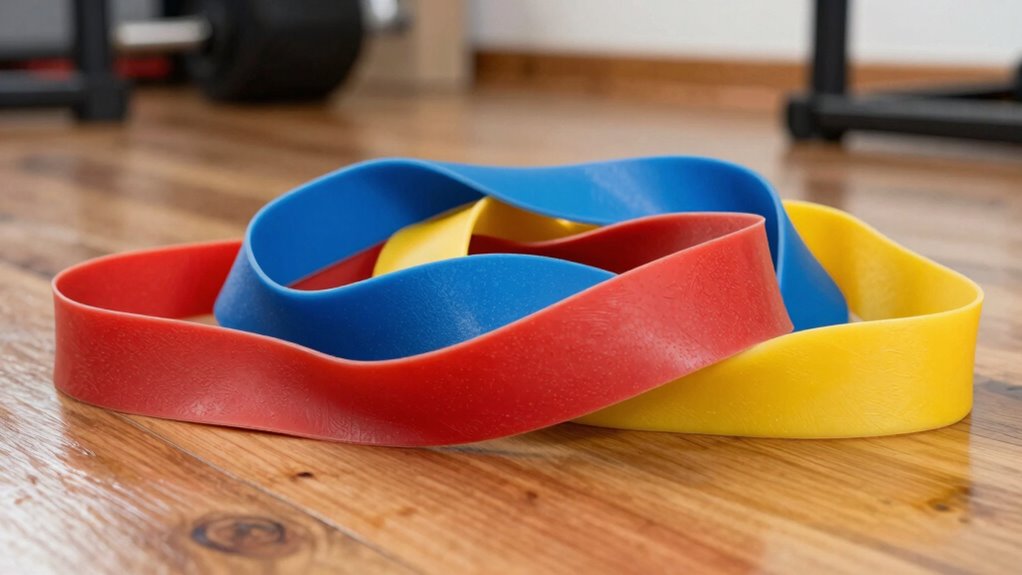

Resistance bands are a versatile and effective tool for boosting your workouts, but when your routine becomes too random, their benefits diminish. Inconsistent training can lead to neglecting certain muscle groups and reduce muscle engagement, limiting progress. Staying structured helps you target specific areas and avoid imbalances or injuries. If you keep your workouts organized and focused, you’ll maximize your results. Discover how creating a consistent plan can make your resistance band exercises even more effective.
Key Takeaways
- Random routines reduce targeted muscle engagement, limiting gains and increasing injury risk.
- Lack of structure can cause muscle imbalances and hinder overall progress.
- Inconsistent workouts diminish motivation and make tracking improvements difficult.
- Without planning, it’s easy to neglect certain muscle groups or overtrain others.
- Maintaining a routine ensures steady strength development and maximizes resistance band benefits.

Resistance bands are a versatile tool that can elevate your workout routine, offering convenience and a wide range of exercises. They’re lightweight, portable, and adaptable, making it easy to target different muscle groups wherever you are. When used correctly, resistance bands can maximize muscle engagement, helping you build strength and tone your body effectively. However, as your routine becomes more random and scattered, maintaining exercise consistency can become a challenge, which ultimately affects your progress.
Resistance bands boost muscle engagement, but inconsistent routines hinder progress—structure and consistency are key.
The problem with randomness in your resistance band workouts is that it can lead to inconsistent muscle engagement. When you jump from one exercise to another without a clear plan, your muscles may not get the stimulus they need to grow stronger or improve endurance. Consistency is key in any fitness journey, and that’s especially true with resistance bands. If your workouts lack structure, you might find yourself missing out on the full benefits, like improved muscle activation and balanced development. Without a deliberate approach, you risk neglecting certain muscle groups or overworking others, leading to imbalances and potential injuries down the line.
To avoid this, you need to create a more organized routine. Even if you enjoy variety, establishing a basic framework helps ensure you’re hitting your goals. Pick specific exercises targeting particular muscles and stick with them for a set period before switching. This consistency allows your muscles to adapt, grow stronger, and develop better engagement. Incorporating a variety of resistance levels and angles can keep your workouts interesting without sacrificing structure. It’s about finding a balance between diversity and discipline, so your muscles benefit from targeted stimulation while keeping your routine structured and purposeful.
Another way to combat randomness is to set clear goals and plan your weekly schedule accordingly. If you know you want to improve your upper body strength, dedicate certain days to exercises like band rows, shoulder presses, or bicep curls. Tracking your progress also helps maintain motivation and accountability. When you see steady improvements, you’re more likely to stay committed and exercise consistently. Research shows that goal setting can significantly boost your adherence and results in any fitness program. Additionally, understanding the importance of exercise consistency can help you stay motivated and committed to your fitness journey. Remember, the effectiveness of resistance bands relies heavily on deliberate effort and regularity, not just random workouts that change every session. Maintaining a structured workout routine can significantly enhance your results and prevent the pitfalls of inconsistent training.
resistance bands workout routine
As an affiliate, we earn on qualifying purchases.
As an affiliate, we earn on qualifying purchases.
Frequently Asked Questions
How Do I Choose the Right Resistance Band for My Fitness Level?
To choose the right resistance band for your fitness level, start with your progression planning. Beginners should opt for lighter bands, while more advanced users can select higher resistance. Consider band durability—look for high-quality materials to guarantee longevity. Test different tensions to find one that challenges you without causing strain. As you improve, gradually increase resistance to keep progressing and avoid plateaus in your workouts.
Can Resistance Bands Replace Traditional Weights Completely?
In a heartbeat, resistance bands can’t fully replace traditional weights, especially for building maximum strength. While they offer excellent exercise variety and are portable, their band durability limits how much resistance you can safely handle. Think of them as a versatile sidekick rather than a complete substitute. Incorporate both for a balanced workout, ensuring you get progressive overload and avoid plateauing in your fitness journey.
What Are the Best Exercises for Targeting Specific Muscle Groups?
To target specific muscle groups effectively, focus on exercises that promote muscle isolation, like bicep curls for your arms or leg extensions for your quads. Incorporate exercise variety to prevent plateaus and keep your routine interesting. Resistance bands are excellent for this because they allow precise control and can be adjusted for different muscle groups, helping you achieve targeted results without the need for bulky equipment.
How Often Should I Update My Resistance Band Routine?
You should update your resistance band routine every 4 to 6 weeks to keep challenging your muscles and prevent plateaus. Pay attention to band tension; as you get stronger, increase tension or resistance to maintain effectiveness. Adjust your workout frequency based on your progress and goals, ensuring you give your muscles enough time to recover while keeping the routine fresh and engaging. This balance helps maximize results.
Are There Safety Concerns With Using Resistance Bands?
Think of resistance bands as a trusting friend—but even friends can have safety hazards. Always check for band deterioration before using, as cracks or tears can cause sudden snaps. Avoid overstretching to prevent accidents. Properly anchoring the band and using correct form are key to safety. By staying vigilant and inspecting your bands regularly, you minimize risks and keep your workouts safe and effective.
Conclusion
You start with a solid resistance band routine, confident in your progress. Then, out of nowhere, a new workout pops up—like a sign from the universe. Suddenly, your routine feels spontaneous, almost fated. It’s funny how these random moments can shake things up just when you think you’ve got it all figured out. Sometimes, life’s little coincidences remind you that even the most random routines can lead to surprising gains—if you’re open to the twist.