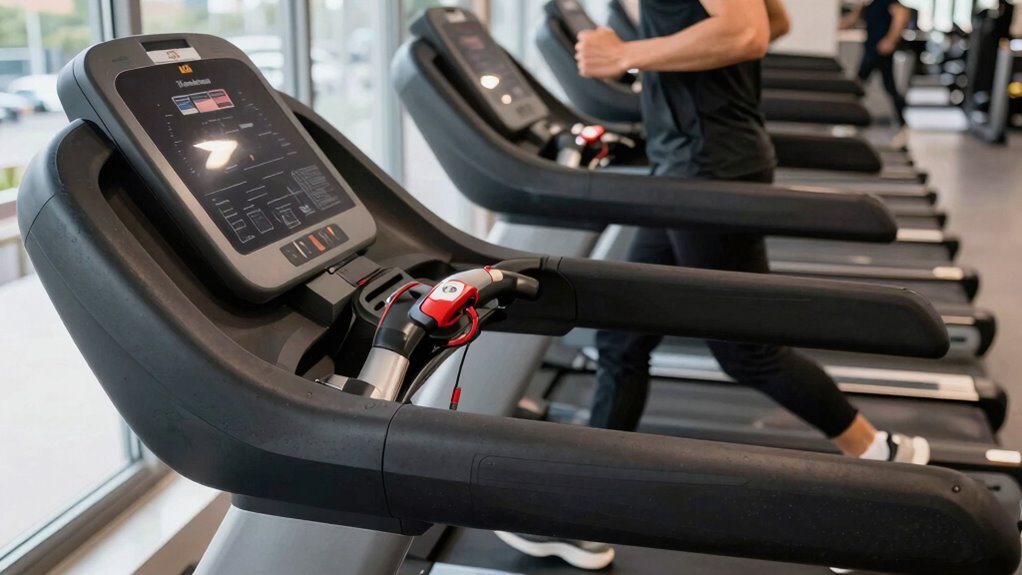

Walking treadmills pose safety risks that many overlook. To stay safe, you should regularly inspect equipment for loose bolts, frayed cords, and wear and tear. Always keep the emergency stop within easy reach and practice using it quickly. Make sure electrical connections are secure and the belt is clean and aligned. Incorporate routine safety checks and maintenance to prevent accidents. Staying aware of these precautions can make your workout safer—you’ll find more helpful tips if you keep going.
Key Takeaways
- Many users overlook regular equipment inspections, risking mechanical failures and safety hazards.
- Proper emergency stop training is often neglected, delaying response during emergencies.
- Electrical safety checks are essential to prevent shocks or fires from faulty wiring.
- Routine maintenance, including belt alignment and cleanliness, is crucial for safe treadmill operation.
- Clear safety protocols, like quick access to emergency stops and user awareness, are often underestimated.

Walking treadmills are becoming increasingly popular for home workouts, but many users underestimate the risks involved without proper safety routines. When you’re using a treadmill regularly, it’s essential to understand that safety isn’t just about wearing the right shoes or avoiding distractions. It also involves knowing what to do in emergencies and maintaining your equipment properly. Without a clear plan and routine, accidents can happen, sometimes with serious consequences.
First, you need to establish emergency protocols. This means knowing exactly how to stop the treadmill quickly if something goes wrong—like if you trip or feel faint. Most treadmills have an emergency stop button or a safety key that instantly halts the machine. Make sure it’s within easy reach before you start walking. Practicing how to activate this feature can save you precious seconds in a crisis. Additionally, you should have a plan for what to do if you experience dizziness, chest pain, or any sudden discomfort. Keep your phone nearby so you can call for help if needed. Also, inform someone in your household about your workout schedule, so they’ll check on you if you’re unresponsive or in trouble.
Equipment maintenance is equally essential. Regularly inspect your treadmill for loose bolts, frayed cords, or signs of wear that could cause malfunctions. Keep the belt clean and aligned, and ensure that the motor and electrical components are functioning properly. If you notice any strange noises or irregular movements, stop using the machine immediately and address the issue. Proper maintenance not only extends the lifespan of your treadmill but also keeps it operating safely. Lubricate the belt as recommended by the manufacturer, and follow the user manual for routine checks. Neglecting maintenance can lead to sudden breakdowns or dangerous malfunctions during your workout. Additionally, understanding gadget safety principles can help prevent accidents related to electrical components or mechanical failure. Incorporating routine safety checks into your maintenance routine can further reduce the risk of unexpected malfunctions. Regular inspections and adherence to safety guidelines are key to preventing malfunctions that could lead to accidents. Performing regular preventive maintenance can identify potential issues before they become serious hazards. Furthermore, staying informed about electrical safety precautions can prevent shocks or fires caused by faulty wiring or electrical issues.

Gosknor Treadmill Magnet Safety Key, Universal Treadmill Safety Key
- Package Includes: 1 treadmill safety magnet key
- High-Quality Materials: ABS, strong magnet, polyester cord
- Flexible Length: Approximately 100cm for easy reach
As an affiliate, we earn on qualifying purchases.
As an affiliate, we earn on qualifying purchases.
Frequently Asked Questions
Are Walking Treadmills Suitable for Elderly Users?
Walking treadmills can be suitable for elderly users if safety measures are prioritized. They can support elderly mobility and help improve balance through controlled, low-impact exercise. However, you should start with a professional assessment, verify the treadmill has safety features like handrails and emergency stops, and always supervise initial sessions. Proper guidance can make walking treadmills a safe, effective way for seniors to stay active and enhance their balance.
What Are the Common Signs of Treadmill Malfunction?
You’ll notice common signs of treadmill malfunction through unusual noises, inconsistent speed, or the belt slipping. Regular maintenance checks help catch issues early. Watch out for sensor malfunctions, such as inaccurate speed or heartbeat readings, which can indicate problems. If you experience sudden stops or strange vibrations, stop using the treadmill and consult a technician. Staying vigilant guarantees safe, smooth workouts and prolongs your treadmill’s lifespan.
How Often Should Safety Features Be Inspected?
You should inspect safety features on your treadmill at least once a month to guarantee maximum safety. Regular checks help prevent accidents caused by worn-out safety gear or malfunctioning parts. Incorporate safety gear inspections into your maintenance checklist, focusing on emergency stop buttons and safety keys. Studies show that consistent maintenance reduces injury risks by up to 50%, so stay vigilant and keep your equipment safe for every workout.
Can Children Safely Use Walking Treadmills?
Children can’t safely use walking treadmills without proper supervision. You should always guarantee child supervision and follow age restrictions set by the manufacturer. Typically, kids under 12 shouldn’t operate treadmills, as their coordination and judgment aren’t fully developed. Always keep a close eye on children when they’re nearby, and never leave them alone near a treadmill. Prioritizing safety routines helps prevent accidents and keeps your child safe.
What Emergency Procedures Should Be in Place?
You should have clear emergency procedures, including regular emergency drills that everyone practices. Make certain safety signage is prominently displayed, showing how to stop the treadmill quickly and contact help. Train users on these protocols so they know what to do if something goes wrong. Keep emergency stop buttons easily accessible, and review safety routines periodically to guarantee everyone’s prepared to respond swiftly and safely in an emergency.
Conclusion
So, next time you step onto that treadmill, remember there’s more to safety than meets the eye. Treat it like a trusted partner that deserves your attention and care. By adopting simple precautions, you keep your journey smooth and enjoyable. After all, a little extra caution today can help you avoid unnecessary bumps along the way. Stay mindful, stay safe, and let your walking routine be a truly rewarding experience.