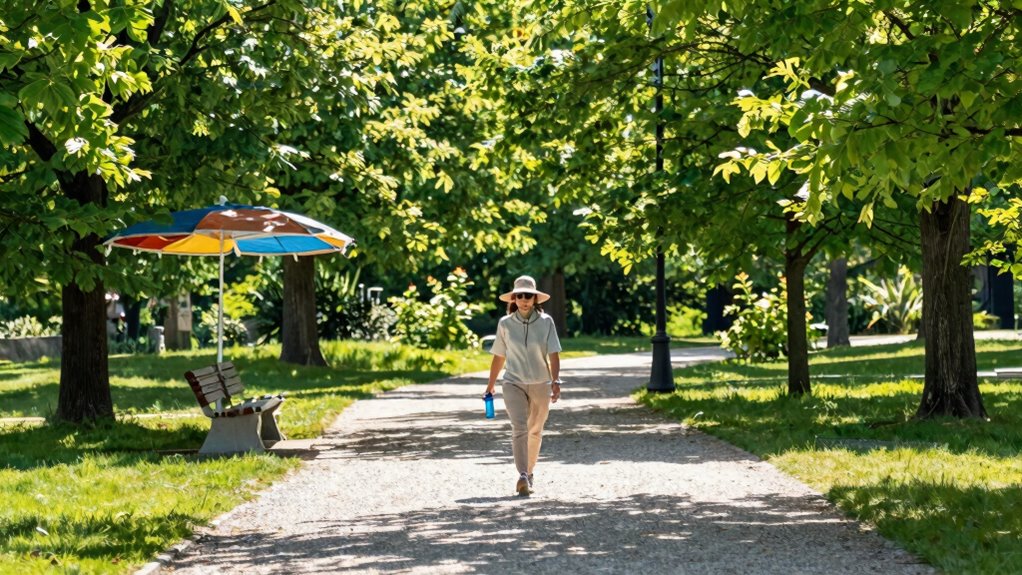

To make outdoor walks safer in warm weather, wear lightweight, light-colored clothing, and use broad-spectrum sunscreen to protect your skin. Drink water regularly and incorporate electrolyte drinks to stay hydrated, while taking breaks in shaded areas. Walk during cooler times, like early mornings or late afternoons, and avoid strenuous activities during peak heat. Wearing UV protection sunglasses and wide-brimmed hats adds extra protection. Curious? Keep exploring ways to stay safe and comfortable outdoors in the heat.
Key Takeaways
- Schedule walks during early mornings or late afternoons to avoid peak heat and direct sun exposure.
- Wear lightweight, breathable clothing and protective accessories like wide-brim hats and UV sunglasses.
- Carry water and electrolyte drinks to stay hydrated and prevent heat-related illnesses.
- Take regular breaks in shaded or ventilated areas to cool down and avoid overheating.
- Apply broad-spectrum sunscreen frequently and minimize time spent under direct sunlight.

As the temperatures rise, enjoying outdoor walks becomes more appealing, but warm weather also brings increased risks like heat exhaustion and dehydration. To make your walks safer and more comfortable, you need to focus on sun protection and hydration strategies. Sun protection is essential because prolonged exposure to direct sunlight can cause sunburns, heatstroke, and long-term skin damage. Start by wearing lightweight, light-colored clothing that covers your skin, providing a barrier against harmful UV rays. Don’t forget to apply a broad-spectrum sunscreen with at least SPF 30 on all exposed skin, and reapply every two hours, especially if you’re sweating or wiping your face. Wearing a wide-brimmed hat and UV-protection sunglasses can further shield your face and eyes from the sun’s rays, reducing glare and preventing eye strain. Planning your walks during early mornings or late afternoons also minimizes direct sunlight exposure, helping you avoid the hottest parts of the day.
Hydration strategies are equally important because your body loses fluids more quickly in warm weather, increasing your risk of dehydration. Before heading out, drink a glass of water to start your walk well-hydrated. Bring a water bottle with you and take small, consistent sips throughout your walk, rather than gulping large amounts all at once. This helps your body absorb the fluids more effectively and prevents stomach discomfort. If you’re planning a longer walk, consider adding electrolyte drinks or snacks that contain sodium and potassium to replenish lost minerals and maintain your energy levels. Pay attention to your body’s signals; if you start feeling dizzy, weak, or excessively tired, it’s a sign you need to hydrate more or find shade immediately. Incorporating proper hydration practices can significantly improve your comfort and safety during outdoor activities in warm weather. Ensuring proper air circulation can also help keep your body cooler and reduce the risk of heat-related illnesses. Additionally, staying in well-ventilated areas or using portable fans can further aid in body cooling.
Additionally, dress appropriately to keep cool—opt for moisture-wicking fabrics that draw sweat away from your skin and allow it to evaporate. Take breaks in shaded areas whenever possible, and avoid strenuous activity during the hottest parts of the day, typically between 10 a.m. and 4 p.m. Remember, protecting yourself from the sun and staying hydrated aren’t just precautions; they’re essential steps to enjoy your outdoor walks safely and comfortably in warm weather. By implementing these strategies, you can reduce health risks and make your outdoor experience more enjoyable, no matter how high the temperatures climb.
wide-brimmed sun hat for outdoor walks
As an affiliate, we earn on qualifying purchases.
As an affiliate, we earn on qualifying purchases.
Frequently Asked Questions
How Can I Prevent Insect Bites During Outdoor Walks?
To prevent insect bites during outdoor walks, you should use insect repellent containing DEET or picaridin on exposed skin. Wearing protective clothing, like long sleeves, pants, and a wide-brimmed hat, also helps shield you from insects. Avoid walking during peak insect activity times, such as dawn and dusk. Keep moving to reduce standing water around your path, which attracts insects. These steps considerably lower your chances of bites and keep you safer outdoors.
What Should I Do if I Feel Faint in the Heat?
If you feel faint in the heat, stop walking immediately and find a shaded area. Use hydration strategies like sipping water or electrolyte drinks to rehydrate. Sit down and rest, elevating your legs if possible. Focus on mental preparedness by staying calm and aware of your body’s signals. If symptoms worsen or persist, seek medical help. Staying hydrated and alert helps you prevent heat-related issues during outdoor walks.
Are There Specific Clothing Tips for Hot Weather Walks?
Think of your clothing as your shield against the sun’s relentless rays. Opt for lightweight fabrics like linen or moisture-wicking materials to stay cool and dry. A wide-brimmed hat acts as an umbrella for your face, providing essential shade. In one walk, I learned that covering my head and choosing breathable clothes kept me comfortable even during the hottest afternoon, proving proper attire can turn a challenging walk into a pleasant experience.
How Can I Stay Hydrated Without Carrying Water?
You can stay hydrated without carrying water by using hydration alternatives like electrolyte tablets or powders you add to your drinks. Opt for portable hydration options such as sports drinks or flavored waters with electrolytes, which replenish lost minerals. Also, plan your walk during cooler parts of the day and visit shaded spots, so you don’t need as much water. These strategies help you stay refreshed and safe during warm weather walks.
What Are Signs of Heat Exhaustion to Watch For?
You should watch for signs of heat exhaustion like heavy sweating, weakness, dizziness, and nausea. To stay safe, use sun protection such as hats and sunscreen, and follow hydration strategies like drinking water regularly. Pay attention to how your body feels, and if you notice symptoms, move to a cooler place, rest, and rehydrate. Recognizing these signs early helps prevent heat-related illnesses during warm weather walks.
Conclusion
With a bit of planning and precautions, you can confidently conquer warm-weather walks. Stay shaded, stay hydrated, and slip on sturdy shoes to stay safe and sound. By balancing brightness with brains, you’ll breeze through your outdoor adventures without a bother. Remember, a little awareness goes a long way—so savor the sunshine while staying safe and secure. Stride smartly, stay safe, and soak up the sunny serenity!