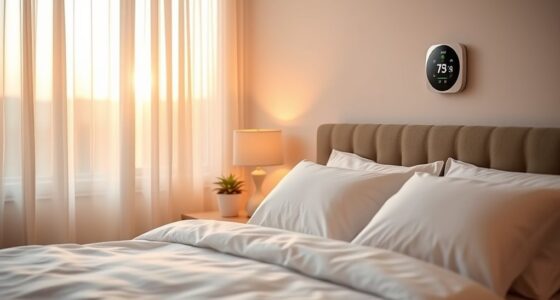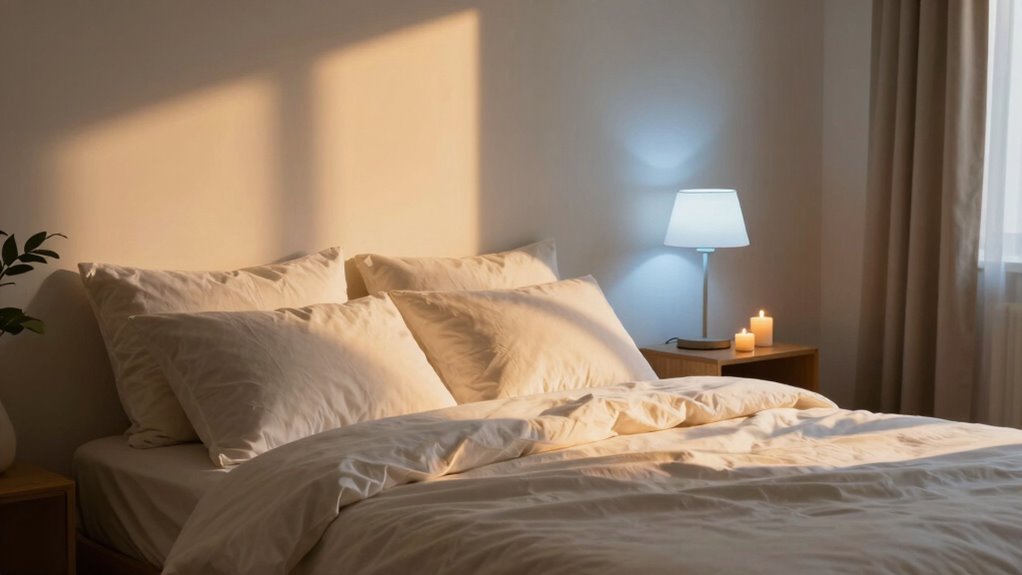

Changing your bedroom lighting several times a day helps keep your natural rhythms in sync, boosting your mood, energy, and sleep quality. Bright, natural-like light in the morning can make you feel more alert, while warmer, dimmer tones in the evening signal your body to wind down. This variation supports your circadian rhythms and promotes emotional stability. Keep going, and you’ll discover how adapting your lighting can enhance your overall well-being throughout the day.
Key Takeaways
- Changing lighting throughout the day supports natural circadian rhythms and improves sleep quality.
- Multiple light adjustments help maintain energy levels and enhance mood consistency.
- Dynamic lighting mimics natural sunlight variations, promoting overall health and emotional stability.
- Varying light intensity and warmth reduces the negative effects of static, artificial lighting.
- Adaptive lighting creates a calming environment for relaxation and stress reduction at different times.
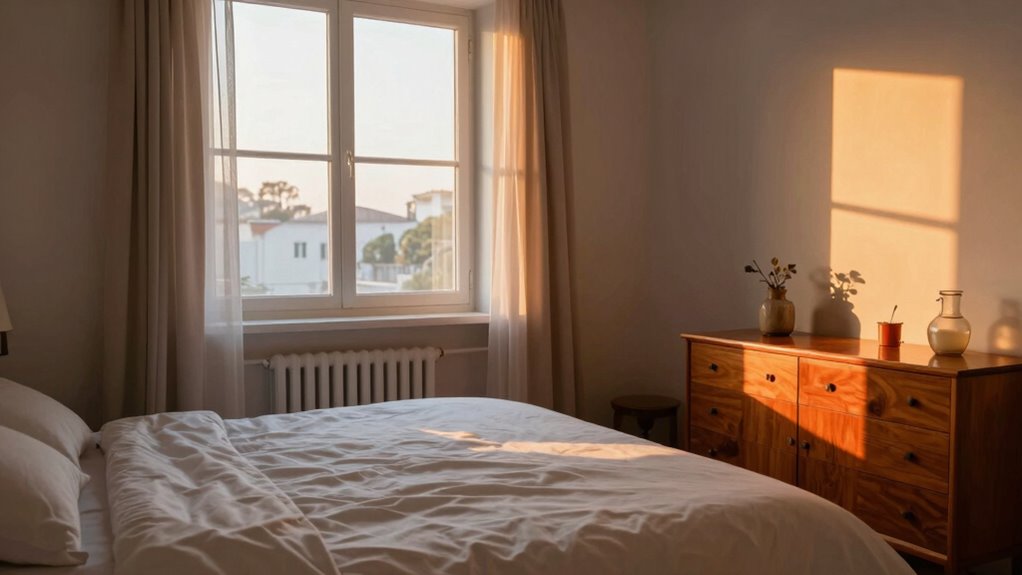
Changing your bedroom lighting throughout the day isn’t just about creating ambiance; it’s essential for your health and well-being. Your body responds to light in ways that influence your mood and energy levels, so adjusting your lighting can have a real impact on how you feel and function. When you start your day, bright, natural-like light helps set a positive tone. It signals to your brain that it’s time to wake up, boosting your alertness and mood. As the day progresses, gradually dimming the lights or switching to softer, warmer tones can help maintain your energy regulation. This prevents your energy from crashing mid-afternoon and prepares you for winding down in the evening.
Mood enhancement is a key reason to change your lighting. Bright, cool tones in the morning mimic natural sunlight, which can lift your spirits and improve your focus. It’s the kind of lighting that makes you feel more motivated and ready to tackle the day. Conversely, warmer, dimmer lights in the evening help create a calming environment that signals to your brain it’s time to relax. This switch not only enhances your mood by reducing stress but also encourages better sleep. When your bedroom lighting aligns with the natural rhythm of the day, it supports emotional stability and promotes a positive outlook. Incorporating biodiverse lighting options that mimic natural variations can further enhance your body’s ability to adapt to these changes.
Additionally, using lights that adapt to your environment can support your body’s natural light response and improve overall well-being. Proper lighting adjustments can also help prevent light pollution, which can disrupt your circadian rhythms and negatively impact your sleep patterns. Recognizing the importance of lighting variability throughout the day can help optimize your health and comfort at home. Incorporating circadian lighting systems that change throughout the day can further promote your natural biological rhythms and overall health.
circadian lighting system for bedroom
As an affiliate, we earn on qualifying purchases.
As an affiliate, we earn on qualifying purchases.
Frequently Asked Questions
How Does Lighting Affect Sleep Quality Throughout the Day?
Lighting impacts your sleep quality by syncing with your circadian rhythms. During the day, brighter light and higher light intensity boost alertness, helping you stay awake and active. As evening approaches, dimmer lighting signals your body to prepare for sleep, improving its quality. By adjusting light intensity throughout the day, you support your natural biological clock, making it easier to fall asleep and wake refreshed.
Can Changing Lighting Improve Mood and Mental Health?
Changing lighting can boost your mood and mental health by aligning with your circadian rhythms and incorporating color therapy. Bright, cool lights in the morning energize you, while softer, warmer tones at night promote relaxation. By adjusting your bedroom lighting throughout the day, you support your body’s natural clock and stimulate positive feelings, helping you feel more balanced, focused, and emotionally resilient.
What Are the Best Types of Lighting for Different Times of Day?
Choose smart bulbs with adjustable color temperature for different times of day. In the morning, opt for bright, cool light to energize you. During the day, use natural or warm lighting to stay focused. In the evening, switch to soft, warm tones to relax and prepare for sleep. Using smart bulbs allows you to easily change your lighting, matching your environment to your mood and activities throughout the day.
How Often Should I Update My Bedroom Lighting Fixtures?
You should update your bedroom lighting fixtures every 1 to 3 years to guarantee proper lighting maintenance and fixture compatibility. Regular updates help you avoid outdated bulbs or fixtures that no longer match your style or needs. Keep an eye out for signs of wear, inefficiency, or poor lighting, and consider switching fixtures seasonally for ideal ambiance and energy efficiency. Staying proactive ensures your bedroom remains functional and inviting.
Are There Energy-Efficient Lighting Options for Dynamic Lighting Changes?
Yes, there are energy-efficient options for dynamic lighting changes. You can use smart bulbs, which allow you to customize brightness and color without wasting energy, and LED strips, known for their low power consumption and versatility. Both options enable you to effortlessly adjust your bedroom lighting throughout the day, creating the perfect ambiance while saving energy. These solutions are cost-effective, eco-friendly, and easy to control via apps or voice commands.
Conclusion
Think of your bedroom lighting as the sun’s journey across the sky—bright and energetic at dawn, soft and calming at dusk. When your lighting changes throughout the day, it guides your mood and sleep just like the sun guides nature’s rhythm. By embracing this natural dance of light, you create a sanctuary that nurtures your well-being. So, let your lights evolve with the day, and watch your nights become more restful and your mornings more energized.