To determine if a hybrid mattress feels firm or soft, focus on its hidden layers: foam density and coil gauge. Higher foam density (4 pcf or more) and lower coil gauge (12-13) create a firmer, more supportive feel, while softer foam and higher coil gauge (14-15) make it more plush and contouring. Understanding these specs helps you find a mattress that matches your comfort preferences—continue exploring to discover how these details shape your sleep experience.
Key Takeaways
- Foam density (measured in pcf) influences mattress firmness and durability, with higher densities offering firmer support.
- Coil gauge determines spring thickness; lower gauges (12-13) create firmer support, while higher gauges (14-15) provide softness.
- Combining high-density foam with lower coil gauge results in a firmer feel; softer foam with higher coil gauge offers plushness.
- These hidden specs shape overall support, contouring, and support longevity beyond surface softness.
- Understanding foam density and coil gauge helps customize mattress firmness or softness to match preferences.
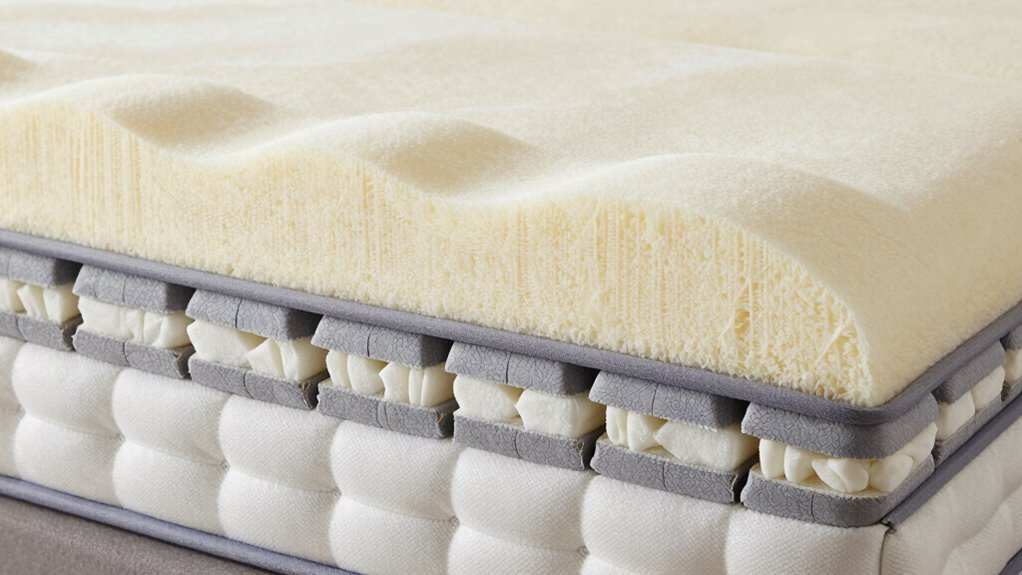
Ever wondered what makes hybrid mattress layers stand out? It’s often the hidden specs that influence how a mattress feels and performs, and understanding these details can help you find the perfect sleep surface. Two critical factors are foam density and coil gauge, which work together to shape whether your mattress feels firm or soft. Foam density is a key indicator of durability and support. It measures how much weight a cubic foot of foam can hold, usually expressed in pounds per cubic foot (pcf). Higher foam density means the material is denser, offering better support and longevity. For example, a high-density foam layer, like 4 pcf or above, provides firmer support and tends to resist sagging over time. Conversely, lower-density foam, around 1.5 to 2.0 pcf, feels softer and more plush but might wear out faster. When you’re choosing a hybrid mattress, pay attention to foam density because it directly impacts how firm or plush the top layers feel, and how well they support your body throughout the night. Additionally, foam density plays a crucial role in determining the overall comfort and lifespan of your mattress. On the coil side, coil gauge refers to the thickness of the steel wire used to make the springs. It’s measured in numbers, with lower numbers indicating thicker wires. A coil gauge of 12 or 13 is thicker, providing a more supportive, firmer feel, which suits those who prefer a firm mattress. Thinner gauges, like 14 or 15, give a softer, more cushioned experience, ideal if you like a plush surface. The coil gauge also influences the overall support and durability of the mattress. Thicker coils tend to be more resilient and better at maintaining shape, while thinner coils offer more contouring and pressure relief. Hybrid mattresses combine these elements to strike a balance between support and comfort. A mattress with high-density foam layers atop a support coil with a lower gauge will feel firmer and offer more support. Conversely, a hybrid with softer foam and higher gauge coils will feel more plush and conforming. Understanding how foam density and coil gauge interact helps you customize your sleep experience. If you prefer a mattress that feels like sinking into a cloud, look for softer foam and higher gauge coils. If you want something sturdy and supportive, opt for denser foam layers and lower gauge coils. In the end, these hidden specs—foam density and coil gauge—are what truly determine the firmness or softness of a hybrid mattress. They’re not always obvious when shopping, but knowing what to look for empowers you to choose a mattress that meets your comfort and support needs perfectly.
Frequently Asked Questions
How Does Layer Thickness Influence Mattress Firmness?
Layer thickness directly impacts mattress firmness by affecting layer density and foam composition. Thicker layers usually mean more material, which can distribute weight better, leading to a softer feel if made with lighter foam or a firmer feel with denser foam. Conversely, thinner layers tend to be firmer or softer depending on their foam composition. So, the combination of layer thickness, density, and foam type determines whether your mattress feels firm or soft.
Can Hybrid Layers Be Customized for Individual Preferences?
Imagine tailoring your perfect sleep sanctuary—yes, hybrid layers can be customized to fit your personal preferences. You can choose layer customization options like foam densities, coil types, or thicknesses, allowing you to create a mattress that’s just right for you. This personalized approach guarantees ideal comfort and support, making your sleep experience uniquely yours. So, don’t settle—design a hybrid mattress that truly aligns with your sleep needs.
What Materials Impact the Durability of Hybrid Layers?
You’ll find that foam quality and material elasticity substantially impact the durability of hybrid layers. High-quality foams resist sagging and maintain their shape longer, ensuring your mattress stays supportive over time. Elastic materials like latex or certain memory foams adapt well without breaking down quickly. By choosing hybrids with durable foam and flexible materials, you guarantee your mattress remains comfortable and supportive for years, saving you money and hassle in the long run.
Are There Eco-Friendly Options for Hybrid Mattress Layers?
Like a gust of clean forest air, eco-friendly options for hybrid mattress layers exist. You can choose sustainable materials like organic latex, recycled steel, and natural fibers, which support eco-conscious manufacturing. These options not only reduce your environmental footprint but also offer comfort and durability. By selecting eco-friendly hybrid layers, you’re making a conscious choice that benefits both your sleep and the planet, turning your bed into a haven of sustainability.
How Do Hybrid Layers Affect Temperature Regulation?
Hybrid layers notably impact temperature regulation by incorporating gel cooling technologies and breathable fabrics. These features help dissipate heat and promote airflow, keeping you cooler throughout the night. Gel cooling layers absorb excess heat, while breathable fabrics allow air to circulate freely, preventing overheating. As a result, your sleep remains comfortable, even if you tend to sleep hot, ensuring a more restful and revitalizing sleep experience.
Conclusion
Understanding the layers of a hybrid mattress helps you choose the perfect feel. Did you know that 65% of sleepers prefer a medium-firm mattress, balancing support and softness? By knowing how each layer influences firmness or softness, you can make an informed decision. Remember, the right combination of foam, coils, and comfort layers can improve sleep quality and reduce aches. So, check those specs carefully—you’ll sleep better knowing you’ve picked a mattress tailored just for you.