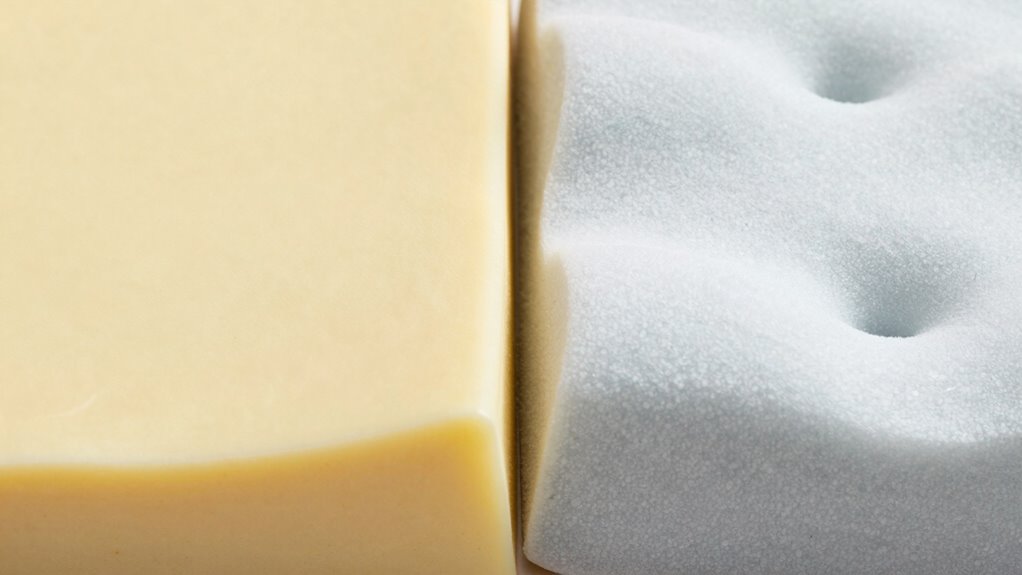

If you prefer a lively, responsive feel, latex reacts quickly and offers a bouncy, springy surface that keeps you feeling refreshed. In contrast, memory foam gently contours to your body, providing a soft, hugging sensation that molds closely and relieves pressure. Your experience depends on whether you favor a lively, responsive surface or a cozy, contouring one. Want to discover more about how these materials can shape your sleep? Keep exploring, and you’ll find the details you need.
Key Takeaways
- Latex offers a responsive, bouncy feel that quickly reacts to movements, while memory foam contours closely, providing a soft, hugging sensation.
- Latex provides a lively, springy surface ideal for those who prefer responsiveness; memory foam offers a slower, more pressure-molding experience.
- The feel of latex is more ventilated and cooler, whereas memory foam tends to trap heat and feel warmer during sleep.
- Latex’s firmness and resilience give it a more buoyant, supportive feel, contrasting with the plush, cradling softness of memory foam.
- Overall, latex feels more lively and airy, while memory foam delivers a contouring, cozy sensation suited for pressure relief.
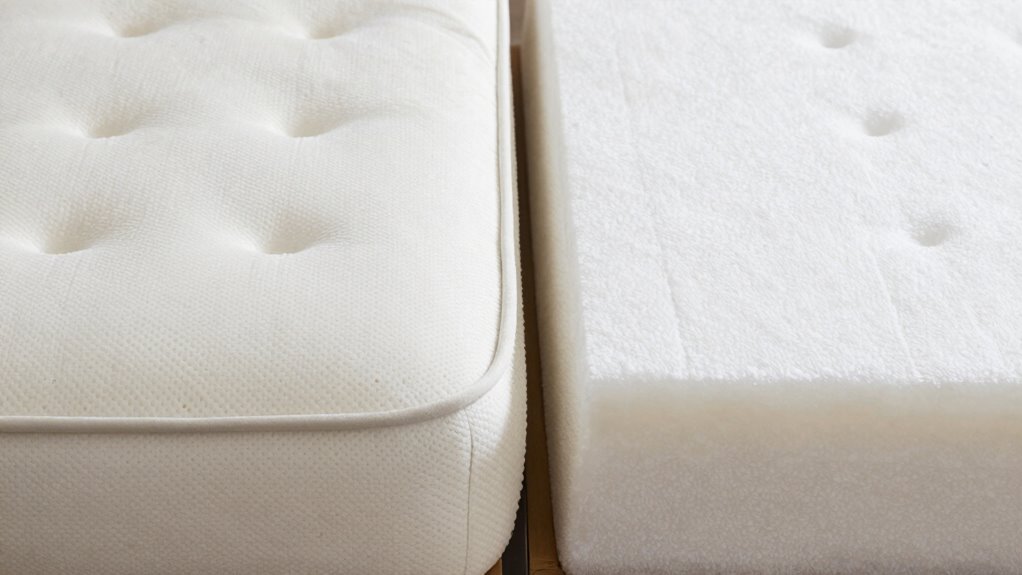
Are you trying to decide between latex and memory foam for your mattress? Both materials offer distinct feels and benefits, so understanding their differences can help you make an informed choice. One key factor to weigh is the breathability comparison. Latex tends to be more breathable than memory foam, thanks to its natural open-cell structure. This allows air to circulate more freely, helping you stay cooler throughout the night. If you tend to sleep hot, latex might be the better option because it prevents heat buildup and promotes airflow. Memory foam, on the other hand, tends to trap heat due to its dense, viscoelastic design. While some modern memory foam mattresses incorporate gel infusions or cooling covers to counteract heat retention, they generally don’t match latex’s breathability. So, if cooling is a priority, latex provides a natural advantage.
Latex offers superior breathability and cooling compared to memory foam.
Long-term durability is another pivotal aspect to weigh. Latex mattresses are known for their impressive longevity; they often last 10 to 20 years without significant sagging or loss of support. Natural latex, especially, maintains its shape and resilience over time, making it a good investment for durability-conscious buyers. Memory foam, however, tends to soften and develop impressions more quickly, typically lasting around 6 to 8 years before noticeable wear occurs. Over time, memory foam can develop permanent indentations where you sleep, which might compromise comfort and support. If long-term durability is a top concern, latex’s resilience and ability to retain its shape give it an edge.
Your choice also depends on how you prefer your mattress to feel. Latex offers a bouncy, responsive surface that quickly reacts to your movements, giving you a more “springy” sensation. Memory foam, by contrast, contours closely to your body, providing a softer, more hugging feel that can enhance pressure relief. If you like a mattress that responds immediately and offers a lively feel, latex is likely the better fit. If you want to sink into your bed and experience a body-molding sensation, memory foam might suit you more.
In the end, both materials have unique advantages, but considering the breathability comparison and long-term durability can guide you toward the right choice. Latex’s natural airflow and lasting support make it a durable, cooler option, while memory foam offers a cozy, contouring experience that can be comfortable but may need replacing sooner. Think about what matters most—temperature regulation, longevity, or feel—and pick the one that aligns with your sleep preferences.
Frequently Asked Questions
Which Material Is More Eco-Friendly, Latex or Memory Foam?
You’ll find latex more eco-friendly than memory foam because of its sustainability comparison. Latex is made from natural rubber, a renewable resource, and often involves less chemical processing. Memory foam, on the other hand, is typically petroleum-based and involves chemical treatments, making it less eco friendly. If sustainability matters to you, choosing latex supports eco friendly materials and reduces your environmental impact.
How Do Allergens Differ Between Latex and Memory Foam?
You’ll notice latex’s hypoallergenic properties act like a shield, resisting dust mites and mold, making it less likely to trigger allergies. Memory foam, on the other hand, can trap allergens inside, which may worsen allergy triggers unless it’s specially treated. If you’re sensitive, latex offers a cleaner, allergen-resistant surface, while memory foam might need extra care to keep allergens at bay. Choose based on your allergy needs for a healthier sleep.
What Is the Typical Lifespan of Latex Versus Memory Foam Mattresses?
You’ll find latex mattresses typically last 10-15 years, thanks to their durability comparison favoring resilience. Memory foam mattresses usually last 7-10 years, as they tend to sag over time. To extend your mattress’s lifespan, follow maintenance tips like rotating it regularly and keeping it clean. Proper care helps you maximize comfort and value, regardless of whether you choose latex or memory foam.
Are There Significant Temperature Regulation Differences?
They say, “You can’t judge a book by its cover,” but when it comes to mattresses, you can notice the difference in temperature control. Memory foam tends to trap heat, leading to higher heat retention, making you feel warmer. Latex offers better breathability, providing more effective heat dissipation. If temperature regulation matters to you, latex might keep you cooler and more comfortable all night long.
How Do Costs Compare Between Latex and Memory Foam Options?
In a price comparison, latex mattresses usually cost more than memory foam options, making them less affordable for budget-conscious shoppers. However, an affordability analysis shows that latex offers longer durability and better natural materials, which can justify the higher price over time. If you’re looking for a balance between cost and longevity, memory foam tends to be the more budget-friendly choice, but latex provides premium quality for a higher investment.
Conclusion
When choosing between latex and memory foam, it’s all about your personal feel preference. Latex offers a bouncy, responsive experience, while memory foam provides sinking comfort. Curiously, a recent survey found that 65% of sleepers preferred the contouring support of memory foam, yet latex users reported higher satisfaction with its durability and natural feel. Consider how each material aligns with your sleep style, and you’ll find the perfect fit for restful nights ahead.