To guarantee your smart lighting automations for sunrise and sunset work reliably, you should use well-designed rules that respond to natural light changes, incorporating outdoor sensors if possible. These automations can turn lights on or off automatically, adjust brightness levels, and adapt to seasonal shifts. Combining scheduling with voice control makes management simple and flexible. Keep your system updated and properly configured, and you’ll enjoy seamless, energy-efficient lighting that truly adapts to daylight hours; if you continue, you’ll discover how to optimize this even further.
Key Takeaways
- Use integrated outdoor light sensors for real-time adjustments to sunrise/sunset automation.
- Program flexible brightness levels that adapt seasonally for natural-looking lighting effects.
- Enable voice control to quickly modify or extend lighting schedules as needed.
- Set clear rules in your smart system to turn lights on at sunset and off at sunrise automatically.
- Regularly update and customize automation settings to match local daylight variations and personal preferences.

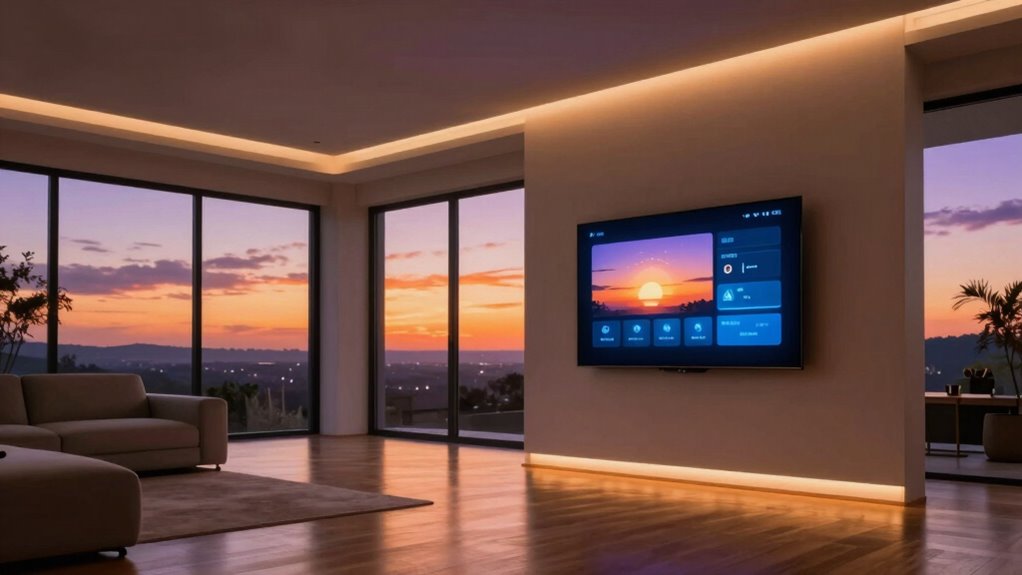
Have you ever wondered how smart lighting automations can transform your home? One of the most practical features is using sunrise and sunset rules to automatically adjust your lights. With these automations, you don’t have to manually turn lights on or off as the day progresses. Instead, your system intelligently responds to natural light changes, creating a comfortable environment while saving energy. Imagine waking up with gentle lighting at sunrise or winding down with dimmed lights at sunset—it’s all possible with smart automation.
Voice control makes managing these routines even easier. You can simply speak commands to your smart assistant to activate or modify your lighting schedules. Want the lights to turn on brighter at sunset? Just ask. Need to extend the schedule during longer evenings? Voice control lets you do that without fiddling with apps or switches. This hands-free approach isn’t just convenient; it also encourages consistent energy-saving habits. When your lights respond precisely to natural light levels, you avoid unnecessary energy consumption, resulting in lower utility bills and a smaller carbon footprint. Automating lights based on sunrise and sunset ensures your home uses power only when needed, embracing energy efficiency without sacrificing comfort.
Setting these rules is straightforward. You can program your lights to turn on at sunset and off at sunrise, or vice versa, depending on your preferences. Many smart lighting systems also allow you to customize the brightness levels based on the time of day or outdoor light conditions. This means your home adapts seamlessly to changing seasons, with brighter lights in winter evenings and softer lighting during summer nights. Such automation not only enhances your home’s ambiance but also maximizes energy efficiency by reducing waste. Instead of leaving lights on unnecessarily, your system ensures they operate only when natural light isn’t sufficient, or when you’re actively using a space. Additionally, local automation options enable your system to respond to real-time outdoor light sensors, further optimizing energy usage.
Frequently Asked Questions
How Do I Sync Smart Lighting With Weather Changes?
To sync smart lighting with weather changes, guarantee your system has accurate geolocation data for precise weather updates. Use weather integration features in your smart home app to link weather conditions with your lights. When the weather shifts—like cloudy days or rain—your lights can adjust accordingly, such as dimming or brightening, creating a seamless experience. Regularly update your location settings for the best geolocation accuracy and reliable automation.
Can I Override Automated Lighting Schedules Temporarily?
Yes, you can easily override automated lighting schedules with manual overrides for temporary adjustments. If you’re worried about losing your settings, don’t fret—most systems allow quick manual control that doesn’t interfere long-term. Simply activate the manual override when needed, make your adjustments, and the system will resume its automation once you’re done. It’s a simple way to customize your lighting without permanently changing your smart setup.
What Are the Best Devices for Sunrise/Sunset Automation?
You should consider devices like LIFX, Philips Hue, or TP-Link Kasa for sunrise/sunset automation. These smart bulbs offer broad compatibility with various smart home systems and work seamlessly with geofencing technology, which triggers lights based on your location. Make certain your chosen device supports your automation platform, and check for features like scheduling and dimming to create smooth, natural lighting changes that mimic sunrise and sunset.
How Do I Troubleshoot Inconsistent Lighting Timings?
Think of your lighting schedule as a delicate dance that can stumble over misplaced steps. To troubleshoot inconsistent timings, start by checking for manual adjustments that might be throwing off the rhythm. Next, inspect for schedule conflicts between devices or apps, like competing conductors disrupting the harmony. Ensuring all settings align and removing manual overrides helps synchronize your lights, so they perform a seamless sunrise or sunset routine every time.
Are There Privacy Concerns With Location-Based Lighting Rules?
Yes, there are privacy concerns with location-based lighting rules because they rely on your location data, which can be sensitive. When you use these automations, your device shares your whereabouts with the smart home system, potentially exposing your movements. To protect your privacy, make certain your system has strong security measures, limit data sharing, and review app permissions regularly. Being aware of how your location data is used helps keep your privacy safe.
Conclusion
As dawn and dusk weave their silent dance, your smart lighting becomes the heartbeat of your home, guiding you through day and night. With each sunrise, let your lights awaken like a new beginning; at sunset, gently fade like closing pages of a story. Embrace these automations as your home’s silent guardians, symbolizing harmony and balance. In this rhythm, your space transforms into a sanctuary — a reflection of nature’s own timeless flow.