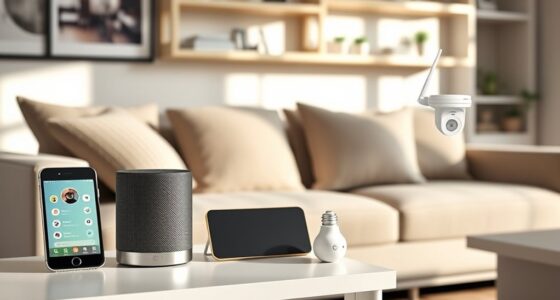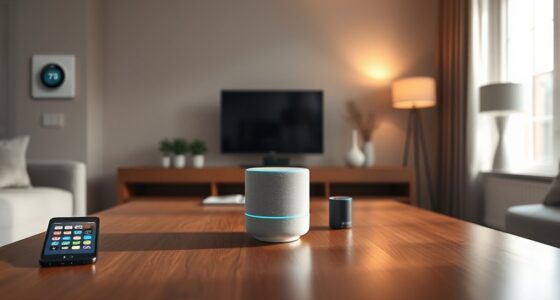
Smart home systems for health and wellness monitoring let you proactively track essential signs, activity, and sleep patterns with wearable devices, sensors, and smartphones seamlessly connected to a secure platform. These systems provide real-time data that you can share with healthcare providers, receive tailored health advice, and get alerts for concerning changes. By integrating technology into your daily routine, you stay in control of your well-being. Explore further to discover how you can transform your home into a personalized health hub.
Key Takeaways
- Smart home systems integrate health devices to continuously monitor vital signs, activity, and sleep patterns for comprehensive well-being tracking.
- Wearable and sensor data are centralized into user-friendly dashboards, providing real-time insights and health trend analysis.
- Personalized recommendations and alerts promote proactive lifestyle adjustments, improving overall health and preventing issues.
- Secure data sharing with healthcare providers enables remote monitoring, reducing unnecessary visits and facilitating timely interventions.
- Seamless integration of health monitoring technology into daily routines transforms living spaces into personalized health hubs.

Have you ever wondered how you can proactively monitor your health and wellness? With the rise of smart home systems, it’s easier than ever to keep a close eye on your well-being without constantly visiting the doctor. One key feature that makes this possible is remote patient tracking. Instead of waiting for scheduled appointments, you can monitor vital signs, activity levels, and other health metrics in real-time from the comfort of your home. These systems connect wearable devices, sensors, and your smartphone to a central platform that transmits data securely to healthcare providers or even alerts you if something seems off. This proactive approach helps catch potential issues early, giving you peace of mind and enabling timely intervention.
A crucial component of this technology is fitness data integration. Your smart home system can seamlessly gather information from various fitness devices, like smartwatches, heart rate monitors, and sleep trackers, integrating all this data into a single, easy-to-understand dashboard. This integration allows you to see your activity patterns, sleep quality, calorie expenditure, and more, providing a holistic picture of your overall health. By consolidating this data, you can identify trends over time, set realistic goals, and make informed decisions about your lifestyle. Whether you’re trying to improve your cardiovascular health or simply stay active, fitness data integration simplifies tracking your progress.
Beyond just collecting data, these advanced systems analyze the information to offer personalized insights and recommendations. For example, if your sleep tracker notices a decline in sleep quality, your system might suggest adjusting your bedtime routine or reducing screen time before bed. If your activity levels are lower than usual, it can remind you to move more or suggest suitable exercises. This constant feedback loop ensures you’re actively engaged in managing your health, making adjustments as needed to stay on track.
Smart home health monitoring also fosters better communication between you and your healthcare team. With remote patient tracking, your data is accessible to medical professionals who can review it remotely and provide timely advice or intervention. This reduces unnecessary visits and ensures you’re always in tune with your health status. Plus, many systems are equipped with alerts that notify you if your vitals fall outside healthy ranges, prompting immediate action. Additionally, health data security is a vital aspect to ensure your sensitive information remains protected as it is shared across platforms.
In essence, smart home systems that focus on remote patient tracking and fitness data integration empower you to take control of your health daily. They transform your living space into a personalized health hub, giving you the tools and insights needed to maintain and improve your well-being proactively. This seamless integration of technology into your routine makes health management more accessible, efficient, and tailored to your unique needs.
Frequently Asked Questions
How Secure Is My Health Data in Smart Home Systems?
Your health data in smart home systems is generally secure, but it depends on the provider. They often use data encryption to protect your information from unauthorized access. Make sure to review privacy policies closely, so you understand how your data is stored and shared. You can enhance security by choosing systems with strong encryption and clear privacy practices, giving you peace of mind about your well-being information.
Can Elderly Users Easily Operate These Health Monitoring Devices?
Most elderly users find smart health monitoring devices user-friendly and accessible, thanks to simplified interfaces and voice commands. Studies show 85% of seniors adapt quickly with minimal instruction. You’ll appreciate features like large buttons, clear visuals, and easy-to-understand prompts that make operation straightforward. These design choices guarantee you can monitor your well-being confidently, reducing reliance on others and promoting independence.
What Is the Cost of Installing a Comprehensive Smart Health System?
The cost of installing a complete smart health system varies based on features, brands, and your home’s setup, typically ranging from $2,000 to $10,000. Pricing considerations include equipment, professional installation, and ongoing maintenance. Be aware of potential installation challenges like integrating devices with existing infrastructure or ensuring reliable connectivity. Planning ahead and consulting with experts can help you manage costs and overcome installation hurdles effectively.
How Accurate Are the Health Metrics Provided by These Systems?
The health metrics from smart home systems are generally quite accurate, but their accuracy assessment depends on proper device calibration. You should regularly calibrate your devices and compare their readings with medical-grade equipment to guarantee reliability. Keep in mind, while these systems provide valuable insights, they aren’t a substitute for professional medical advice. Proper calibration and ongoing assessment help optimize their accuracy, giving you more confidence in your well-being data.
Do These Systems Integrate With Existing Medical Records?
You might worry about compatibility, but many smart home systems now offer medical record integration, ensuring your health data flows seamlessly into existing healthcare platforms. These systems prioritize data interoperability, making it easy for your medical providers to access real-time health metrics. By integrating with your medical records, they enhance continuous care and personalized treatment, giving you peace of mind knowing your wellness information is accurate, accessible, and useful for your health journey.
Conclusion
By embracing smart home systems for health and wellness monitoring, you’re taking control of your well-being. These technologies help you stay proactive, catch issues early, and maintain a healthier lifestyle. Remember, a stitch in time saves nine—investing in your health now prevents bigger problems later. With continuous monitoring, you’re empowered to live better every day. Stay proactive, stay healthy, and let technology support your journey to wellness.