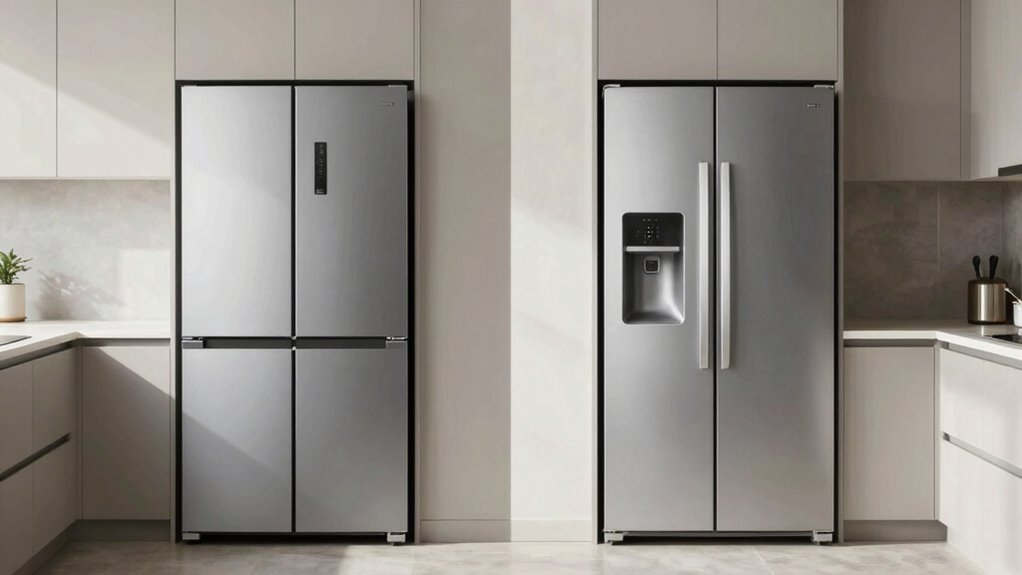

Choosing between counter‑depth and standard refrigerators impacts your kitchen layout and style. Counter‑depth models sit flush with cabinets, creating a sleek, organized appearance that makes small kitchens look larger. They’re energy-efficient and help preserve food longer, but typically offer less storage space. Standard models provide more room for bulkier items but protrude, affecting aesthetics. Proper space planning ensures ideal airflow and easy access, so exploring these options further can help you design a functional, stylish kitchen suited to your needs.

Get decor and gifts delivered free with Prime
- Fast, free delivery on millions of items
- Prime Video, Amazon Music and more included
- Member-only deals all year
Key Takeaways
- Counter-depth refrigerators offer a sleek, flush appearance that integrates seamlessly with cabinetry, enhancing kitchen aesthetics and perceived space.
- Standard models provide more interior storage capacity, suitable for larger families or bulk storage needs.
- Proper space planning ensures optimal airflow, prevents overcrowding, and maintains energy efficiency regardless of refrigerator type.
- Counter-depth units reduce cold air loss, helping food stay fresh longer and lowering energy consumption.
- Organizing accessible shelves and strategic placement improve usability and ease of maintenance in both refrigerator styles.
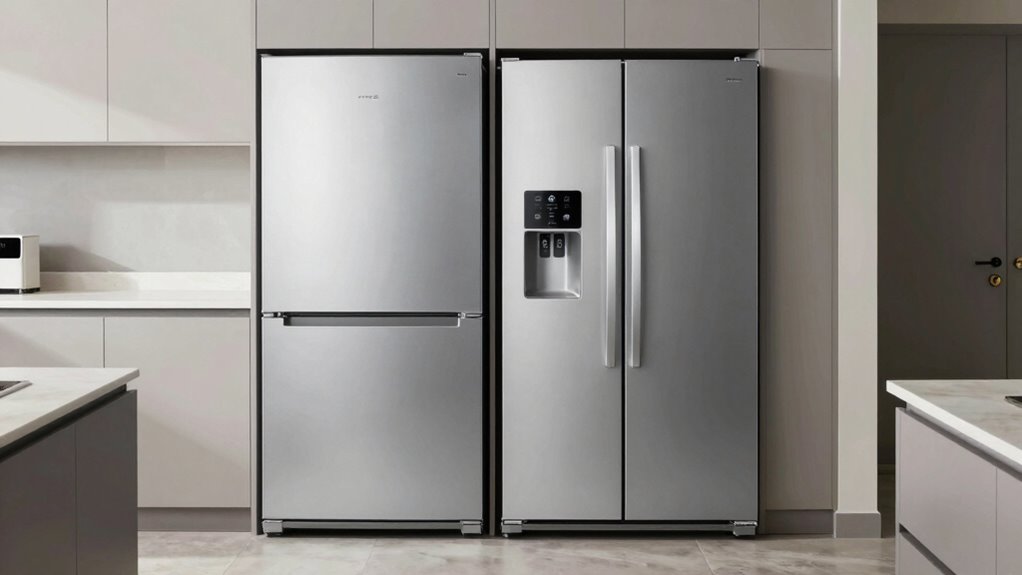
Have you ever wondered how to organize your refrigerator for maximum efficiency? The way you layout your fridge can markedly impact not only how easily you find what you need but also its energy efficiency and overall aesthetic appeal. When choosing between a counter-depth and a standard refrigerator, space planning becomes essential. Counter-depth models are designed to sit flush with your cabinets, giving your kitchen a sleek, streamlined look. This design minimizes protrusions, making your space feel more open and organized, which enhances the aesthetic appeal. A tidy, cohesive appearance can make even a small kitchen look more spacious and inviting. Moreover, the closer fit of a counter-depth fridge often means less cold air escapes, helping to preserve food longer and reduce energy consumption. This contributes to better energy efficiency, lowering your electricity bills over time.
On the other hand, standard refrigerators usually offer more interior space, which is advantageous if you tend to store large quantities of groceries or bulky items. While they may slightly disrupt the uniform look of your kitchen, their larger capacity can make storage more convenient. When planning your space, consider how much room you typically need and how often you access certain items. Properly organized shelves and compartments can make a considerable difference, whether you opt for a sleek counter-depth or a spacious standard model. Good space planning ensures that cold air stays contained within the fridge, reducing energy wastage and keeping your food fresher longer. It also prevents overcrowding, which can hinder air circulation and decrease efficiency. Additionally, understanding common kitchen layout principles can help you optimize your refrigerator’s placement for better access and airflow.
Another vital factor is accessibility. With a well-thought-out layout, you can keep frequently used items at eye level or in easy-to-reach drawers, saving you time and effort. For counter-depth models, it’s especially imperative to maximize interior space since external dimensions are more limited. Use clear bins and adjustable shelves to optimize every inch of space, maintaining an organized and visually appealing interior. This not only boosts the aesthetic appeal but also ensures you’re making the most of your investment in energy-efficient appliances. Regularly cleaning and reorganizing your fridge keeps it running smoothly and looks inviting, reinforcing the importance of thoughtful space planning in achieving both efficiency and a pleasing kitchen environment.
Products Worth Considering

Levoit Core 400S-P Smart Air Purifier for Large Rooms

Samsung 75-Inch The Frame Pro 4K Neo QLED Smart TV (QN75LS03FW)

Arlo Pro Wireless Security Camera, 2K HDR, 6th Generation, 4-Camera Kit
As an affiliate, we earn on qualifying purchases.
Frequently Asked Questions
Which Refrigerator Type Is More Energy-Efficient?
Counter-depth refrigerators are generally more energy-efficient because they have less space to cool and maintain, leading to energy savings. Plus, many eco-friendly models are designed in this size, further reducing your carbon footprint. You’ll notice lower electricity bills and a smaller environmental impact when choosing a counter-depth fridge. If energy efficiency matters to you, go for a well-rated, eco-friendly model in this size to maximize savings and sustainability.
How Does Refrigerator Placement Affect Kitchen Workflow?
You’ll find that refrigerator placement directly influences your kitchen workflow. Proper door placement guarantees easy access without blocking pathways, while adequate countertop clearance allows smooth movement around the fridge. Positioning your refrigerator near your main prep or cooking areas minimizes steps and improves efficiency. Always consider door swing direction and space for opening doors comfortably, so your kitchen remains functional and clutter-free during daily tasks.
Are There Size Restrictions for Installing Counter-Depth Fridges?
Think of your kitchen like a puzzle, and size restrictions are the pieces you need to fit perfectly. Counter-depth fridges generally fit standard cabinet openings, but custom cabinetry and seamless appliance integration may require specific measurements. You should verify your fridge’s dimensions against your available space, usually around 24-30 inches wide, to ensure a smooth fit without compromising your kitchen’s flow. Always measure carefully before installation.
How Does Refrigerator Depth Influence Cabinet and Countertop Design?
Refrigerator depth considerably influences your cabinet integration and countertop clearance. A counter-depth fridge aligns flush with your cabinets, creating a sleek, seamless look, while standard models may stick out, reducing available space. This affects your countertop clearance, making it essential to choose a size that fits your design. Opting for a counter-depth fridge can maximize your working surface and enhance overall kitchen aesthetics.
What Are the Maintenance Differences Between Counter-Depth and Standard Refrigerators?
You’ll find that counter-depth refrigerators often require less maintenance because their compact size means fewer components like water filtration systems, which can be simpler to service. Standard refrigerators may have more extensive water filtration needs and often come with longer door warranties due to their size and complexity. Regularly checking the water filter and door seals guarantees smooth operation, saving you time and potential repair costs.
Conclusion
Choosing between a counter-depth and a standard refrigerator is like selecting the right brush for your masterpiece—you want it to fit seamlessly into your kitchen’s canvas. A well-planned layout turns your space into a harmonious symphony, where every appliance plays its part without crowding the stage. By understanding your needs and space, you craft a kitchen that feels like a warm, welcoming hug—organized, functional, and beautifully in tune with your daily rhythm.