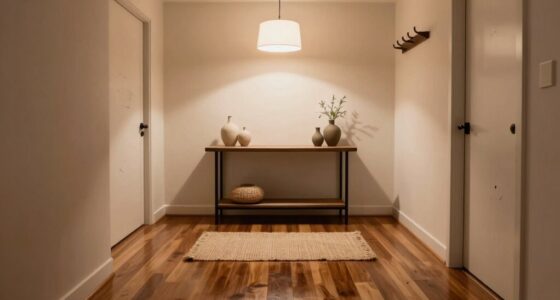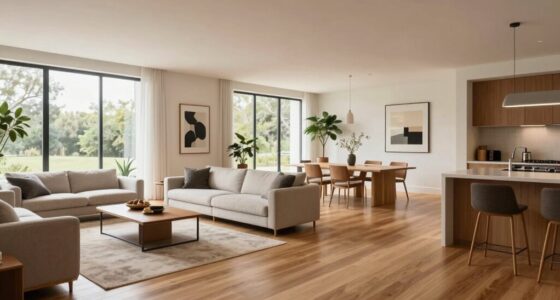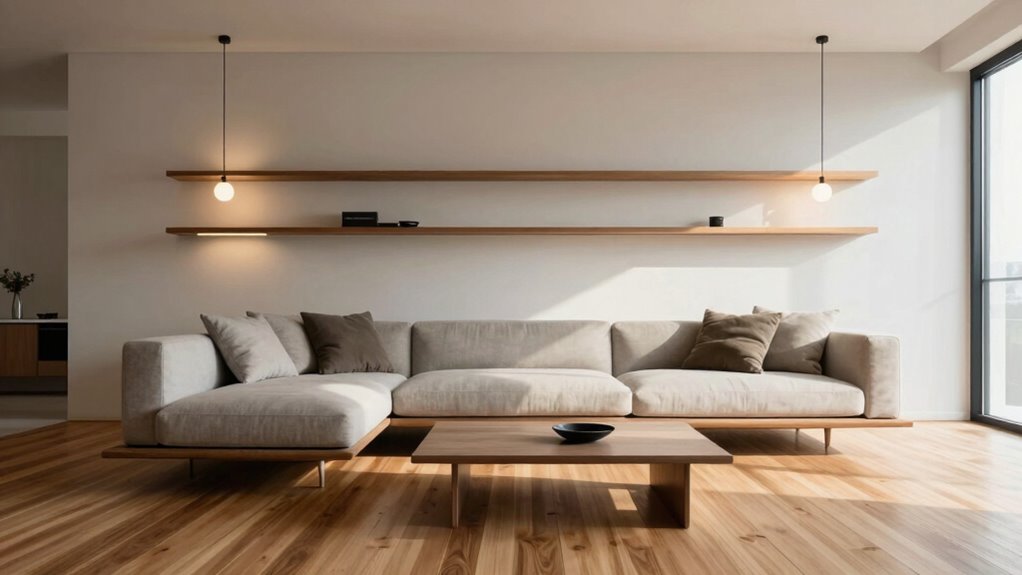
Floating furniture layouts work better than wall-hugging arrangements because they free up wall space and make your room feel larger and more open. By positioning furniture in the center, you create a flexible, inviting environment that encourages social interactions and better flow. This approach also allows you to experiment with styles and define zones within your space easily. Keep exploring to discover more ways floating layouts can transform your home and enhance your daily living.

Get decor and gifts delivered free — and shop member deals
- Fast, free delivery on millions of items
- Access to Prime Big Deal Days deals on October 6–7
- Prime Video, Amazon Music and more included
Key Takeaways
- Floating furniture maximizes space by freeing up wall areas, making rooms appear larger and more open.
- It enhances aesthetic flexibility, allowing for diverse styles, textures, and focal points.
- Centered layouts improve social interaction and facilitate better conversation among occupants.
- Floating arrangements create the illusion of increased room size and better interior harmony.
- They offer adaptability for easy reorganization and evolving design preferences over time.
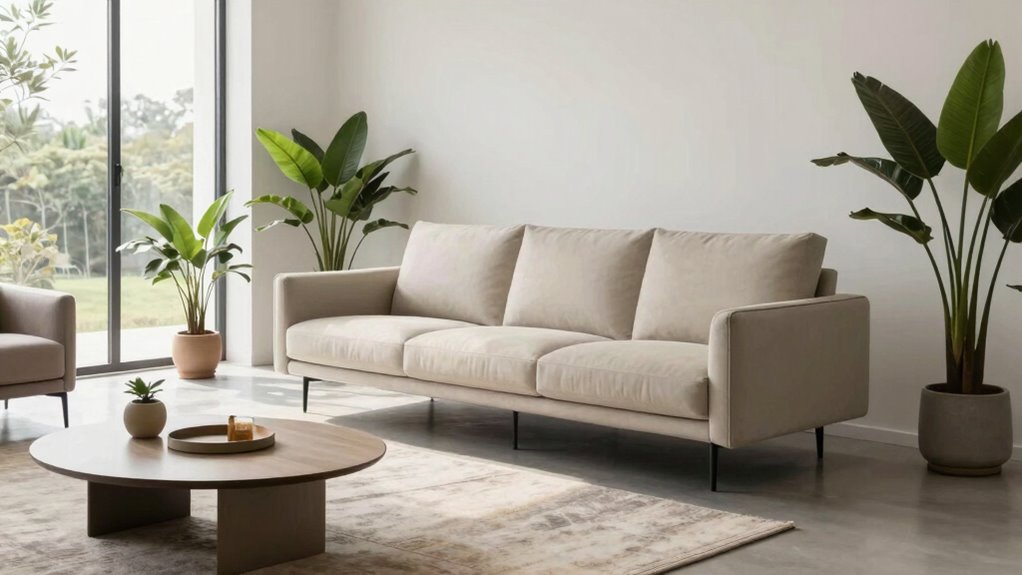
Have you ever wondered how to create a versatile and inviting space without traditional furniture arrangements? Furniture float layouts offer a fresh approach that can transform your room into a dynamic and functional environment. Unlike wall-hugging setups that confine furniture to the perimeter, floating pieces in the center of the room open up space and invite creative design possibilities. This arrangement enhances space optimization by making the entire room feel larger and more accessible. You’re not limited by the walls, which means you can better utilize every inch of your space, whether it’s for a cozy living room or a multi-purpose area. The flexibility of this layout allows you to shift pieces easily, adapting the room to different activities or moods without significant reorganization. It’s especially beneficial in smaller spaces where maximizing every square foot is essential.
A floating layout also boosts aesthetic flexibility. When furniture isn’t pressed against the walls, you gain a chance to play with different styles, textures, and colors, creating a more curated and layered look. You can define zones within a single room—like a seating area separated from a workspace—without adding walls or partitions. This approach encourages a more open, airy feel, which is often lacking in traditional wall-hugging arrangements. Additionally, floating furniture invites you to experiment with focal points, lighting, and decorative accents. By elevating your furniture off the walls, you’ll naturally draw attention inward, giving your space a more intentional and balanced appearance. Incorporating space optimization strategies can further enhance the functionality and flow of your room. Furthermore, this layout can help mitigate the effects of room size limitations by creating the illusion of more space. It also promotes a sense of interior harmony, making the entire environment feel more cohesive and thoughtfully designed.
Another advantage is the way floating layouts foster better conversation and social interaction. When furniture is arranged in the center of the room, you naturally create a more inviting environment for guests. People can face each other more comfortably, enhancing the sense of connection. It also allows for easier movement around the space, reducing bottlenecks and clutter typical of wall-bound setups. This layout encourages a more relaxed, welcoming atmosphere where everyone feels integrated into the room, rather than separated by furniture pushed against the walls. Plus, interior design principles support the idea that flexible furniture arrangements can significantly improve the overall ambiance of your home. Additionally, the adaptability of floating layouts makes it easier to update your space over time without major changes.
As an affiliate, we earn on qualifying purchases.
Frequently Asked Questions
How Do Floating Furniture Layouts Affect Room Acoustics?
Floating furniture layouts improve room acoustics by enhancing sound dispersion and reducing echo. When you place furniture away from walls, sound waves spread more evenly, preventing harsh reflections that cause echoes. This setup absorbs and diffuses sound better, making your space feel more balanced and comfortable. You’ll notice clearer conversations and less background noise, creating a more inviting environment where sound flows naturally without bouncing off walls.
Are Floating Layouts Suitable for Small or Large Rooms?
Floating layouts suit both small and large rooms, offering great space optimization and aesthetic flexibility. In small rooms, you can better utilize every inch by avoiding wall-hugging furniture, making the space feel open and less cramped. For larger rooms, floating layouts create defined zones and enhance visual interest. You’ll find that this approach adapts easily, allowing you to customize your space to suit your needs and style, no matter the size.
What Are the Best Materials for Floating Furniture?
You’ll love using materials like solid wood or metal for floating furniture, as they offer exceptional durability and aesthetic versatility. Studies show that sturdy materials extend furniture lifespan by up to 50%, making your investment worthwhile. Solid wood provides timeless elegance, while metals add a modern touch. Both materials resist wear and tear, ensuring your floating pieces remain stylish and functional for years to come.
How Do Floating Layouts Impact Room Lighting?
Floating layouts enhance your room’s visual openness, making it feel larger and more inviting. By positioning furniture away from walls, you allow natural light to flow freely across the space, illuminating corners and creating a brighter environment. This setup prevents shadows and dark spots, maximizing the impact of your windows. Overall, floating layouts optimize room lighting, creating a more vibrant and airy atmosphere you’ll enjoy every day.
Can Floating Furniture Layouts Be Customized for Different Decor Styles?
You can absolutely customize floating furniture layouts to match various decor styles. With numerous customization options like different finishes, materials, and shapes, you can tailor the setup for modern, rustic, or eclectic looks. Studies show that personalized spaces boost comfort and satisfaction by 82%. Floating layouts are highly adaptable, ensuring decor compatibility and allowing you to create a cohesive aesthetic that reflects your unique style effortlessly.
Conclusion
Imagine your living space as a garden, where each piece of furniture floats freely like blooming flowers. Floating layouts breathe life into your room, inviting movement and connection, rather than trapping you behind walls. They create a harmonious flow, much like a gentle breeze weaving through trees. Embrace the freedom of furniture float layouts, and watch your space blossom into an inviting, vibrant sanctuary where you can truly breathe and flourish.
Fall Picks
fall essentials
As an affiliate, we earn on qualifying purchases.