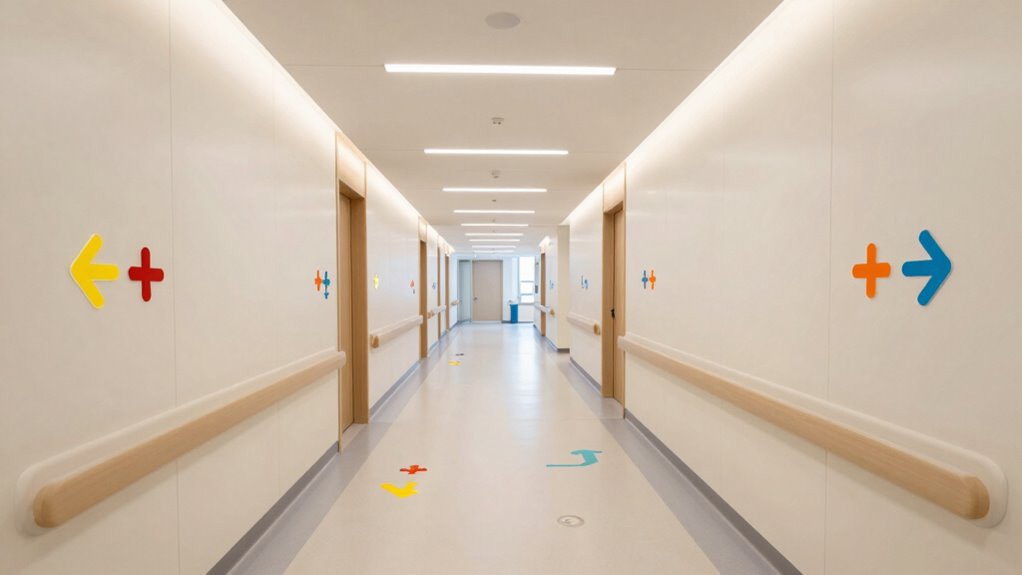
A hallway clue system helps you navigate complex spaces with ease by combining visual and sensory cues. Color-coded markers guide your way, while tactile elements and auditory signals support accessibility for all, including those with visual impairments. These cues make navigation more intuitive, safer, and more comfortable, even in unfamiliar environments. Implementing such systems creates a consistent, user-friendly experience and boosts confidence in finding your destination. Keep exploring, and you’ll discover how these cues can transform your environment.

Get decor and gifts delivered free — and shop member deals
- Fast, free delivery on millions of items
- Access to Prime Big Deal Days deals on October 6–7
- Prime Video, Amazon Music and more included
Key Takeaways
- Implements color-coded visual markers on walls and floors to guide navigation efficiently.
- Uses tactile and auditory cues to assist individuals with visual impairments.
- Incorporates multisensory signals and responsive technologies for personalized wayfinding.
- Enhances safety and accessibility by providing clear, consistent directional cues.
- Allows easy updates and customization to adapt to changing layouts or user needs.

Finding your way through long hallways can be confusing, but the hallway clue system offers an effective way to find your way. When steering unfamiliar or complex corridors, it’s easy to feel lost or overwhelmed. That’s where a well-designed system of visual and sensory cues comes in, guiding you smoothly from one point to another. One of the most practical tools in this system is the use of color coded markers. These markers, whether painted on walls, doors, or floors, serve as clear visual signals that help you identify specific sections or destinations within a building. For example, a red marker might indicate the emergency exit, while blue could point toward restrooms. By associating these colors with particular locations or routes, you quickly develop a mental map, reducing confusion and saving time.
Color-coded markers help you navigate long hallways by clearly indicating destinations and reducing confusion.
Alongside color coded markers, sensory cues play a crucial role in enhancing wayfinding. Sensory cues include tactile elements like textured tiles, raised symbols, or braille, which can guide individuals with visual impairments or those who rely on touch. Auditory cues, such as sound signals or voice prompts, can also be integrated into the system to indicate turns or destinations. These cues create multiple layers of guidance, making the navigation accessible for everyone. When you encounter textured flooring or hear specific sounds, your brain registers these as navigation signals, helping you stay oriented without needing to constantly look around. This multisensory approach ensures that the system isn’t just visually effective but also inclusive. Incorporating multisensory cues can significantly improve navigation for people with diverse needs. Additionally, advancements in nanotechnology are opening new possibilities for creating durable, adaptable, and responsive sensory markers that can enhance the overall effectiveness of such systems. Developing responsive sensory markers through emerging technologies can further personalize navigation experiences based on individual needs.
Implementing a hallway clue system with color coded markers and sensory cues can transform an otherwise confusing space into a navigable environment. It’s about creating a consistent and intuitive experience. As you move through the corridors, you begin to trust the markers and cues, which serve as your internal compass. The system also benefits building managers and designers, who can update markers or cues easily if layouts change or new sections are added. The key is consistency: using the same colors and cues throughout the space helps reinforce recognition and minimizes errors. Over time, you’ll find yourself moving more confidently, relying less on signage or assistance, because your brain has effectively internalized these visual and sensory signals.
Ultimately, a well-structured hallway clue system isn’t just about making navigation easier—it’s about making the environment more accessible, safe, and user-friendly for everyone. Whether you’re rushing to an appointment or simply exploring a new place, these cues serve as your trusted guides, making long hallways feel shorter and more manageable.
As an affiliate, we earn on qualifying purchases.
Frequently Asked Questions
How Customizable Is the Hallway Clue System for Different Buildings?
You’ll find the hallway clue system highly customizable for different buildings, thanks to its interactive technology and aesthetic design. You can tailor the clues to match your building’s layout, branding, or specific wayfinding needs. The interactive technology allows easy updates and adjustments, while the aesthetic design guarantees the clues blend seamlessly with your decor. This flexibility makes it an effective, visually appealing solution for any environment.
What Materials Are Used to Create the Hallway Clues?
Imagine you’re in a sci-fi movie, and the clues are crafted from modern, durable materials. The hallway clues are typically made from high-quality decorative signage, often using materials like acrylic, aluminum, or weather-resistant vinyl. These choices guarantee material durability, withstand daily wear, and maintain their appearance over time. You’ll find that the combination of aesthetics and durability helps your wayfinding system stay clear, vibrant, and functional, no matter the building’s busy environment.
How Often Should the Clues Be Updated or Maintained?
You should update or maintain the clues regularly to guarantee they stay effective. Clue durability depends on the materials used, so schedule maintenance based on wear and tear. Typically, you might review the clues every three to six months, or sooner if they become faded or damaged. Consistent maintenance scheduling helps keep the clues clear, ensuring people can navigate confidently and safely through the hallways at all times.
Can the System Assist Visually Impaired Individuals Effectively?
Think of the system as a guiding lighthouse for visually impaired individuals, illuminating their path with clarity. Yes, it can assist effectively by integrating accessibility features like tactile and auditory cues. Sensory cues provide essential information, ensuring wayfinding is seamless. When designed inclusively, this system becomes a powerful tool, helping everyone navigate confidently, regardless of visual ability, turning complex hallways into accessible pathways of independence.
What Is the Installation Process for New Buildings?
When installing the hallway clue system in new buildings, you start with building integration, ensuring the system aligns with your structure’s layout. Then, consider design considerations like accessibility, visibility, and user-friendliness to maximize effectiveness. Work closely with architects and installers to embed sensors and markers seamlessly into walls or corridors. This careful planning guarantees the system functions smoothly and supports clear wayfinding for all users from the start.
Conclusion
Imagine walking through a maze with no clear path—frustrating, right? That’s what steering unfamiliar hallways often feels like without a clue system. By implementing simple markers, you turn the maze into a well-lit path, guiding everyone smoothly to their destination. Just like a lighthouse guides ships through fog, your hallway clues can illuminate the way, making navigation effortless and stress-free for visitors and staff alike. It’s a small change with a big impact.
Fall Picks
fall essentials
As an affiliate, we earn on qualifying purchases.