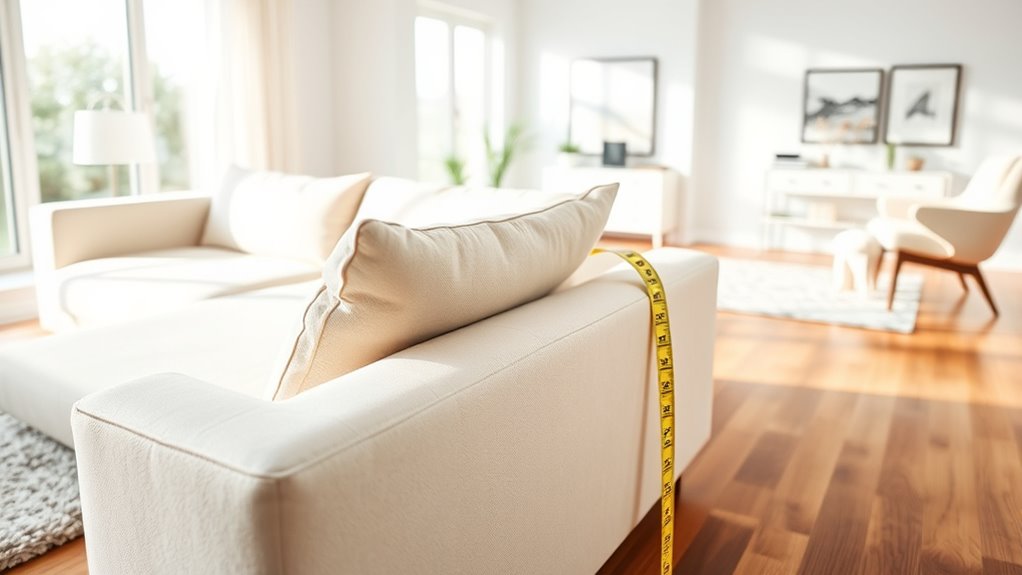

Before buying furniture, you should measure your space carefully to calculate proper clearance. This helps guarantee your furniture fits well and leaves enough room for movement, airflow, and easy cleaning. Proper spacing reduces clutter and minimizes the need for future rearrangements or replacements, which benefits both your home and the environment. Paying attention to clearance can improve your daily life and lower your ecological footprint; keep exploring to learn how to do it effectively.
Key Takeaways
- Measure room dimensions accurately, including doors and windows, to determine appropriate furniture size and placement.
- Calculate sufficient clearance around furniture for ventilation, movement, and ease of cleaning, reducing clutter and waste.
- Use space planning to avoid overcrowding, which can increase energy use and necessitate furniture replacements.
- Opt for versatile, durable furniture that fits well within calculated space allowances to minimize environmental impact.
- Incorporate vertical storage and multifunctional pieces to optimize space and reduce the need for additional furniture purchases.

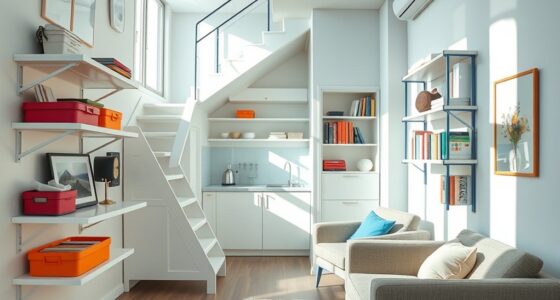
Every piece of furniture you choose leaves a footprint on the environment, from the resources used in production to the energy consumed during manufacturing. That’s why it’s essential to consider not only style and function but also how your selections impact the environment and your living space. Proper space planning plays a crucial role here—it helps you determine the right size and placement of furniture, ensuring you avoid cramming pieces into your rooms or leaving large gaps that waste space. When you plan carefully, you’re reducing unnecessary purchases and minimizing waste, which directly lowers your environmental impact. Incorporating vertical storage solutions can further optimize space and reduce the need for additional furniture. Before you buy, take the time to measure your rooms precisely. Know the dimensions of your space, including doorways, windows, and pathways. This allows you to select furniture that fits perfectly, avoiding the temptation to buy oversized pieces that might seem appealing but make your room feel cramped or hinder movement. A well-thought-out layout enhances your daily life, making your home more functional and comfortable. It also helps you avoid the environmental costs associated with returning or discarding furniture that doesn’t fit. Calculating clearance is equally important. You want enough space around your furniture to promote airflow, ease of cleaning, and accessibility. Overcrowded rooms can lead to increased energy use, as you might rely more on artificial lighting or climate control to compensate for poor ventilation. Plus, furniture that’s too large for your space or placed without considering clearance can force you to replace or rearrange items frequently, contributing to waste and higher environmental impact. When you plan for adequate clearance, you’re making smarter choices that benefit both your home environment and the planet. Thinking about environmental impact also means choosing furniture made from sustainable materials or designed for longevity. Opt for pieces that are durable, easy to maintain, and sourced responsibly. This way, you’re not only reducing your carbon footprint but also investing in furniture that will last longer, decreasing the need for replacements. Incorporating eco-friendly options into your space planning ensures your home remains stylish without sacrificing environmental values. In essence, calculating the right clearance and considering space planning are vital steps in responsible furniture shopping. They help you create a living environment that’s both functional and environmentally conscious. By doing so, you reduce waste, lower your carbon footprint, and enjoy a space that feels just right—no more, no less. Thoughtful planning and awareness of your furniture’s footprint empower you to make smarter, more sustainable choices that benefit your home and the planet.
Frequently Asked Questions
How Accurate Are Online Clearance Measurements Compared to In-Person Checks?
When comparing online vs in person, measurement accuracy can vary. Online clearance measurements often rely on images or specifications, which may not reflect real-world conditions perfectly. In person, you can double-check measurements directly, guaranteeing accuracy. So, while online tools are helpful for initial estimates, always verify measurements in person for precision, especially when planning furniture placement or clearance space. This way, you avoid surprises and ensure your space fits perfectly.
What Tools Are Best for Measuring Clearance Spaces Accurately?
Did you know that using proper measurement tools can improve measurement accuracy by up to 50%? To guarantee your furniture fits perfectly, choose tools like a laser distance measurer or a sturdy tape measure. These tools give precise clearance space readings, helping you avoid surprises. Always double-check measurements and compare results for confidence. Accurate measurement tools are essential for making well-informed furniture purchases and creating comfortable, functional spaces.
How Do Clearance Needs Differ for Large Versus Small Furniture Items?
When considering clearance needs, furniture size plays a key role in space planning. Larger furniture requires more room to guarantee easy movement and access, while smaller pieces need less clearance but still benefit from enough space to prevent clutter. You should measure the dimensions carefully and plan for sufficient clearance around each item, especially for larger pieces, to create a functional and comfortable room layout.
Can Clearance Requirements Vary Based on Room Layout or Design?
Imagine your room as a stage, where room shape and furniture style set the scene. Clearance needs can dance to different tunes depending on layout and design. A narrow, rectangular space might need wider aisles for ease, while an open floor plan allows for more flexibility. Your choices influence how comfortably you move around, making clearance requirements a crucial part of creating a harmonious, functional space tailored to your room’s unique character.
Are There Safety Considerations When Calculating Clearance for Furniture Placement?
When calculating clearance, you should always consider safety hazards and emergency access. Guarantee there’s enough space around furniture to prevent tripping or injuries, and keep pathways clear for quick evacuation if needed. Avoid blocking exits or fire extinguishers, and leave sufficient room for comfortable movement. Proper clearance not only enhances safety but also makes your space more functional, reducing risks during emergencies and everyday activities.
Conclusion
Now that you know how to measure and consider furniture footprints, you’re like a skilled architect designing your perfect space. By calculating clearances beforehand, you guarantee your rooms breathe freely, not suffocate under clutter. Think of your furniture as stars in a constellation—each needs room to shine without colliding. With these tips, your home will flow effortlessly, turning chaos into a harmonious dance of style and space. Happy decorating, and may your space always breathe easy!