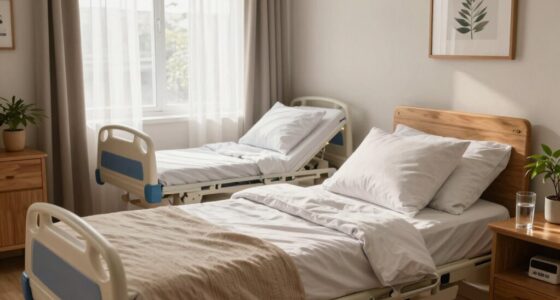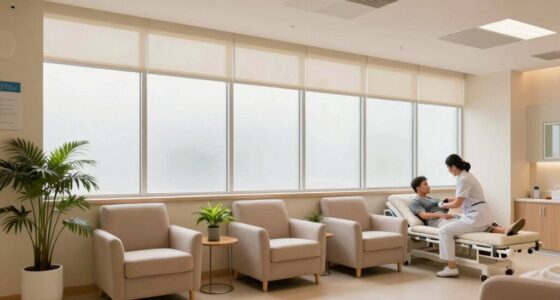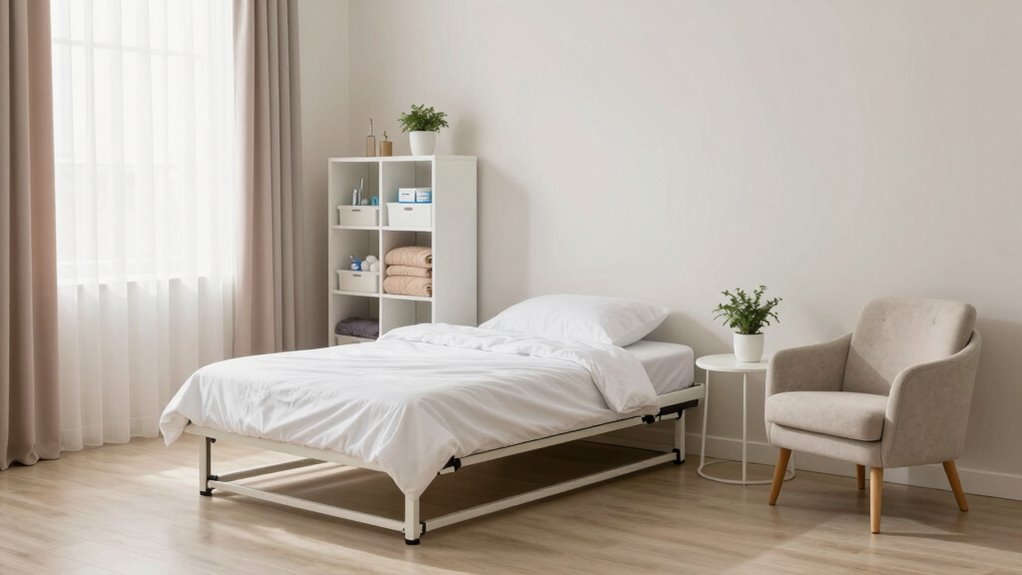
Turn your guest room into a flexible care space by incorporating adaptable furniture, such as fold-away beds or multi-purpose pieces, and installing smart automation for lighting and climate control. Focus on creating clear pathways with thoughtful layout and safety features like grab bars. Use calming colors, personal touches, and flexible storage solutions to suit individual needs. By blending design, technology, and accessibility, you’ll craft a comfortable environment that easily adapts to every situation—discover more ways to optimize your space.

Get decor and gifts delivered free with Prime
- Fast, free delivery on millions of items
- Prime Video, Amazon Music and more included
- Member-only deals all year
Key Takeaways
- Incorporate adaptable furniture and multi-purpose pieces to easily switch between guest and care functions.
- Install smart automation for lighting, climate, and accessibility adjustments tailored to individual needs.
- Maximize storage with labeled bins and wall-mounted solutions to keep the space organized and clutter-free.
- Design clear pathways and install safety features like grab bars for mobility and safety.
- Use calming colors, textiles, and personal touches to create a comfortable, personalized environment.
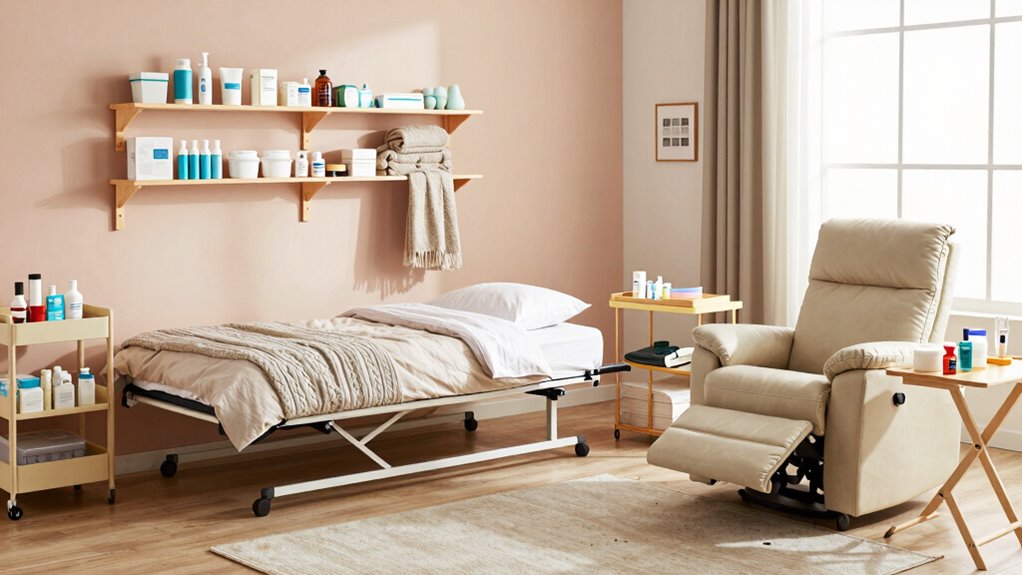
Transforming a guest room into a flexible care space allows you to quickly adapt your home to meet evolving needs, whether for family members, friends, or your own health requirements. To make this changeover seamless, start by evaluating the room’s layout and identifying what’s essential for comfort and accessibility. Incorporate home automation features, such as smart lighting, climate control, and voice-activated devices, to enhance convenience and promote independence for anyone using the space. These systems can be easily programmed to adjust lighting levels, temperature, and even open or close window coverings, creating a comfortable environment that responds to individual needs without requiring physical effort.
Transform your guest room into a flexible, accessible space with smart automation for comfort and independence.
Storage organization is critical in guaranteeing the room remains functional and clutter-free. Invest in multi-purpose furniture, like beds with built-in drawers or fold-away beds, to maximize space. Use clear storage bins and label them clearly, so supplies, medical equipment, or personal belongings are easy to find and access. Consider adding wall-mounted shelves or pegboards for frequently used items, keeping surfaces clear and creating a sense of order. A well-organized space not only improves safety but also promotes a calming atmosphere, which is crucial for recovery or comfort. Additionally, understanding caffeine science can help you choose calming or stimulating elements like soothing lighting or aromatherapy to tailor the environment further. Incorporating adaptive environments can also support various health needs and mobility levels more effectively, especially when integrating smart home technology. Creating safe and accessible pathways and features further enhances the usability of the space for everyone involved.
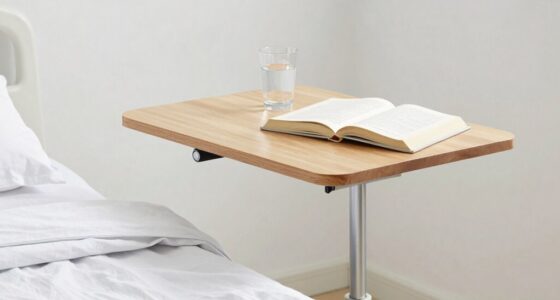
You should also think about flexibility in furniture and layout. Choose adjustable furniture pieces that can serve dual purposes—such as a desk that doubles as a bedside table or a fold-out sofa for visitors. This way, the room can quickly shift from a resting area to a caregiving station or a guest suite when needed. Keep pathways clear and confirm that furniture placement supports easy movement, especially if mobility aids are involved. Installing grab bars near the bed or bathroom area adds safety without compromising style. For added safety and comfort, consider incorporating universal design principles that benefit users of all ages and abilities.
Lighting plays a crucial role in creating a welcoming environment. Besides automated lighting, incorporate layered lighting options—overhead, task, and ambient lights—so you can tailor the room’s brightness for different activities or times of day. Use blackout curtains or shades for restful sleep, and consider nightlights for nighttime navigation. Thoughtful lighting choices can also improve mood and promote better sleep quality, especially for those with health challenges.
Finally, think about privacy and personalization. Add soft textiles, calming colors, and personal touches to make the space feel warm and inviting. By combining thoughtful storage organization, smart home automation, and adaptable furniture, you transform a simple guest room into a versatile care space that meets your needs today and adapts effortlessly for tomorrow.
adjustable fold-away bed for guest room
As an affiliate, we earn on qualifying purchases.
As an affiliate, we earn on qualifying purchases.
Frequently Asked Questions
What Safety Features Should Be Included in a Care Space?
You should include crucial safety features like safety equipment—grab bars, non-slip mats, and smoke detectors—to prevent accidents. Guarantee emergency exits are clearly marked and unobstructed, allowing quick evacuation if needed. Installing a fire extinguisher and keeping a first aid kit accessible are also essential. Regularly check that all safety devices work properly, and educate anyone using the space on safety protocols, creating a secure environment for all.
How Can I Maximize Storage in a Small Room?
To maximize storage in a small room, focus on decor organization and space optimization. Use multi-functional furniture like beds with built-in drawers or fold-away desks. Install wall-mounted shelves or hooks to free up floor space. Opt for vertical storage options and keep clutter minimal. Choosing compact, efficient storage solutions helps you make the most of limited space, creating a flexible care environment that’s both functional and comfortable.
What Are Budget-Friendly Ways to Upgrade the Space?
They say “a little goes a long way,” and that’s true when upgrading on a budget. You can add decorative accents like vibrant throw pillows or artwork to brighten the space without a hefty cost. Swap out or add lighting options—think string lights or affordable lamps—to create a warm, inviting atmosphere. These simple touches instantly make your guest room more functional and cozy, perfect for both visitors and caregiving needs.
How Do I Ensure Privacy for Both Caregiver and Patient?
You can guarantee privacy for both caregiver and patient by installing privacy curtains around the bed, which provide immediate visual separation. Add soundproof barriers, like acoustic panels or thick rugs, to minimize noise transfer. Keep the curtains easily retractable for quick access, and position furniture to create separate zones within the room. Regularly communicate with both parties to confirm their privacy needs are being met effectively.
What Are Quick Conversions for Different Care Scenarios?
Did you know that quick furniture swaps can make a room versatile in just minutes? For different care scenarios, start by rearranging furniture for easy access and privacy. Use versatile pieces like fold-away beds or sofa beds. Enhance lighting solutions with adjustable lamps or dimmable lights to suit the mood or activity. These simple adjustments help you swiftly convert your guest room into a functional, comfortable care space whenever needed.
Conclusion
Transforming your guest room into a flexible care space isn’t just about furniture—it’s about creating a welcoming haven that adapts to your loved ones’ needs. With a few thoughtful touches, you can craft a serene retreat that offers comfort and convenience. Embrace this opportunity to craft a space where care and compassion gently intertwine, turning an ordinary room into a sanctuary of support. Your thoughtful touches can make all the difference in their journey.
Halloween Picks
halloween
As an affiliate, we earn on qualifying purchases.