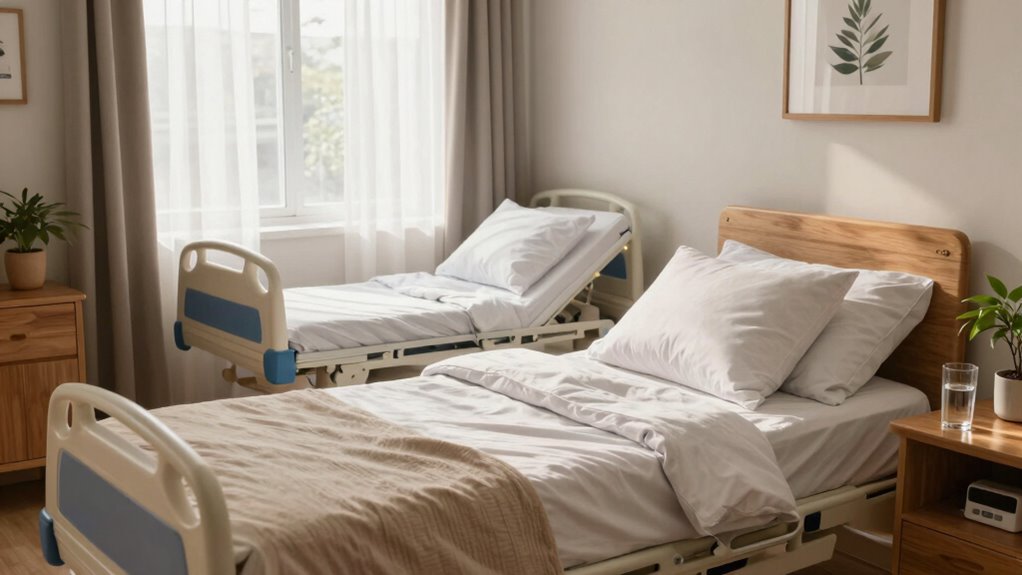

When setting up a hospital bed at home, start with careful room planning instead of rushing to choose a product. Focus on creating a safe, comfortable space by considering layout, lighting, ventilation, and accessibility. Place the bed near the bathroom or main pathways to minimize hazards. Keep the room uncluttered and thoughtful in design to promote healing and ease of movement. If you want to learn how to optimize your space effectively, there’s more to explore.

Get decor and gifts delivered free — and shop member deals
- Fast, free delivery on millions of items
- Access to Prime Big Deal Days deals on October 6–7
- Prime Video, Amazon Music and more included
Key Takeaways
- Prioritize room layout to ensure safety, comfort, and ease of movement before selecting a hospital bed.
- Consider room size, lighting, ventilation, and outlet access to create a functional environment.
- Position the bed near the bathroom or accessible pathways to reduce fall risks.
- Incorporate calming colors, natural light, and personal touches to promote well-being.
- Integrate appropriate equipment and smart technology to enhance safety and support recovery.
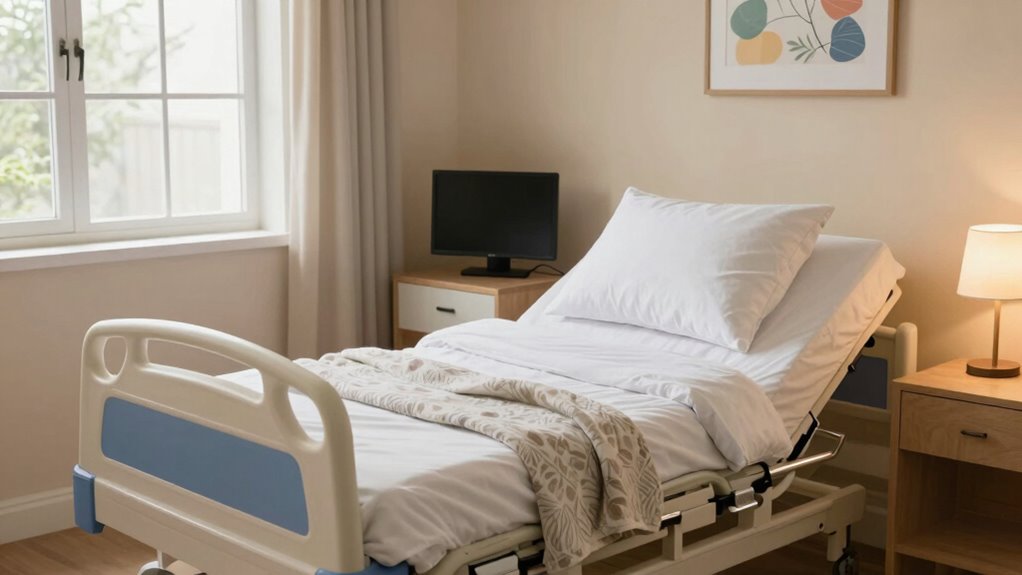
Have you ever wondered if you could receive hospital-level care without leaving the comfort of your home? When considering a hospital bed at home, your first step isn’t choosing the right bed but planning the room carefully. This approach ensures patient comfort and safety considerations are prioritized from the start. Instead of rushing to buy equipment, focus on creating a space that promotes ease of movement, minimizes hazards, and feels calming. Think about the room’s size—does it have enough space for the bed and necessary mobility aids? Is there sufficient lighting, ventilation, and access to outlets? These details matter because they directly impact the patient’s comfort and safety.
You should evaluate the room’s layout to prevent accidents and make daily routines easier. For example, placing the bed near the bathroom or in a spot that allows for unobstructed pathways can reduce fall risks and facilitate caregiver assistance. Consider installing grab bars or handrails where needed, and ensure that furniture doesn’t clutter the space, which can be a tripping hazard. Safety considerations extend beyond physical layout—think about noise levels, temperature control, and ease of access to emergency call buttons. These elements help create a secure environment where the patient feels both comfortable and protected. Additionally, understanding hospital bed features can help you choose the right equipment that complements the room’s design and enhances safety. Being aware of ergonomic design principles can further improve the overall comfort and usability of the space. Incorporating biodiversity-friendly design principles, such as natural light and calming natural elements, can also contribute to the patient’s emotional well-being. Recognizing how interior design influences health can guide you in creating a more therapeutic environment. Moreover, smart home integrations can be employed to enhance safety and streamline daily routines within the room.
Patient comfort is also about the room’s ambiance. Choose soothing colors, soft lighting, and personal touches that make the space feel less clinical. Comfort extends to the bed itself—select one that is adjustable for different positions, providing relief and support. Remember that a well-planned room can help reduce anxiety and promote quicker recovery, making the experience less stressful for both patient and caregiver. It’s tempting to focus solely on the product—like selecting the perfect hospital bed—but neglecting room planning can undermine the benefits. The right bed in an ill-suited environment can diminish comfort and compromise safety.
Ultimately, your goal is to craft a space that supports health, safety, and well-being. When you start with room planning rather than rushing to buy equipment, you set a solid foundation for a successful home care setup. This thoughtful approach ensures the bed becomes a part of a holistic environment that enhances the patient’s experience, making hospital-level care feel less impersonal and more personalized. By prioritizing room layout, safety, and comfort, you’re not just buying a bed—you’re creating a nurturing space where recovery and comfort go hand in hand.
hospital bed with adjustable positions
As an affiliate, we earn on qualifying purchases.
As an affiliate, we earn on qualifying purchases.
Frequently Asked Questions
How Do I Determine the Right Size for a Home Hospital Bed?
You determine the right size for a home hospital bed by considering your room space and your specific needs. Measure the available area to guarantee easy bed positioning and access. Think about mattress selection—opt for a size that offers comfort and support without overwhelming your room. A standard size often fits most spaces, but if you need more room for mobility or medical equipment, consider a larger or adjustable bed.
What Safety Features Should I Look for in a Home Hospital Bed?
You want to guarantee safety, but what features truly matter? Look for bedside safety features like adjustable height, side rails, and easy locking mechanisms that prevent falls. These keep your loved one secure and make caregiving easier. Consider support for caregivers too—features like smooth mobility and accessible controls. Prioritize these safety elements to create a secure environment that promotes independence while providing peace of mind for everyone involved.
How Much Space Is Needed to Comfortably Accommodate a Hospital Bed?
You’ll want at least 3 feet of clearance around the hospital bed for safe bed positioning and easy movement. This space allows you to adjust the mattress and access side rails comfortably. When planning the room, consider your mattress selection—choose one that fits well within the space and provides proper support. Adequate room guarantees safety, simplifies daily care, and improves overall comfort for both you and caregivers.
Are There Specific Room Requirements for Installing a Hospital Bed at Home?
Yes, there are specific room requirements for installing a hospital bed at home. You need enough space to comfortably move around, change bed linens, and access different mattress options. Make sure the room has proper electrical outlets for the bed’s controls and accessories. Adequate lighting and ventilation are also essential. Prioritize a clean, clutter-free environment to make caregiving easier and to accommodate the bed’s size and functionality.
How Do I Ensure Proper Infection Control Around a Home Hospital Bed?
You can’t afford to ignore infection control—it’s more crucial than ever. Guarantee proper hygiene by regularly disinfecting the hospital bed and surrounding surfaces, and keep the room well-ventilated. Protect patient privacy with curtains or screens, and train your staff thoroughly in infection prevention practices. Proper staff training and diligent cleaning routines are your best defenses against infections, turning your home into a safer environment for recovery.
Conclusion
Remember, creating a comfortable, functional space for a hospital bed at home starts with thoughtful room planning—not just choosing the right product. Did you know that nearly 70% of patients feel more at ease and recover faster in familiar environments? By focusing on your room’s layout and comfort, you’ll foster a supportive atmosphere that promotes healing and peace of mind. So, take your time planning—it’s an investment in health and well-being.
Halloween Picks
halloween
As an affiliate, we earn on qualifying purchases.