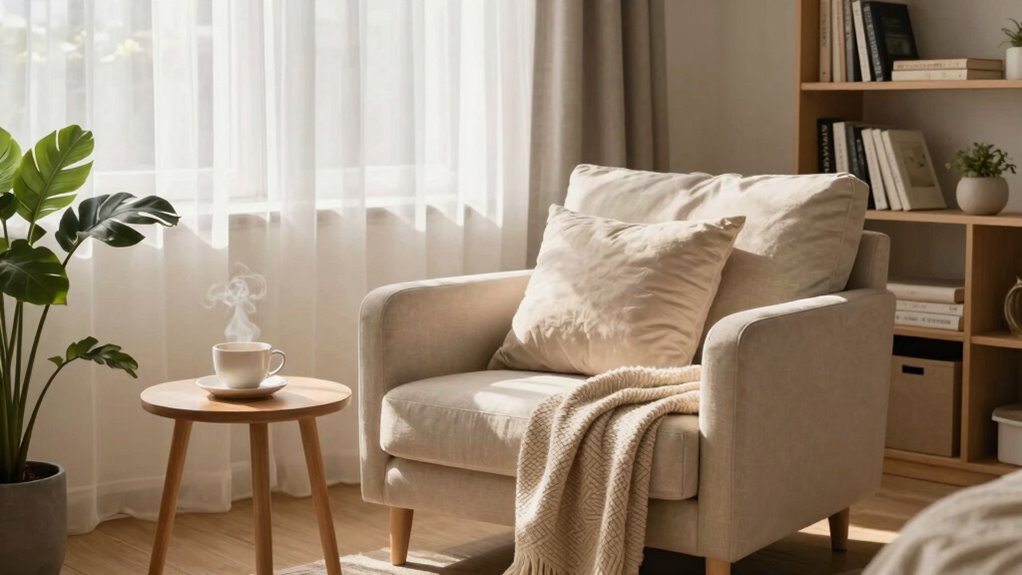

To support your recovery at home, keep your space clean, organized, and well-ventilated to promote good air quality. Use soft lighting and calming decor, like indoor plants, to create a peaceful environment. Incorporate cozy bedding and minimize noise to improve sleep quality. Maintain warmth with natural elements and avoid harsh fluorescent lights. Small adjustments like these can make a big difference—stay with us to discover more simple ways to boost your healing process.

Get decor and gifts delivered free — and shop member deals
- Fast, free delivery on millions of items
- Access to Prime Big Deal Days deals on October 6–7
- Prime Video, Amazon Music and more included
Key Takeaways
- Keep the living space clean, organized, and well-ventilated to promote a healthy environment for recovery.
- Use soft lighting and warm, calming colors to create a peaceful atmosphere conducive to rest.
- Incorporate natural elements like indoor plants to improve air quality and boost emotional comfort.
- Ensure bedding is soft and bedding surfaces are comfortable to enhance sleep quality.
- Minimize noise and avoid harsh fluorescent lighting to support relaxation and restful sleep.

Recovering at home can be a smooth process if you take the right steps. One of the most effective ways to support your recovery is by establishing a calming routine that promotes mental and physical healing. Meditation techniques can be a game changer here. Even just a few minutes each day of deep breathing or mindfulness meditation can help reduce stress, improve sleep, and boost your immune system. Find a quiet space, sit comfortably, and focus on your breath. As your mind calms, your body will follow, making it easier to handle the physical demands of recovery. Consistency is key—integrating these practices into your daily schedule can create a peaceful environment that nurtures healing.
Alongside mental relaxation, nutritional adjustments play an essential role. Your body needs extra nutrients to repair tissues, fight off lingering effects of illness, and regain strength. Prioritize a diet rich in fruits, vegetables, lean proteins, and whole grains. Incorporate foods high in vitamins C and D, zinc, and antioxidants, which support immune function and tissue repair. Stay well-hydrated by drinking plenty of water, herbal teas, or broths, especially if you’re experiencing fatigue or dehydration. Avoid processed foods, sugary snacks, and excessive caffeine, which can cause inflammation and drain your energy. Small, frequent meals can help maintain your energy levels and prevent digestive discomfort. If you notice any loss of appetite, try incorporating smoothies or soups that are easier to digest but still nutrient-dense. Additionally, creating a biodiverse environment at home, such as having indoor plants, can improve air quality and promote a sense of well-being, supporting your recovery process. Incorporating natural elements into your living space can enhance your overall sense of calm and aid in your healing journey.
Creating a comfortable home environment also makes a big difference. Make sure your living space is clean, organized, and well-ventilated. Keep your bedding soft and your surroundings quiet to promote restful sleep, which is essential for recovery. Adjust the lighting to be soft and warm, avoiding harsh fluorescents that can disrupt your circadian rhythm. Gentle stretching or light activity, as recommended by your healthcare provider, can help maintain circulation and prevent stiffness. Remember to listen to your body—rest when needed, and don’t push yourself too hard too soon.
Finally, build in time for mental relaxation beyond meditation. Engage in hobbies or activities that bring you comfort, whether it’s reading, listening to music, or gentle gardening. Connecting with loved ones through phone calls or video chats can also lift your spirits and provide emotional support. Small changes like these, combined with meditation techniques and nutritional adjustments, create a nurturing environment that accelerates healing. The key is patience and consistency, knowing that each quiet home tweak helps you move toward full recovery with less stress and more strength.
As an affiliate, we earn on qualifying purchases.
Frequently Asked Questions
Can Specific Colors in the Home Speed up Recovery?
Yes, specific colors in your home can speed up recovery through color psychology and mood enhancement. Soft, calming hues like blues and greens promote relaxation and reduce stress, which aids healing. Bright, warm colors like yellow can boost positivity and energy levels. By choosing colors that support your emotional well-being, you create a soothing environment that encourages faster recovery and improves overall comfort during your healing process.
How Does Indoor Air Quality Affect Healing?
Indoor air quality is like a gentle breeze for your recovery, clearing out pollutants and boosting your health. When you prioritize air purification and humidity control, you create an environment that minimizes airborne irritants and molds, helping your body heal faster. Clean, well-balanced air keeps your respiratory system happy, reduces fatigue, and supports overall well-being, making your home a true sanctuary for recovery.
Are Certain Plants Beneficial for a Recovery Environment?
Certain plants are indeed beneficial for a recovery environment. By thoughtfully placing plants like snake plants or peace lilies in your home, you enhance air quality and create a calming atmosphere. Plant placement matters—position them in well-lit areas but avoid direct sunlight. These botanical benefits help reduce stress, boost mood, and improve oxygen levels, all of which support your body’s healing process during recovery.
What Role Does Lighting Play in Post-Illness Recovery?
Imagine your home as a gentle sunrise, where natural sunlight awakens your body’s rhythms. Lighting plays a essential role in recovery by aligning with your circadian rhythms, helping you rest and heal more efficiently. Exposure to natural sunlight during the day boosts mood and energy, while soft, dim lighting at night signals your body it’s time to wind down. Proper lighting nurtures your recovery, guiding you back to health with each sunbeam.
Should Noise Levels Be Minimized During Recovery?
Yes, you should minimize noise levels during recovery. Using sound insulation can block disruptive sounds, creating a calmer environment. Incorporate sound masking to gently cover unavoidable noises, helping you relax and rest better. Keeping your home quiet reduces stress on your body, supports healing, and improves sleep quality. Focus on creating a peaceful space where noise is controlled, so your recovery process is as smooth and comfortable as possible.
Conclusion
Think of your home as your personal sanctuary, much like a gentle lighthouse guiding you back to health. By making these simple tweaks—keeping things quiet, cozy, and organized—you create the perfect environment for recovery. Just as a well-tuned instrument heals with care, your body needs peace and comfort to bounce back. Embrace these small changes, and you’ll find yourself sailing smoothly toward wellness, ready to face new horizons with renewed strength.
Fall Picks
fall essentials
As an affiliate, we earn on qualifying purchases.