Traditional composters require manual effort, regular turning, and environmental adjustments, which can be time-consuming and less convenient, especially indoors. Smart composters, however, offer automated features like app notifications, aeration, temperature control, and odor management, making composting faster and cleaner. They’re compact and better suited for limited spaces, perfect for urban living. If you want to explore how smart systems can simplify your composting journey and help you waste less, keep exploring more.
Key Takeaways
- Traditional composters rely on manual aeration and temperature management, needing frequent attention for optimal results.
- Smart composters include automated features like app notifications, turning, and odor control, reducing manual effort.
- Indoor smart models accelerate composting with active aeration and temperature regulation, producing compost faster than traditional methods.
- Traditional systems are often larger and less suited for indoor spaces, while smart composters are compact and designed for urban living.
- Smart composters promote convenience, cleanliness, and efficiency, making home composting more accessible and effective.
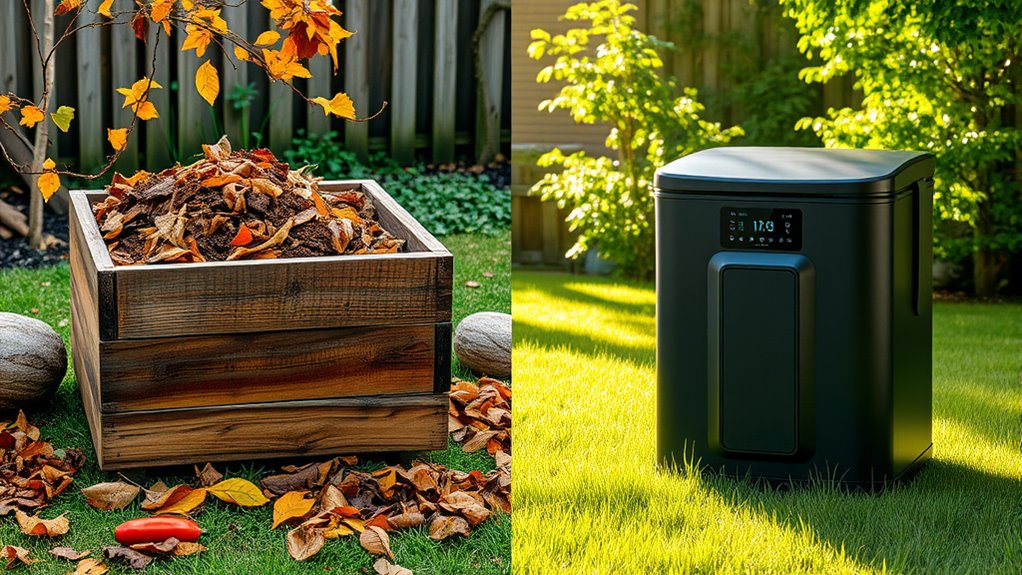
Home composting is an easy and effective way to reduce waste while creating nutrient-rich soil for your garden. One of the key decisions you’ll face is whether to opt for traditional composters or invest in smart composters, especially if you’re interested in indoor composting. Indoor composting offers a convenient way to compost year-round without worrying about outdoor pests or weather conditions. It’s perfect for apartments or homes with limited outdoor space. With indoor composters, you can compost kitchen scraps like vegetable peels, coffee grounds, and eggshells easily, turning waste into valuable compost without any unpleasant odors. Many smart composters come with odor control systems, making indoor composting a clean and hassle-free process. Additionally, some smart composters utilize advanced aeration and temperature regulation to accelerate composting, providing faster results.
When considering composting benefits, indoor composting stands out because it allows you to participate in sustainable waste management even if you don’t have a backyard. It reduces the amount of trash sent to landfills, lowering your carbon footprint. Additionally, indoor composters often speed up the composting process thanks to active aeration and temperature control features, so you get usable compost faster. These systems are typically compact, stylish, and easy to use, making them suitable for modern homes. Plus, they often include smart features like app notifications or automated turning, which simplify the process further. This means you can enjoy all the benefits of composting without the guesswork or manual effort that traditional composting might require. Using smart composters also minimizes odor issues, making them an ideal choice for indoor environments.
Frequently Asked Questions
How Long Does Traditional Composting Typically Take?
Traditional composting usually takes about 3 to 6 months, depending on factors like temperature, moisture, and aeration. You’ll see the composting duration vary based on how actively you manage the pile. The decomposition timeline can be faster if you regularly turn the pile and balance greens and browns. Patience is key, but with proper care, you’ll eventually produce rich, dark compost perfect for your garden.
Are Smart Composters Energy-Efficient or Do They Consume Significant Power?
Smart composters are generally designed to be energy-efficient, so their energy consumption remains low compared to other household appliances. You’ll find that their power efficiency helps minimize electricity use while effectively accelerating composting processes. With smart features like automatic aeration and temperature control, they optimize energy use, ensuring you get quick composting without markedly increasing your utility bills. Overall, they strike a good balance between convenience and energy efficiency.
Can Smart Composters Handle All Types of Food Waste?
Smart composters can handle most food waste varieties, but they have some composting limitations. You might find that certain tough or oily food waste doesn’t break down efficiently. While they’re great for kitchen scraps like fruit peels and coffee grounds, avoid putting in large quantities of meat or dairy, as these can cause odor issues or disrupt the composting process. Knowing these limitations helps you get the best results from your smart composter.
What Maintenance Is Required for Traditional Compost Bins?
Maintaining a traditional compost bin is like tending a lively garden. You’ll need to regularly clean the compost bin to prevent odors and pests. Aeration frequency is key; turn the pile every few weeks to keep it lively and promote decomposition. Also, monitor moisture levels and add dry materials when needed. With consistent care, your compost will turn into rich soil, fueling your garden’s growth.
Do Smart Composters Require Internet Connectivity?
Smart composters generally require Wi-Fi connectivity to operate effectively, as they rely on internet access for monitoring and app control. However, you might worry about data security; reputable brands implement encryption and security measures to protect your information. While Wi-Fi dependency enhances convenience, it also means you should guarantee your network is secure. If Wi-Fi is unavailable, some smart composters may have offline modes or manual options.
Conclusion
Whether you choose traditional or smart composting, you’re making a positive impact on the environment. Did you know that composting can reduce household waste by up to 30%? Smart composters offer convenience with faster results, while traditional methods connect you to nature’s cycle. Whichever option you pick, every bit helps reduce landfill waste and enrich your soil. Start composting today and turn your kitchen scraps into a valuable resource for your garden.