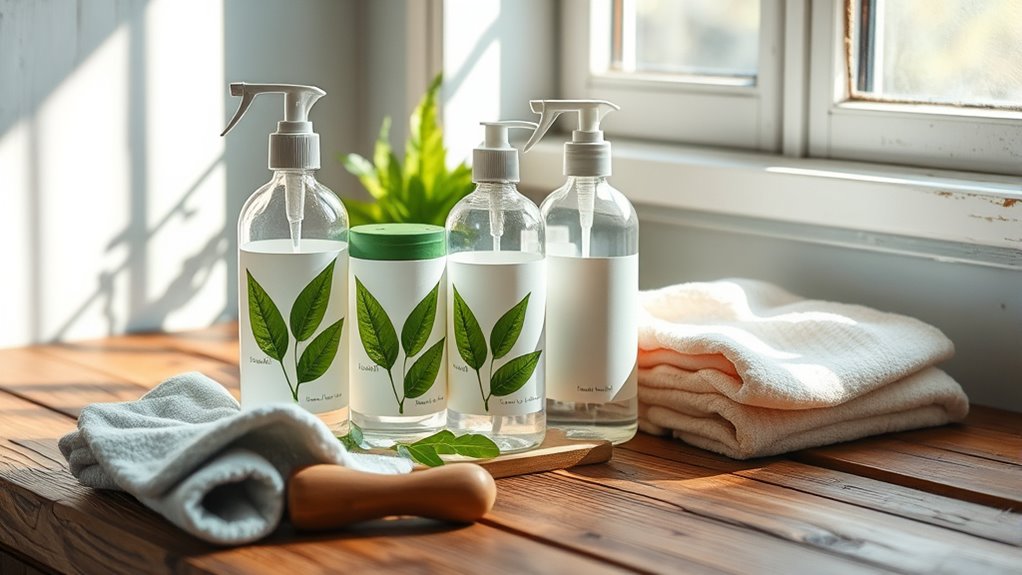

Switching to low-toxicity cleaning products helps reduce your exposure to harmful chemicals, creating a safer, healthier home for you and your loved ones. These products are made from natural, eco-friendly ingredients that are gentler on your skin, allergies, and the environment. They emit fewer VOCs, improving indoor air quality, and support sustainable practices. To learn more about choosing effective, safe cleaners and making mindful cleaning choices, keep exploring these options further.
Key Takeaways
- Eco-friendly cleaning products contain natural ingredients that minimize exposure to harsh chemicals and synthetic irritants.
- They emit fewer VOCs, improving indoor air quality and reducing respiratory irritation.
- Many are biodegradable, decreasing environmental pollution and chemical runoff.
- These products are often as effective as conventional cleaners, ensuring safe and reliable cleaning.
- Using low-toxicity options supports health, safety, and sustainable living practices.
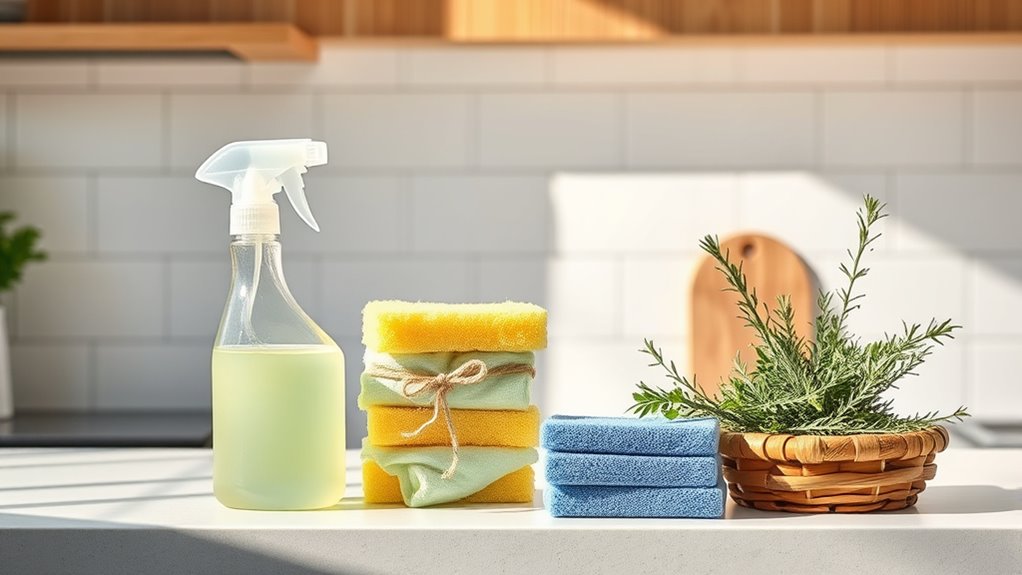
Choosing low-toxicity cleaning products is an effective way to keep your home safe and healthy. When you opt for products with eco-friendly ingredients, you reduce your exposure to harsh chemicals that can irritate your skin, eyes, and respiratory system. Eco-friendly ingredients are derived from natural sources, making them gentler on your body and the environment. These formulations often avoid synthetic fragrances, dyes, and other common irritants, providing allergy-friendly options that minimize the risk of allergic reactions. This approach allows you to maintain a clean space without compromising your health or that of your family.
Choosing eco-friendly cleaning products reduces chemical exposure and promotes a healthier home environment.
Switching to low-toxicity cleaning products means you’re actively reducing your chemical footprint. Many conventional cleaners contain volatile organic compounds (VOCs) and synthetic chemicals that can linger in the air long after you’ve finished cleaning. In contrast, products made with eco-friendly ingredients typically emit fewer or no VOCs, leading to better indoor air quality. This is especially important if you or someone in your household has allergies, asthma, or chemical sensitivities. Allergy-friendly formulations are designed to be hypoallergenic, so they won’t trigger sneezing, coughing, or skin irritation often associated with traditional cleaners. Additionally, understanding spiritual energy and how it influences overall well-being can inspire mindful choices that support a healthier environment.
Using these safer options also aligns with sustainable practices. Many eco-friendly cleaning products are biodegradable, which means they break down more easily in the environment and don’t contribute to pollution. By choosing such products, you’re supporting a healthier planet while safeguarding your home environment. You don’t have to sacrifice cleaning power either; many eco-conscious formulations are just as effective at removing dirt, grime, and germs as their conventional counterparts. With a little research, you can find products that suit your specific needs, whether it’s a multi-surface cleaner, disinfectant, or laundry detergent.
Another benefit is peace of mind. Knowing that you’re using allergy-friendly formulations helps you create a safer space for children, pets, and anyone with sensitivities. You won’t have to worry about exposing your loved ones to unnecessary chemicals. Plus, many eco-friendly cleaning brands are transparent about their ingredients, making it easier for you to make informed choices. You can read labels carefully and select products that meet your safety standards, avoiding hidden toxins. Incorporating mindful and intentional choices in cleaning routines can also elevate your overall spiritual energy, fostering a more harmonious home environment.
Frequently Asked Questions
Are Low-Toxicity Cleaning Products as Effective as Conventional Ones?
Yes, low-toxicity cleaning products can be just as effective as conventional ones. The effectiveness comparison shows they often clean well without harsh chemicals. Plus, their ingredient safety guarantees you’re not exposing yourself to harmful substances. You might notice a slight difference with some tough stains, but many low-toxicity options perform remarkably, making them a safer choice for your home and health.
How Long Do Low-Toxicity Cleaning Products Last on Shelves?
Low-toxicity cleaning products typically last about one to three years on shelves, depending on their ingredients and packaging. You should check the expiration date printed on the bottle or label, as this indicates the product’s shelf life. Proper storage in a cool, dry place can help maintain their effectiveness, so be sure to follow the manufacturer’s guidelines to guarantee you use the product before it expires.
Can Children or Pets Be Exposed Safely to Low-Toxicity Cleaners?
You can breathe easier knowing low-toxicity cleaners are like gentle guardians for your home. They’re designed with child safety and pet safety in mind, so your little ones and furry friends can explore without fear. Still, it’s wise to keep them out of reach and follow label instructions. Think of these products as a soft shield—protecting your loved ones while keeping your space sparkling clean.
Are There Any Environmental Drawbacks to Low-Toxicity Cleaning Products?
Yes, there are some environmental drawbacks to low-toxicity cleaning products. You might find that their environmental impact varies depending on ingredients and packaging, as some still use non-biodegradable components or require energy-intensive manufacturing. While they promote manufacturing sustainability, it’s essential to choose brands committed to eco-friendly practices, minimizing harm to ecosystems. By being mindful of ingredient sourcing and packaging, you can help reduce your overall environmental footprint.
How Can I Identify Truly Low-Toxicity Cleaning Products on Labels?
You can identify truly low-toxicity cleaning products by carefully reading ingredient lists and looking for recognizable, natural ingredients. Avoid products with vague terms like “fragrance” or “chemical.” Check for certification labels such as EPA’s Safer Choice or Green Seal, which verify low-toxicity claims. These indicators help you select safer options, ensuring fewer harmful chemicals in your home while supporting environmentally friendly products.
Conclusion
Choosing low-toxicity cleaning products means you prioritize health without sacrificing cleanliness. While traditional cleaners promise a sparkling home, they often hide hidden dangers. By opting for safer options, you’re not just cleaning surfaces—you’re safeguarding your family’s well-being. It’s a simple switch that contrasts harsh chemicals with gentle, effective ingredients. In this quiet choice, you find a powerful way to protect your space, proving that cleanliness and safety can coexist beautifully.